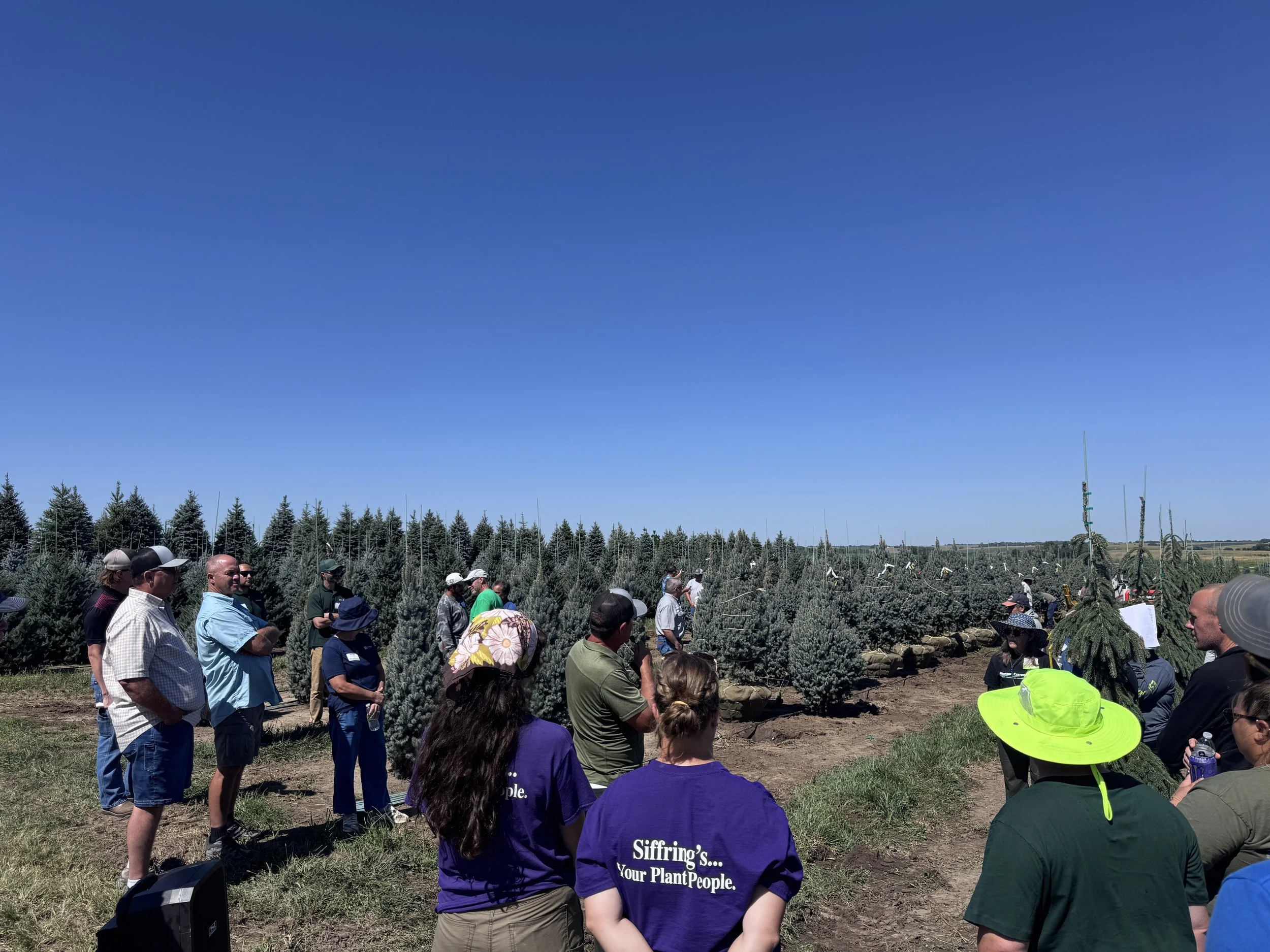
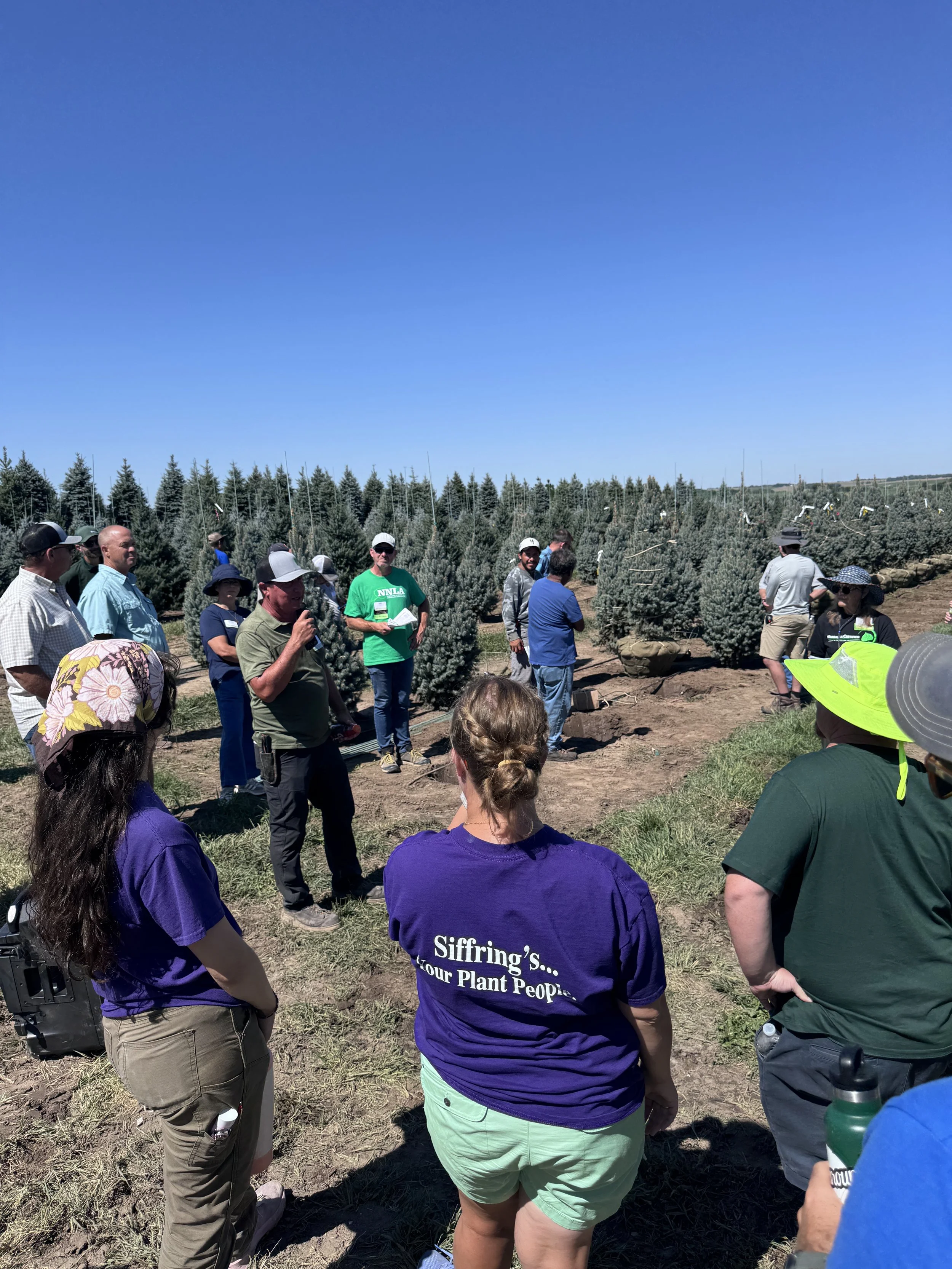
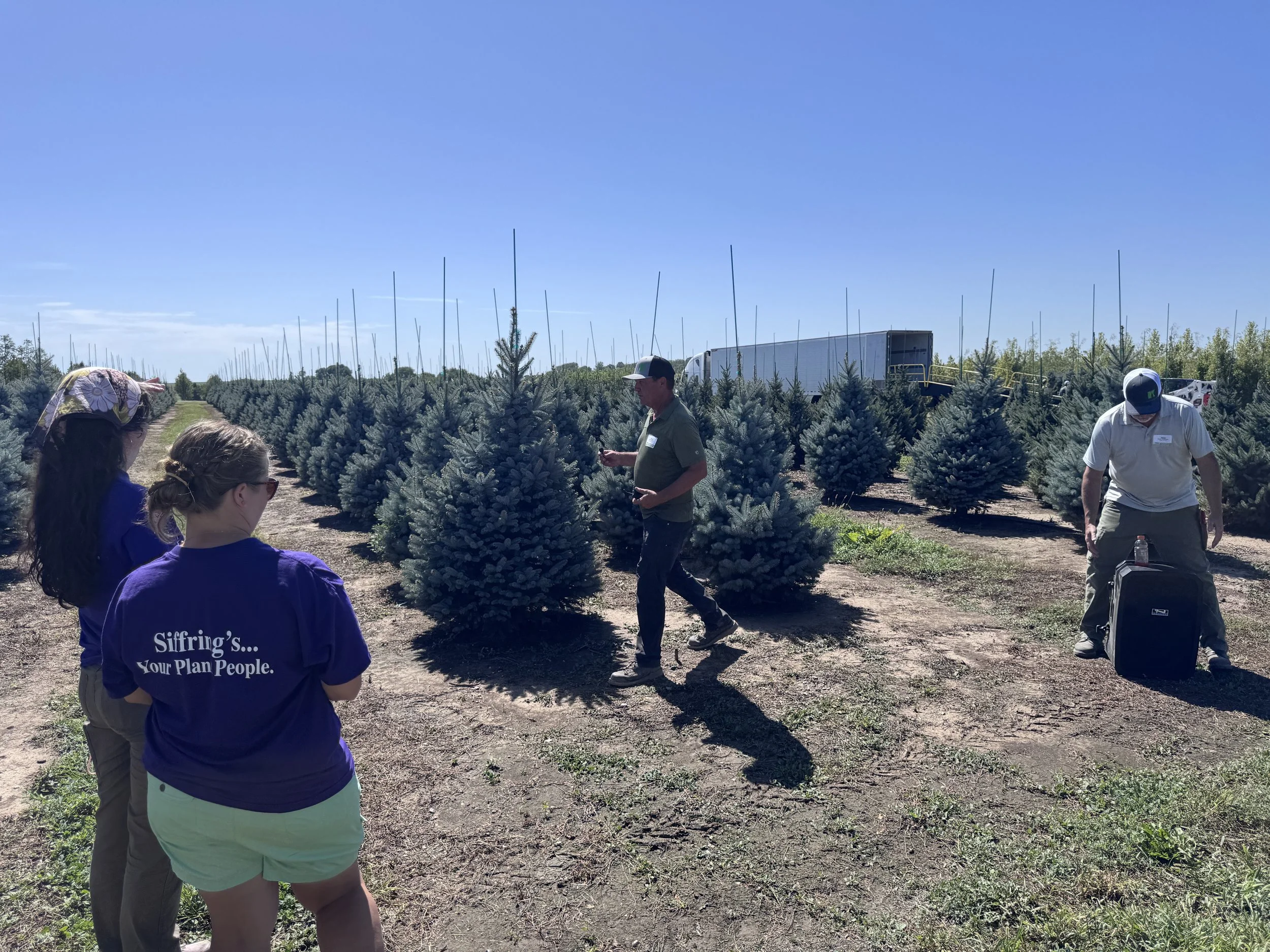
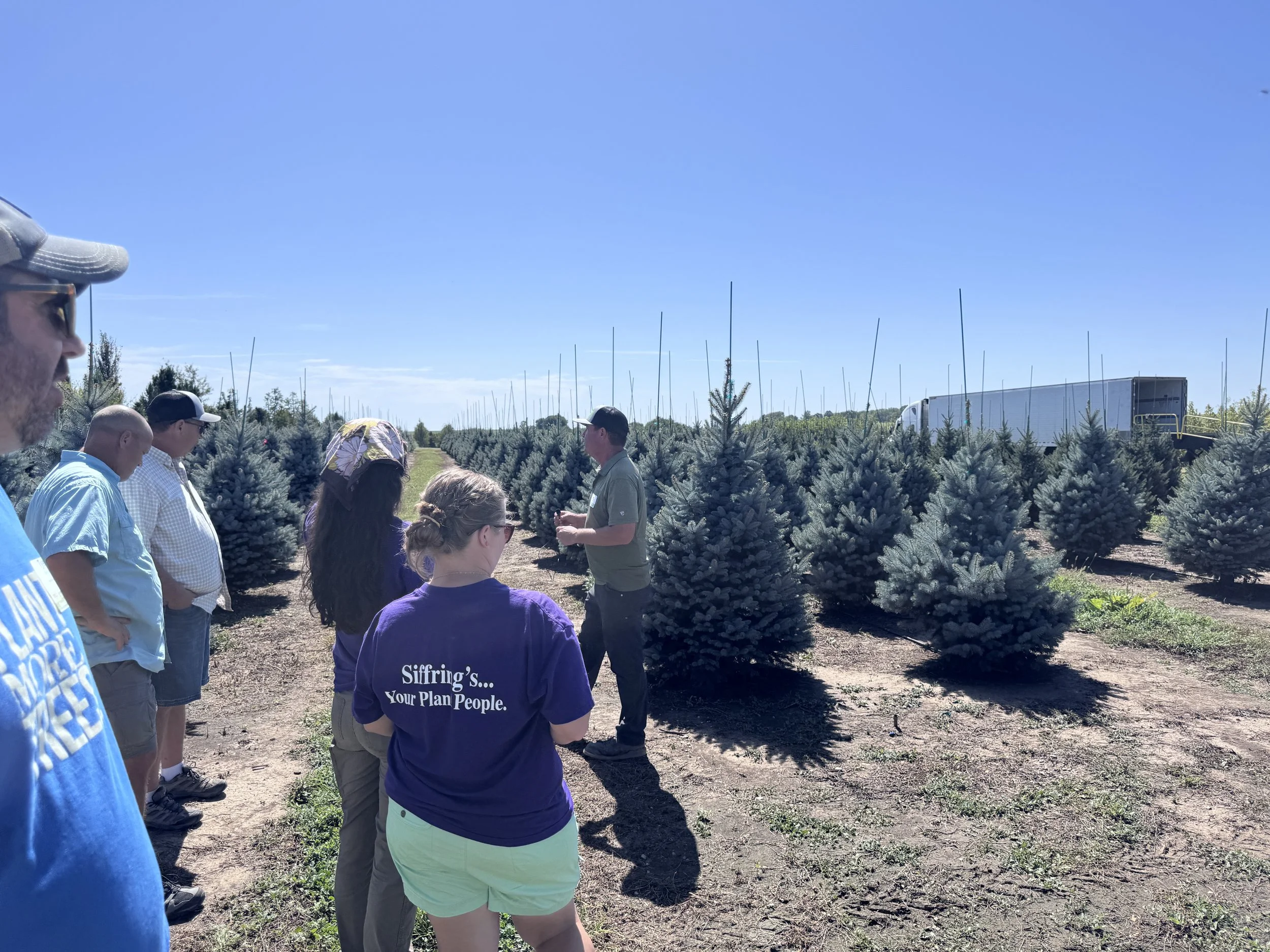
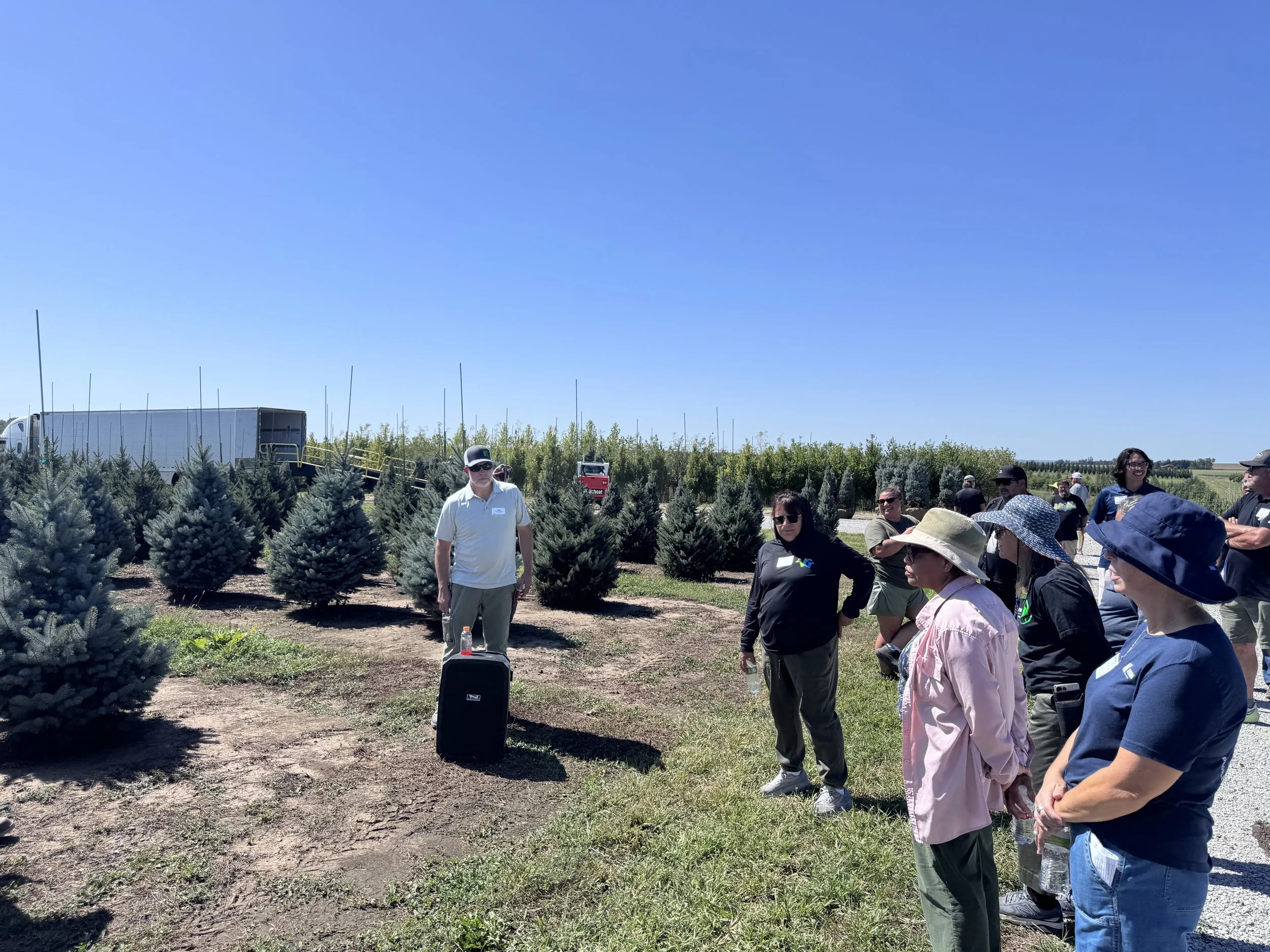
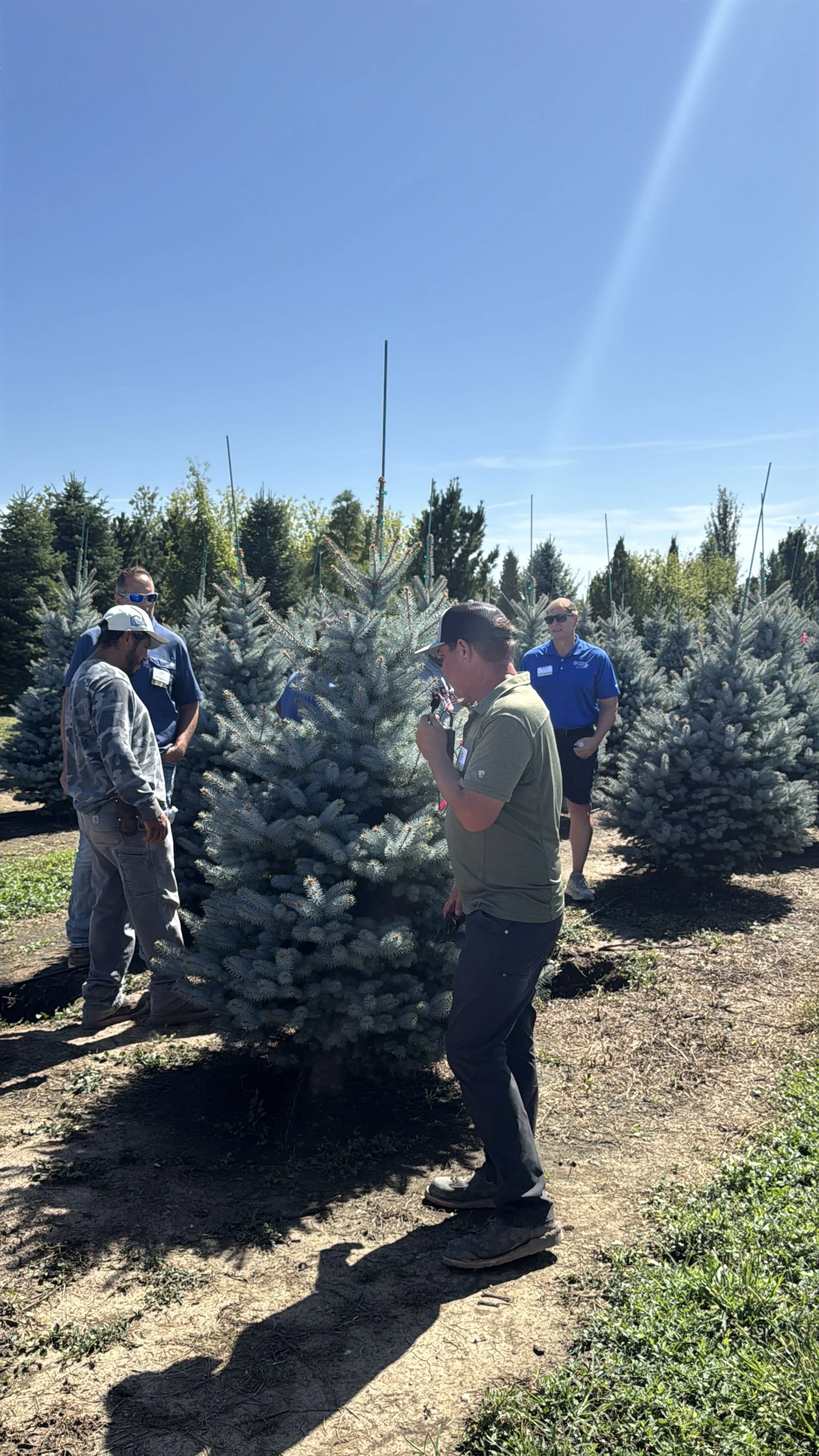
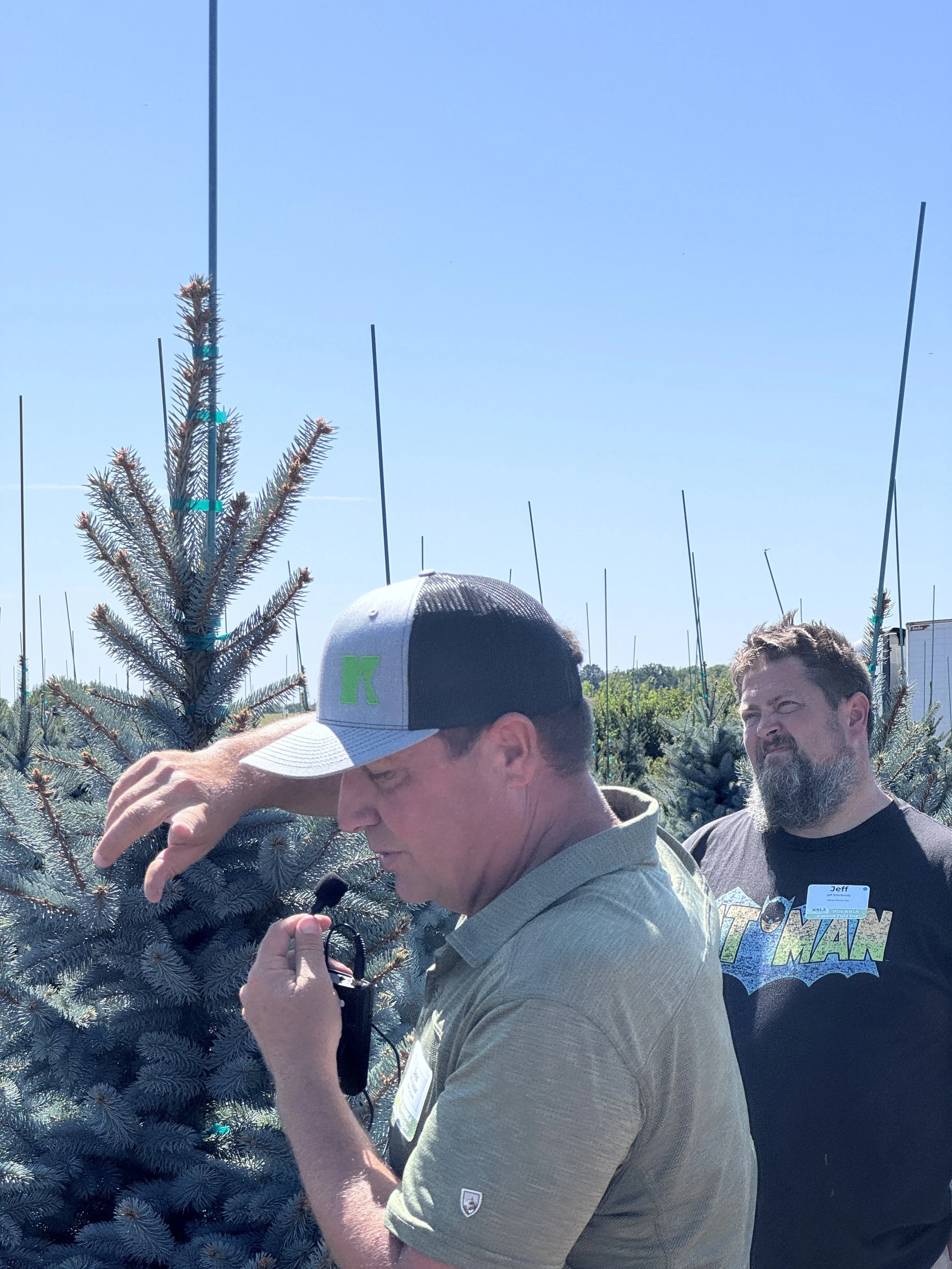
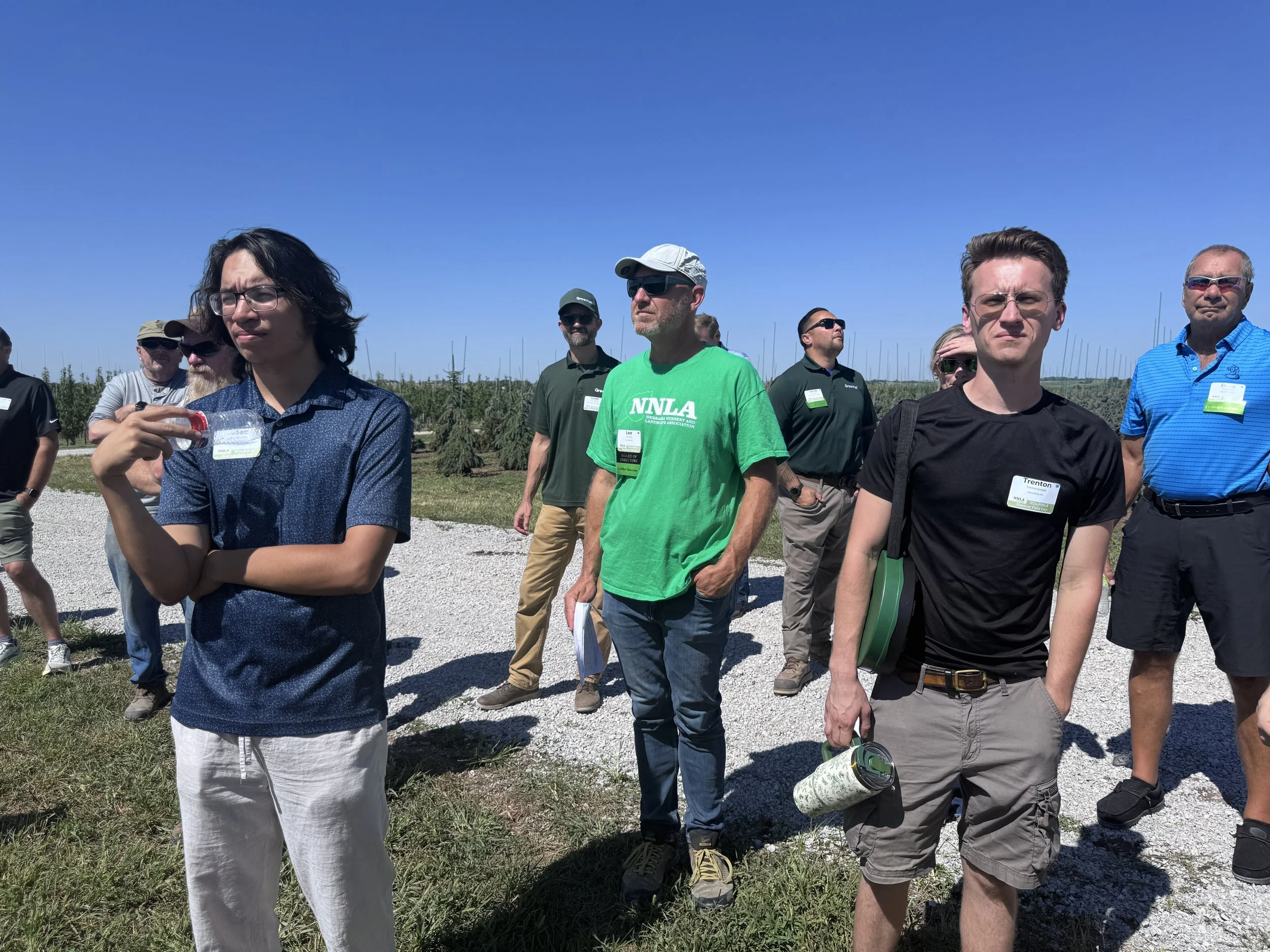
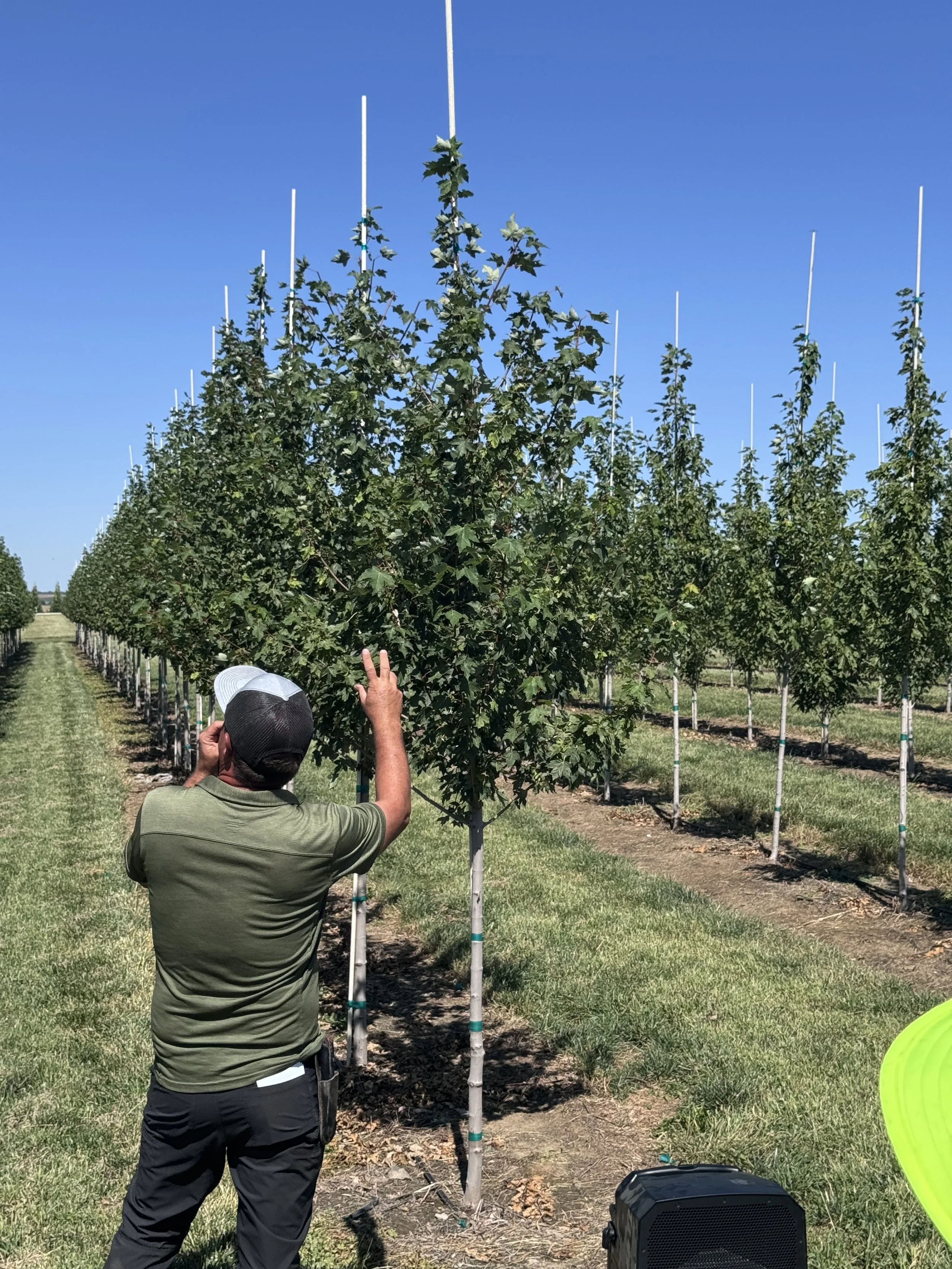
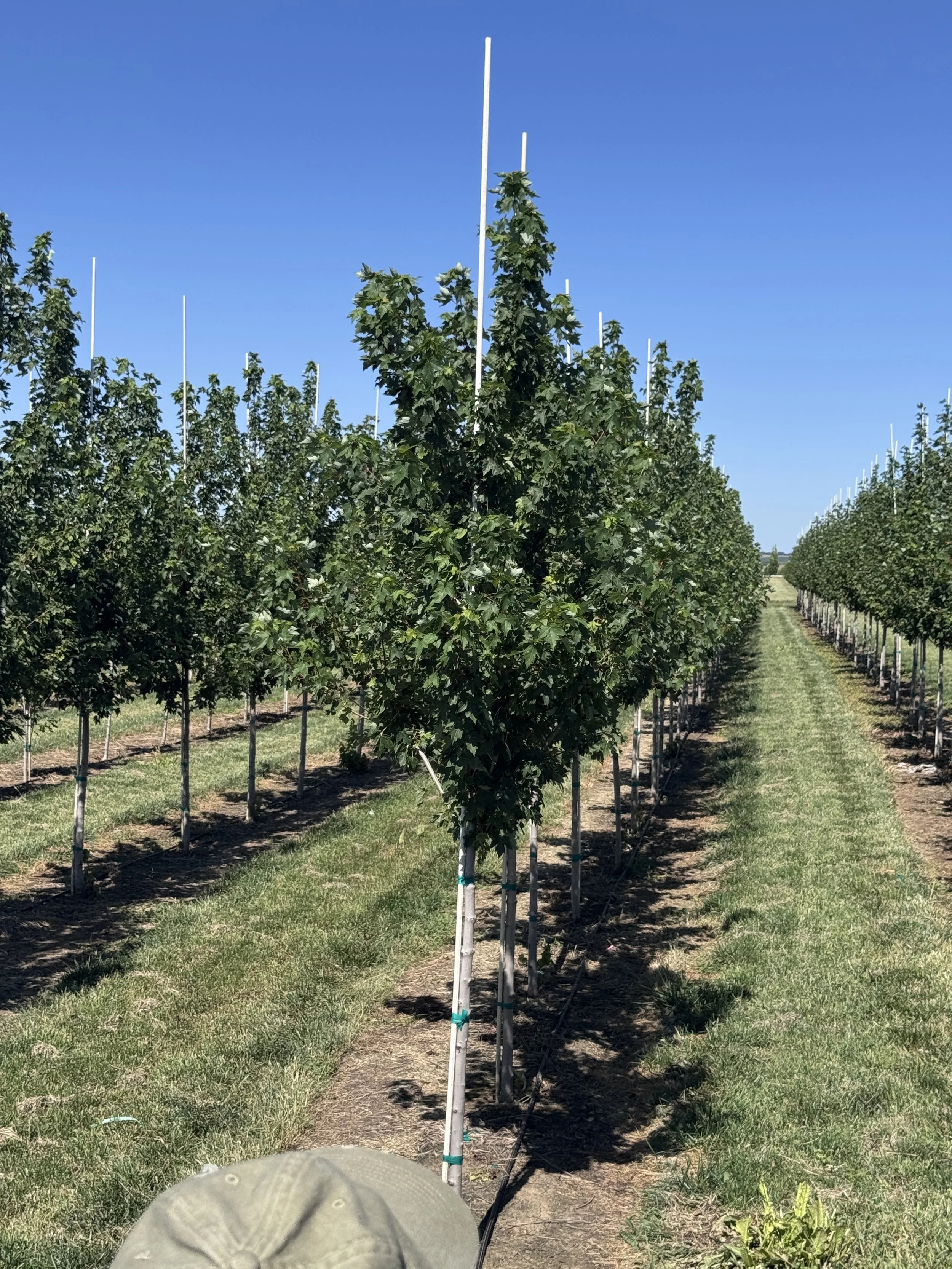
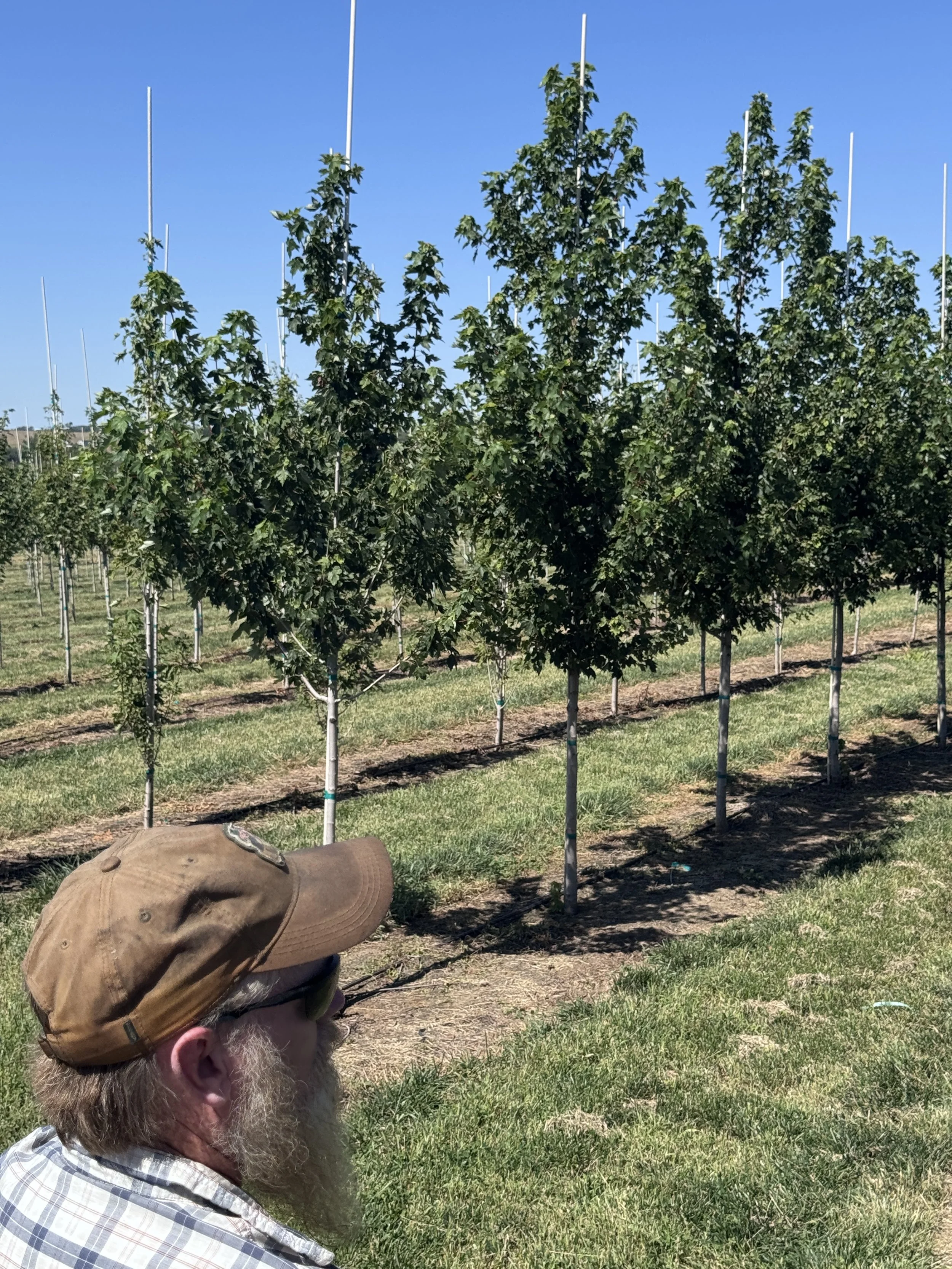
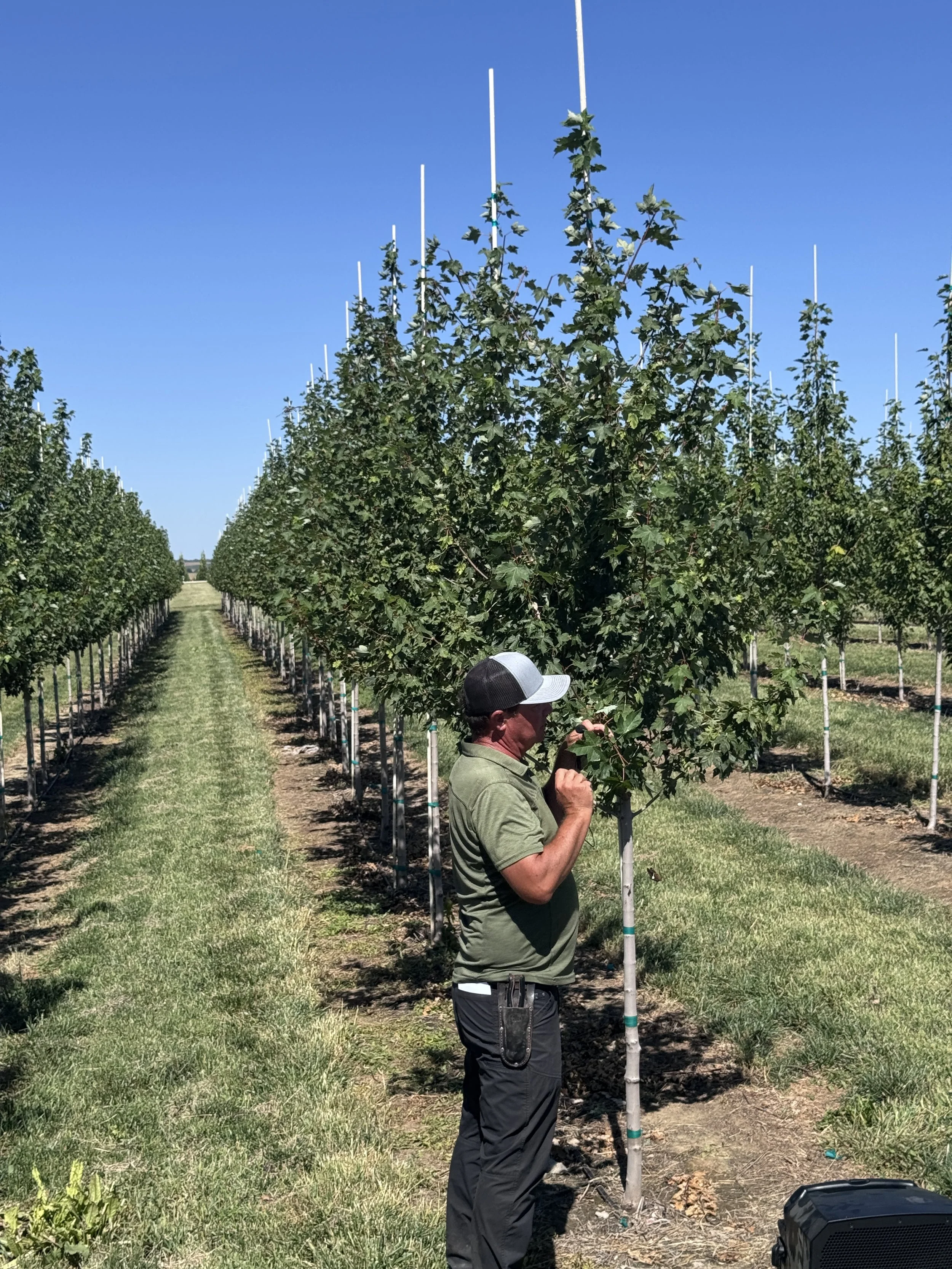
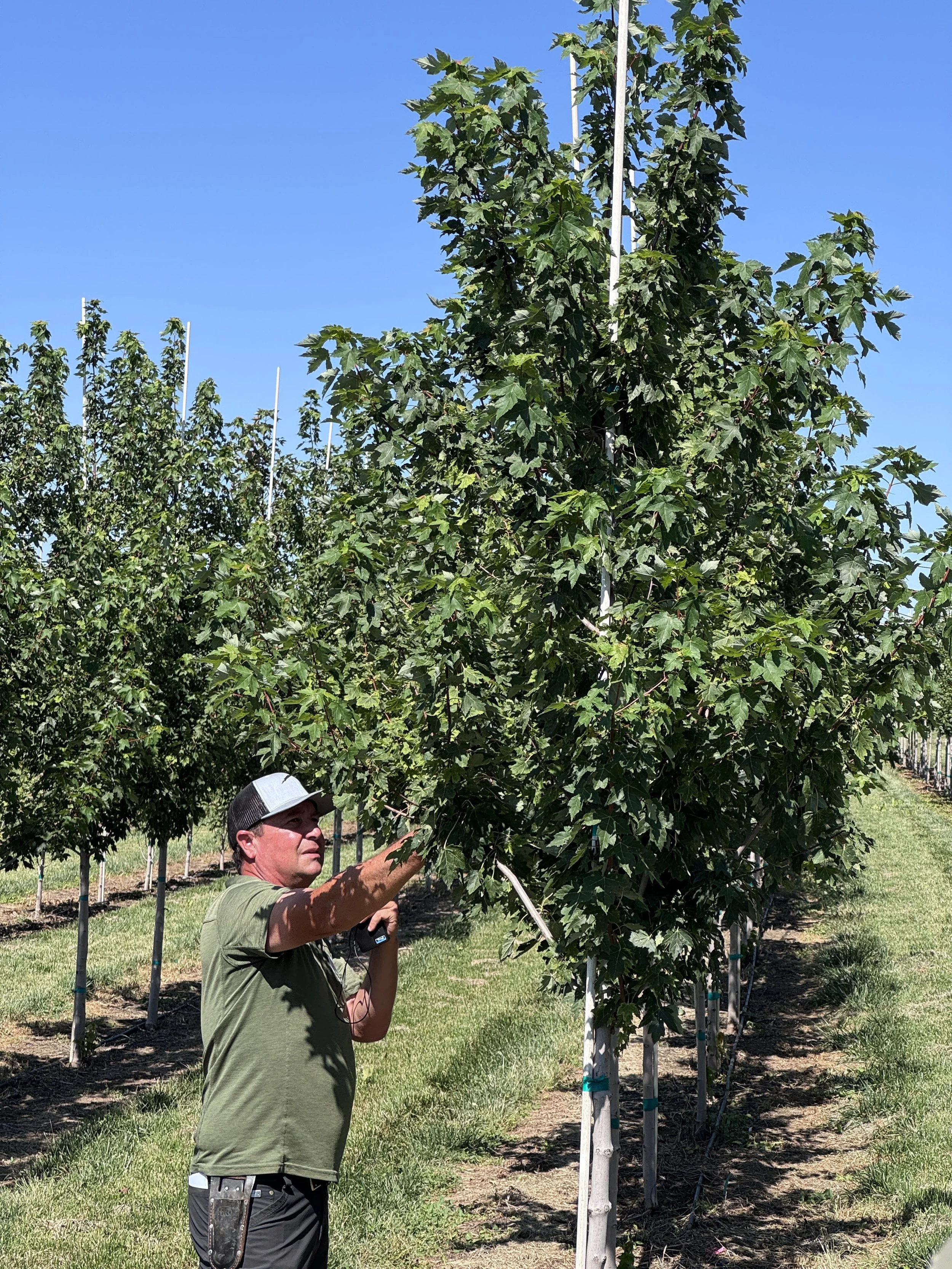
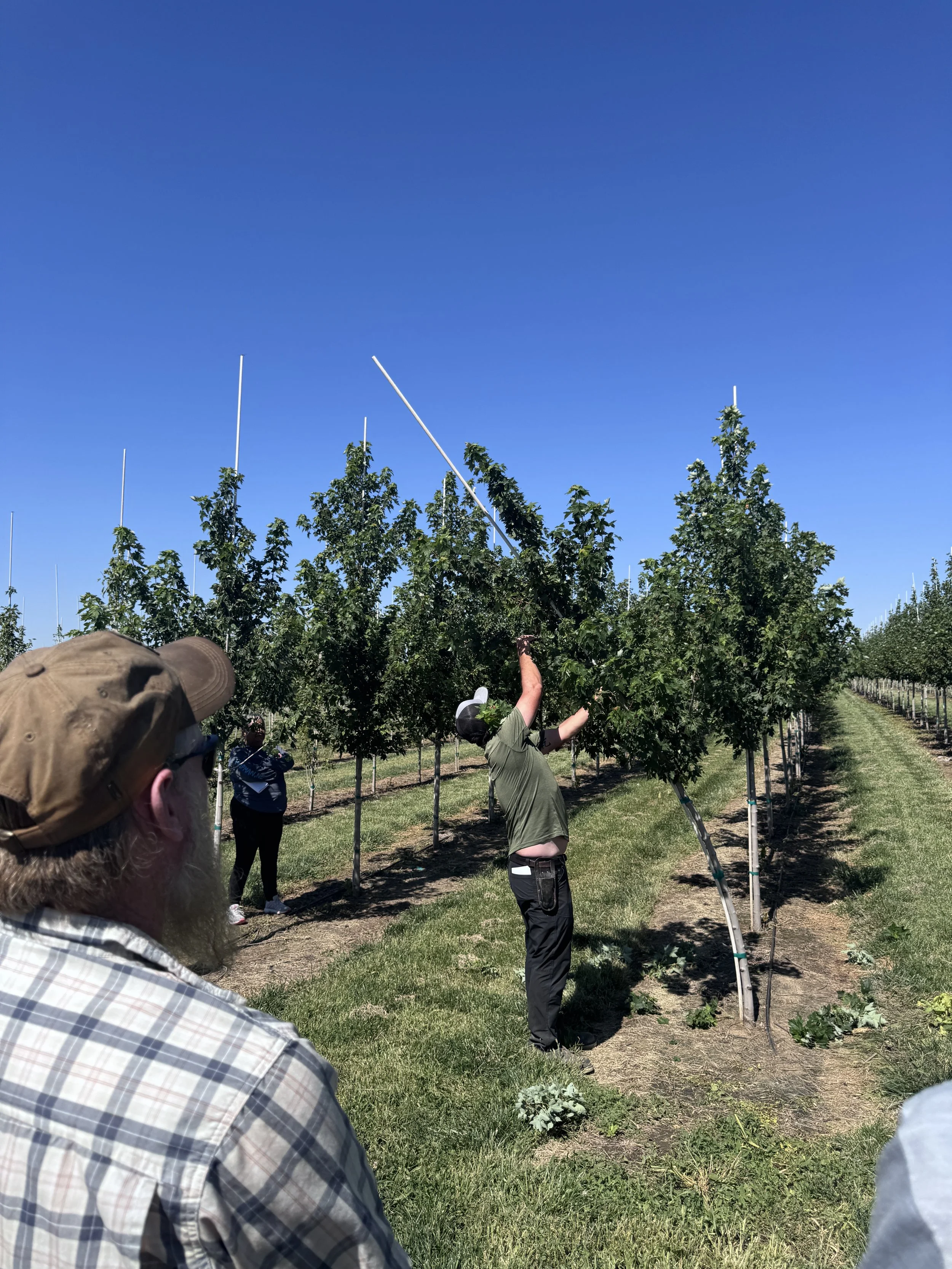
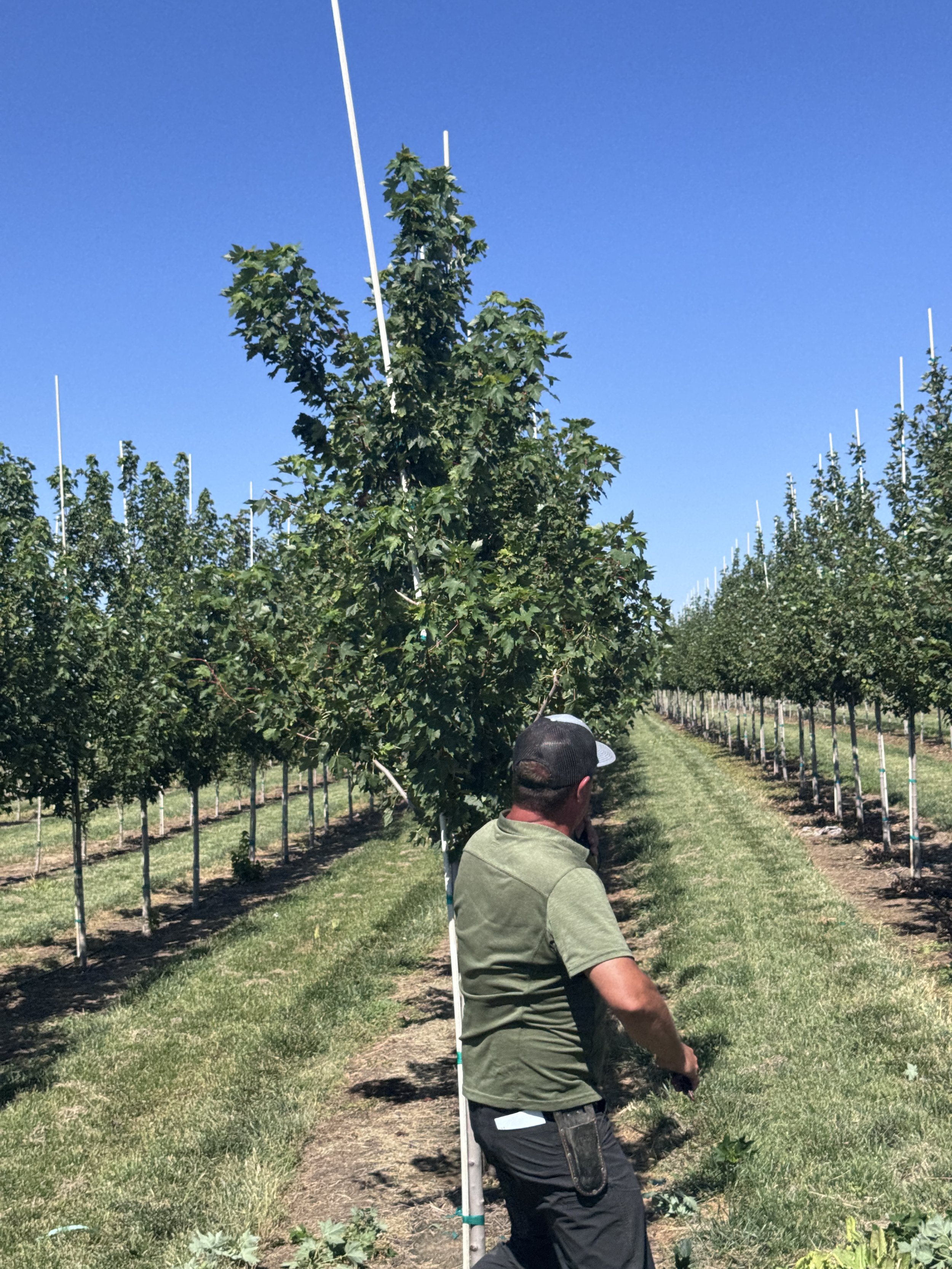
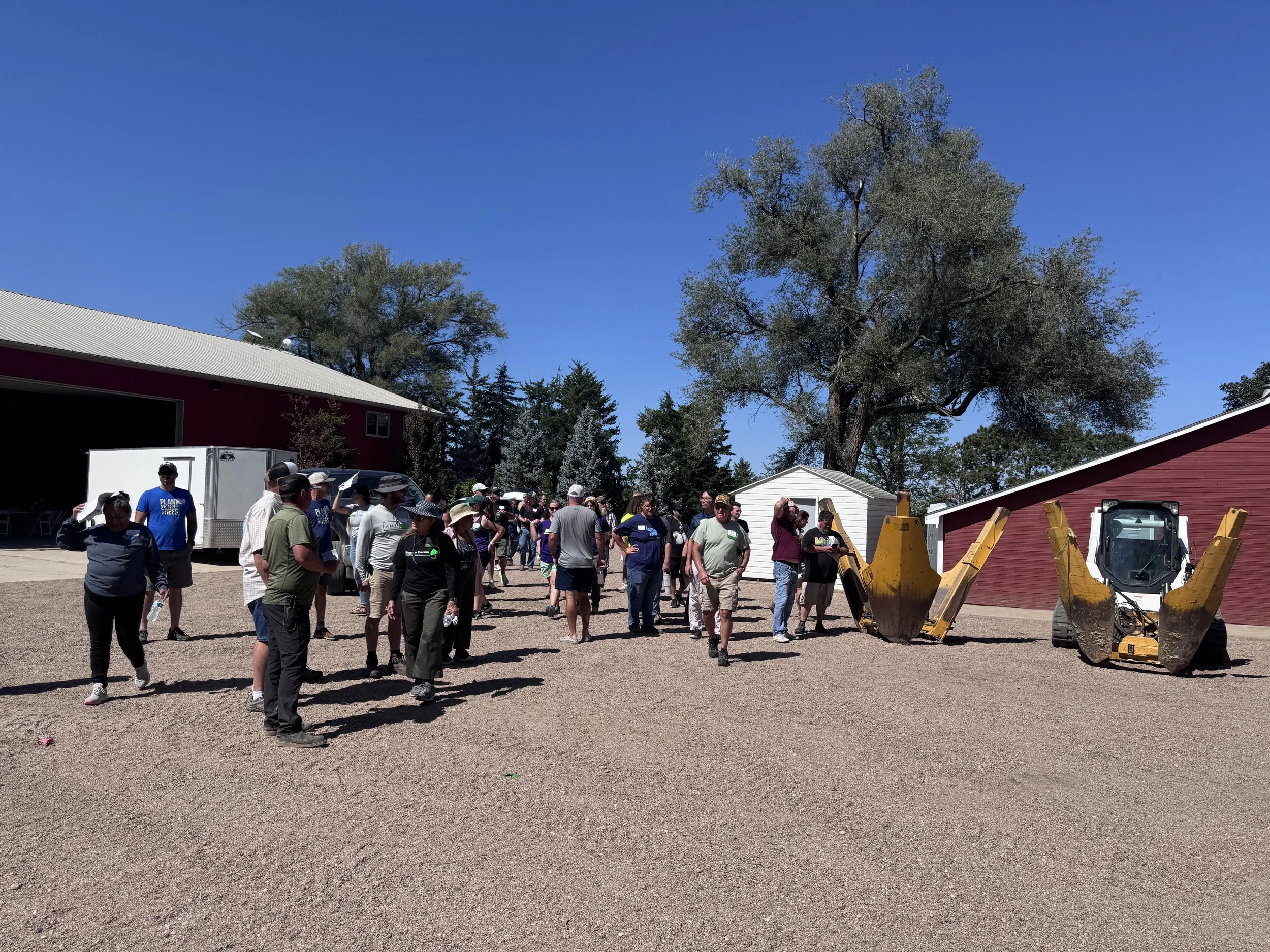
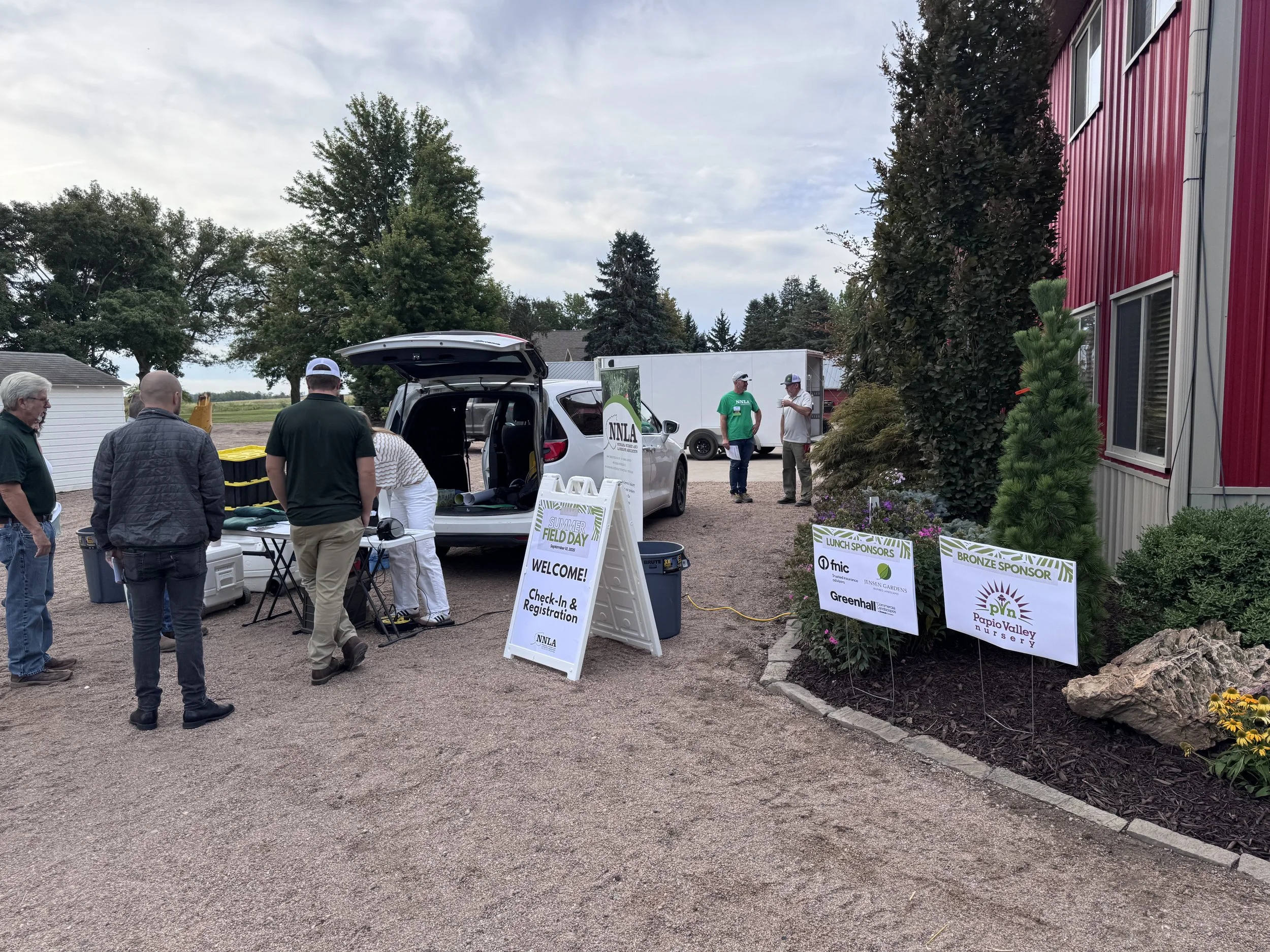
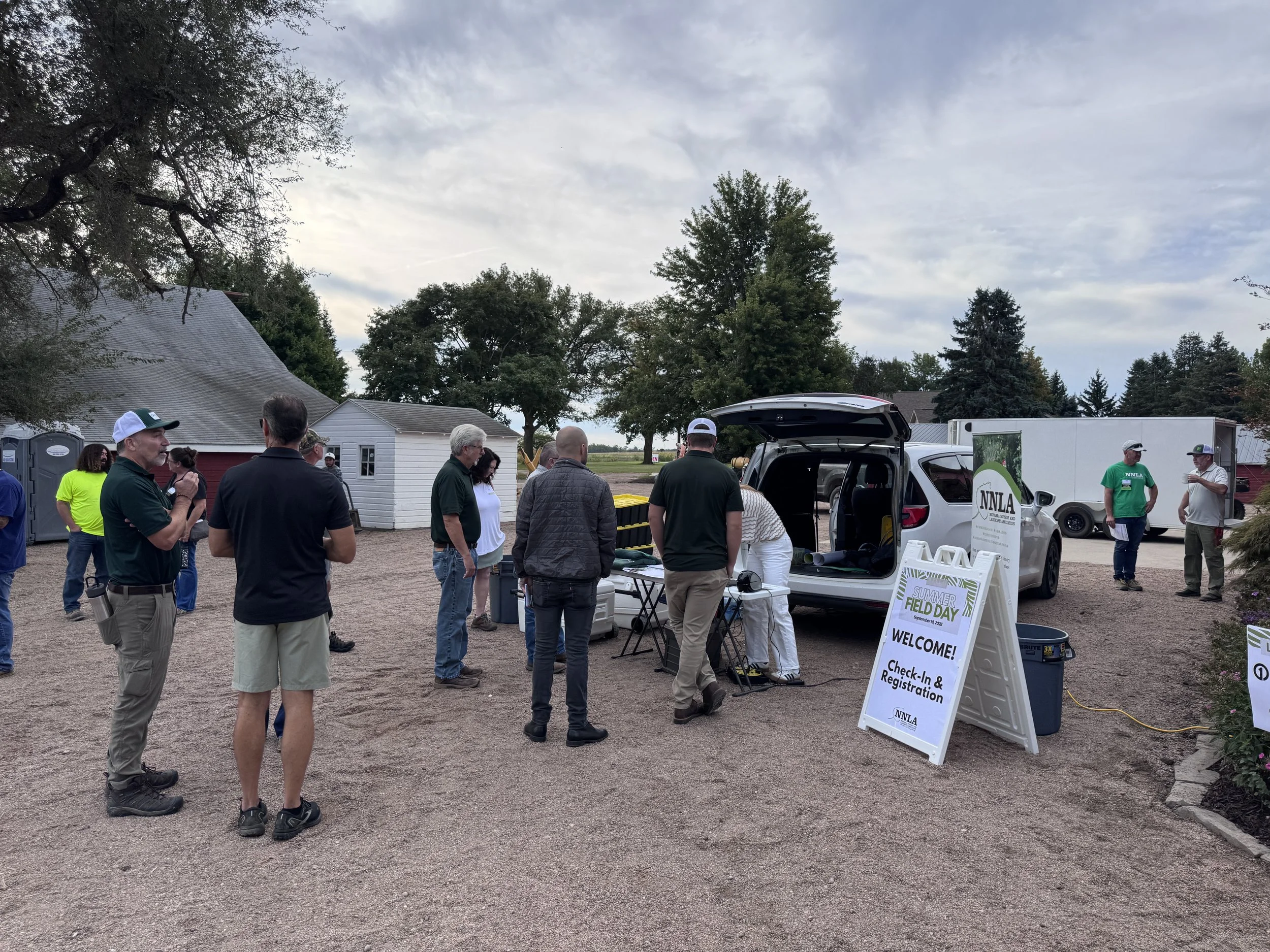
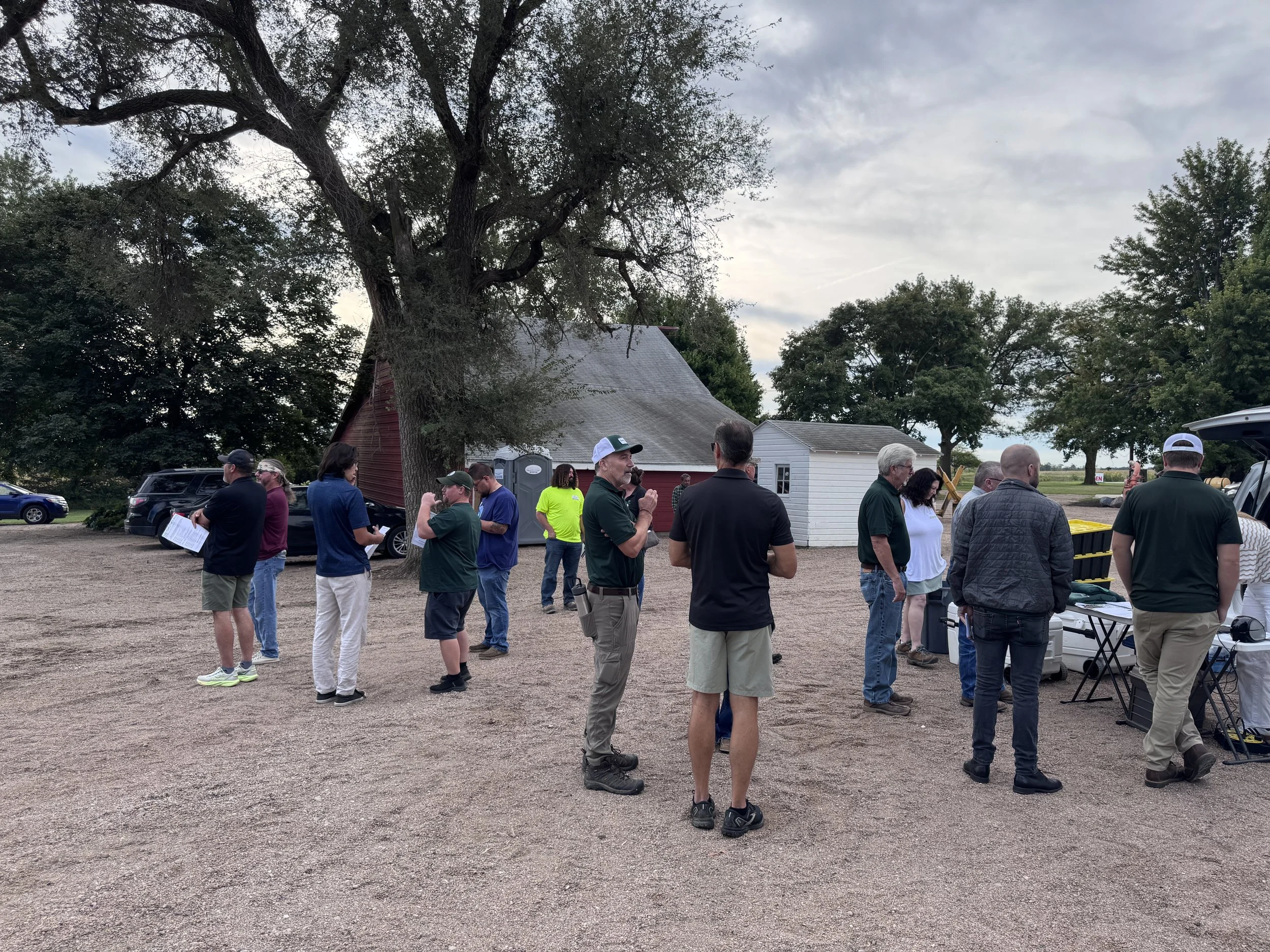
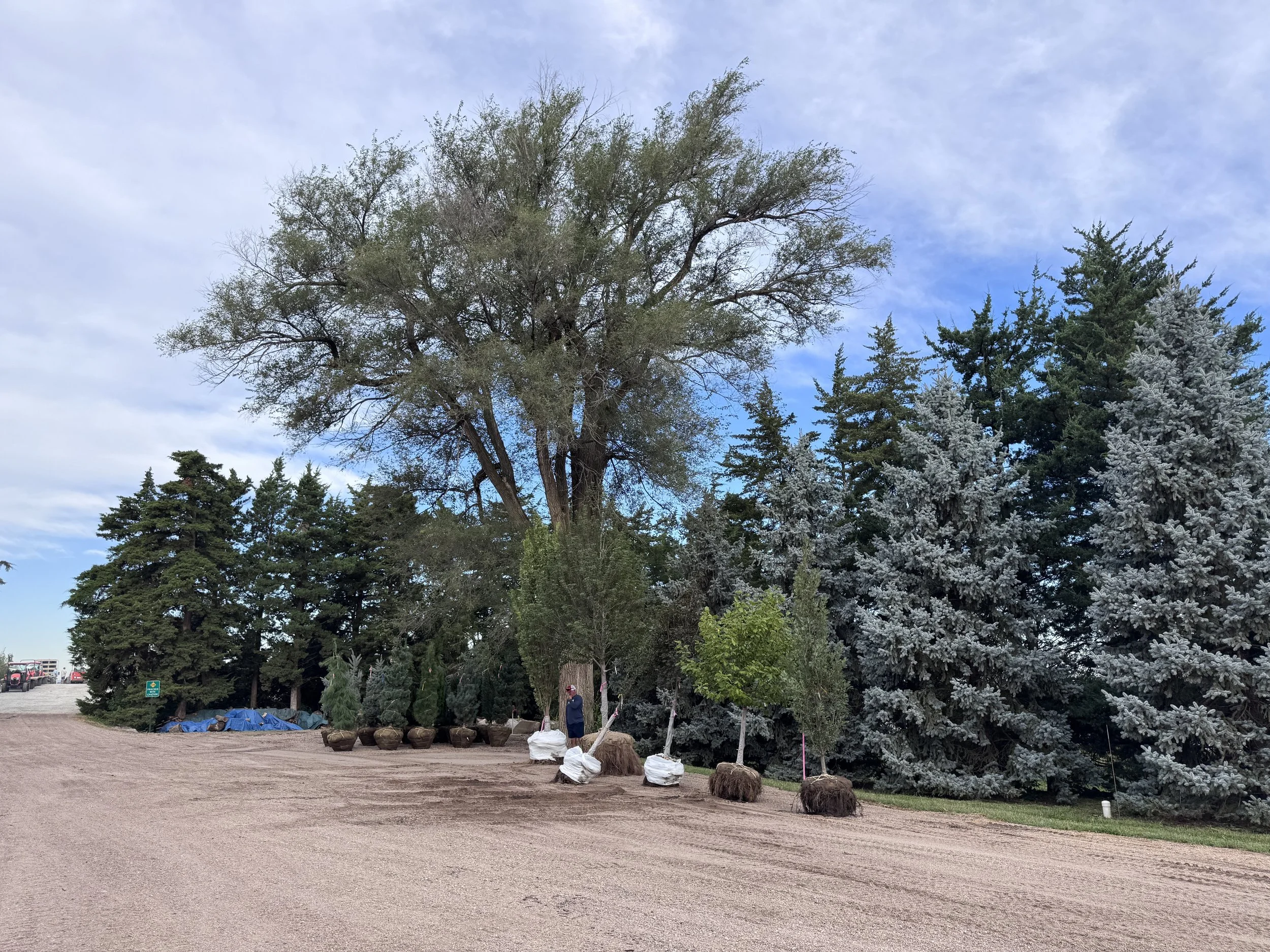
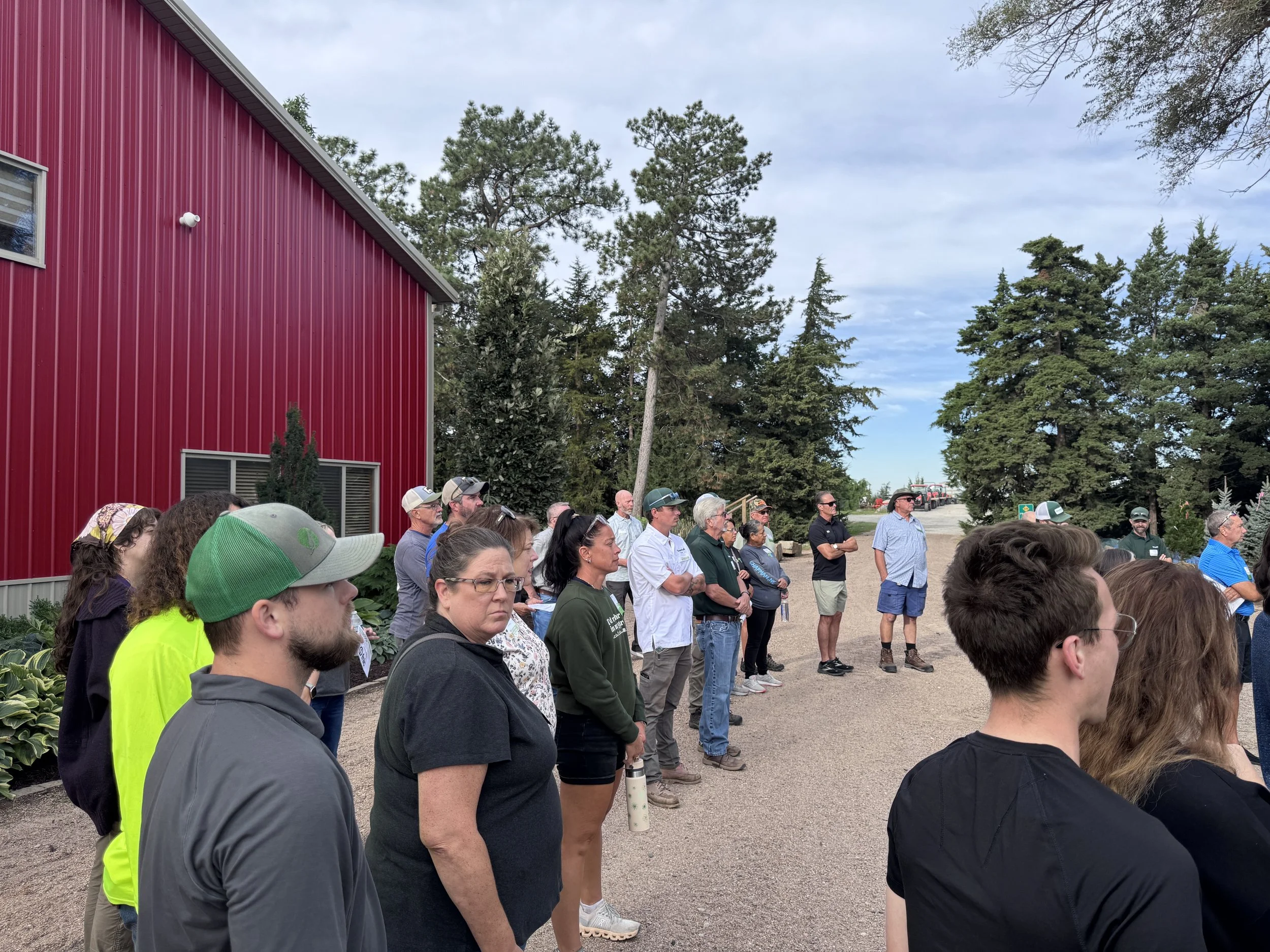
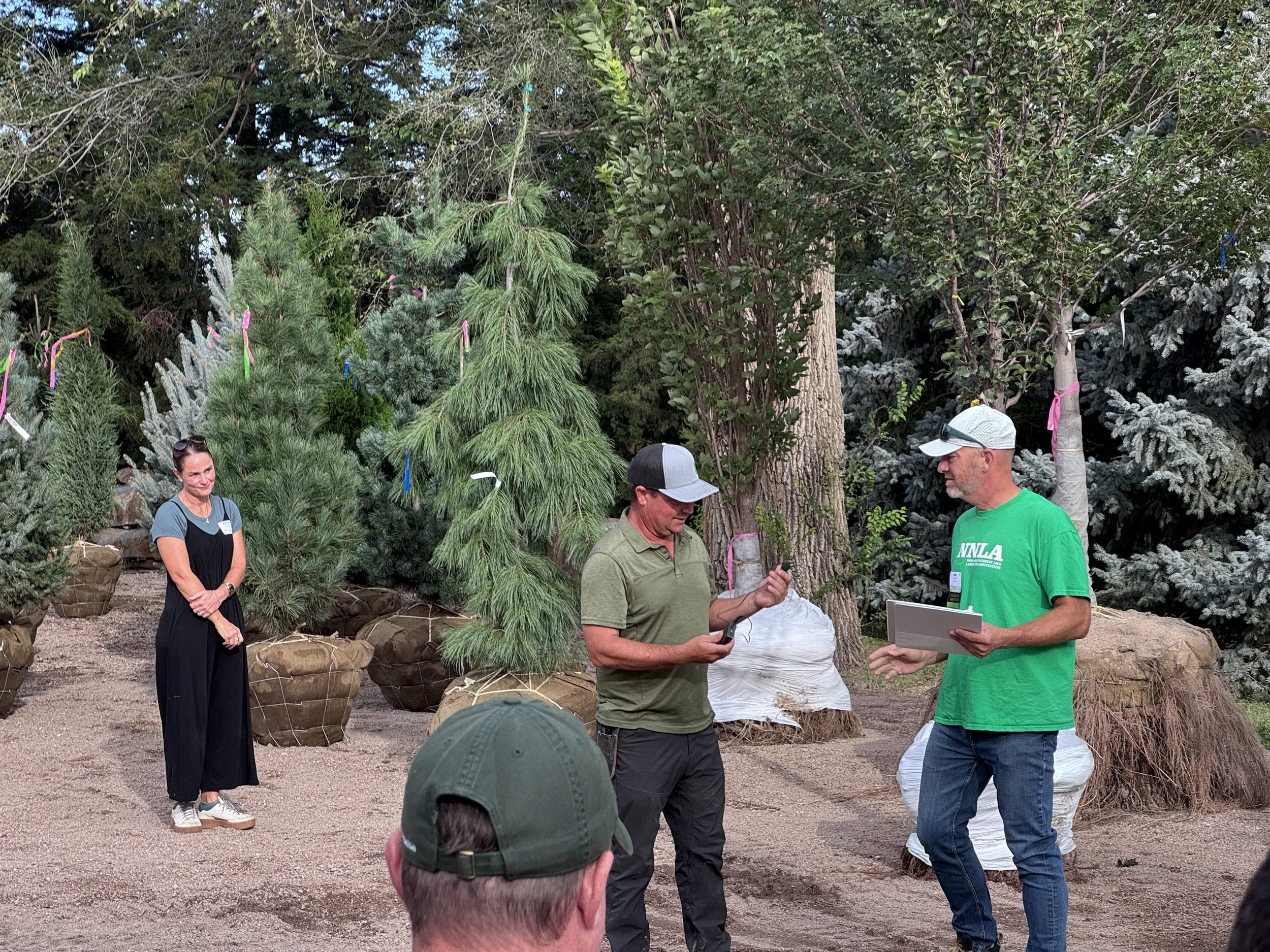
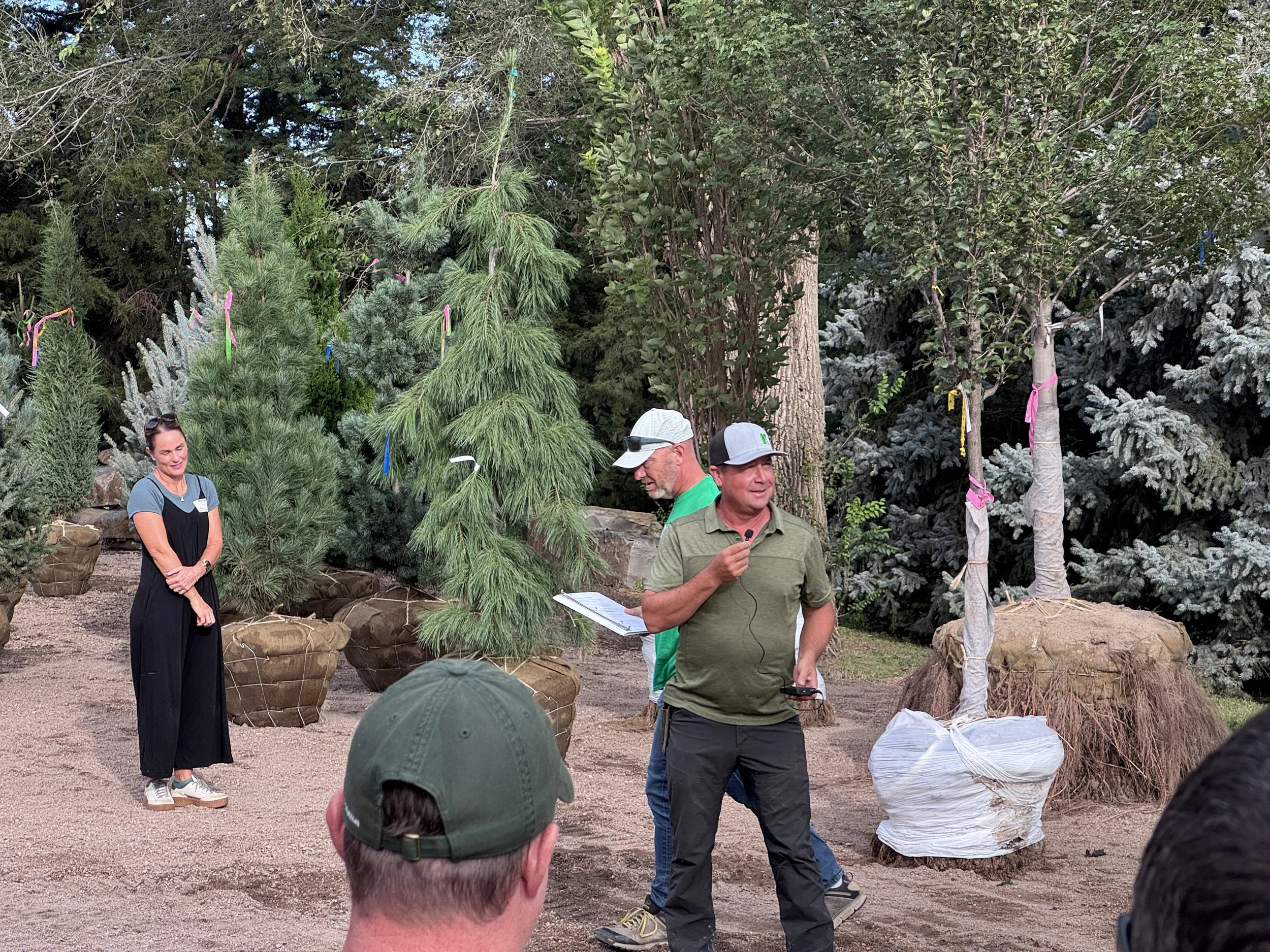
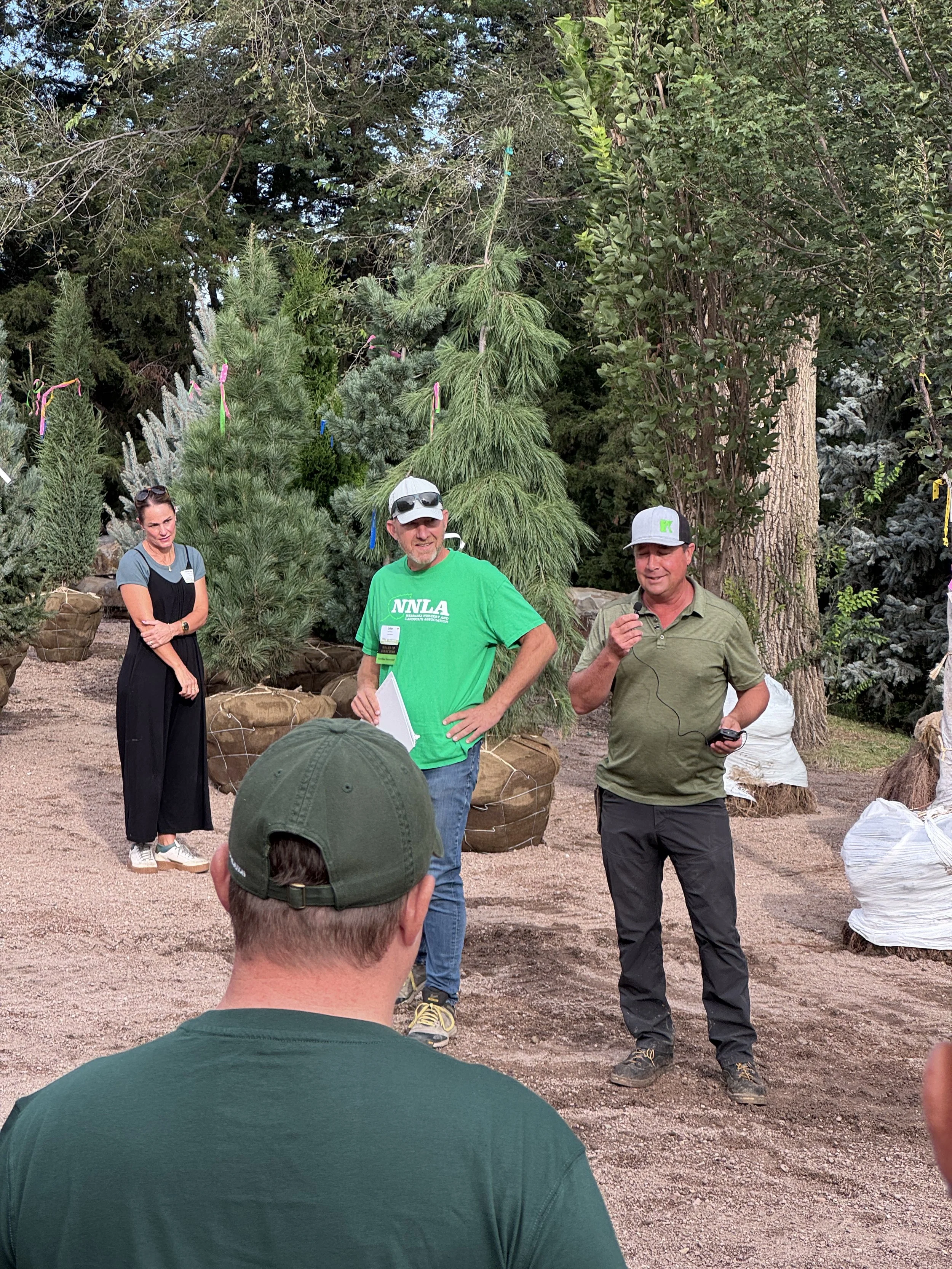
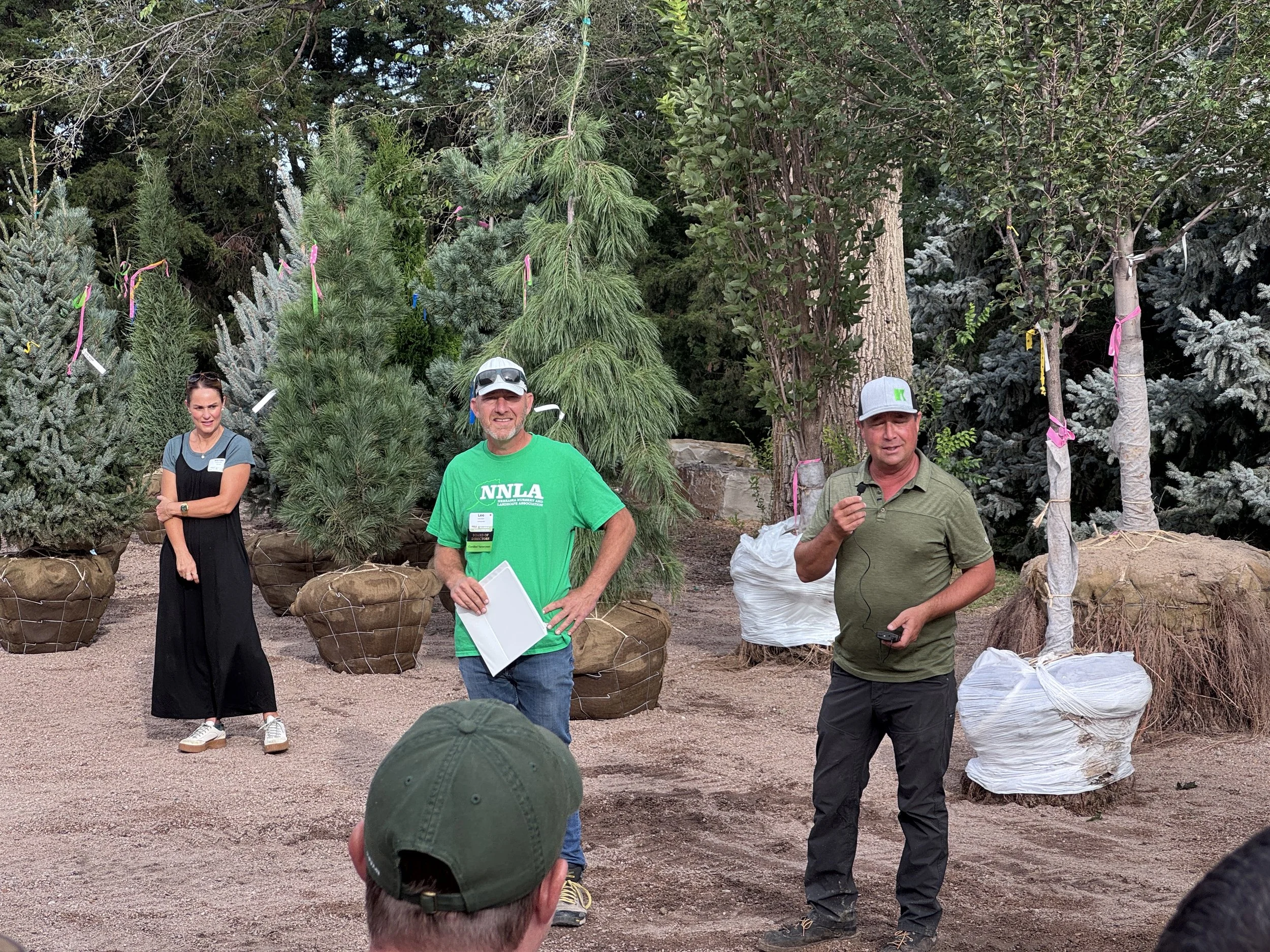
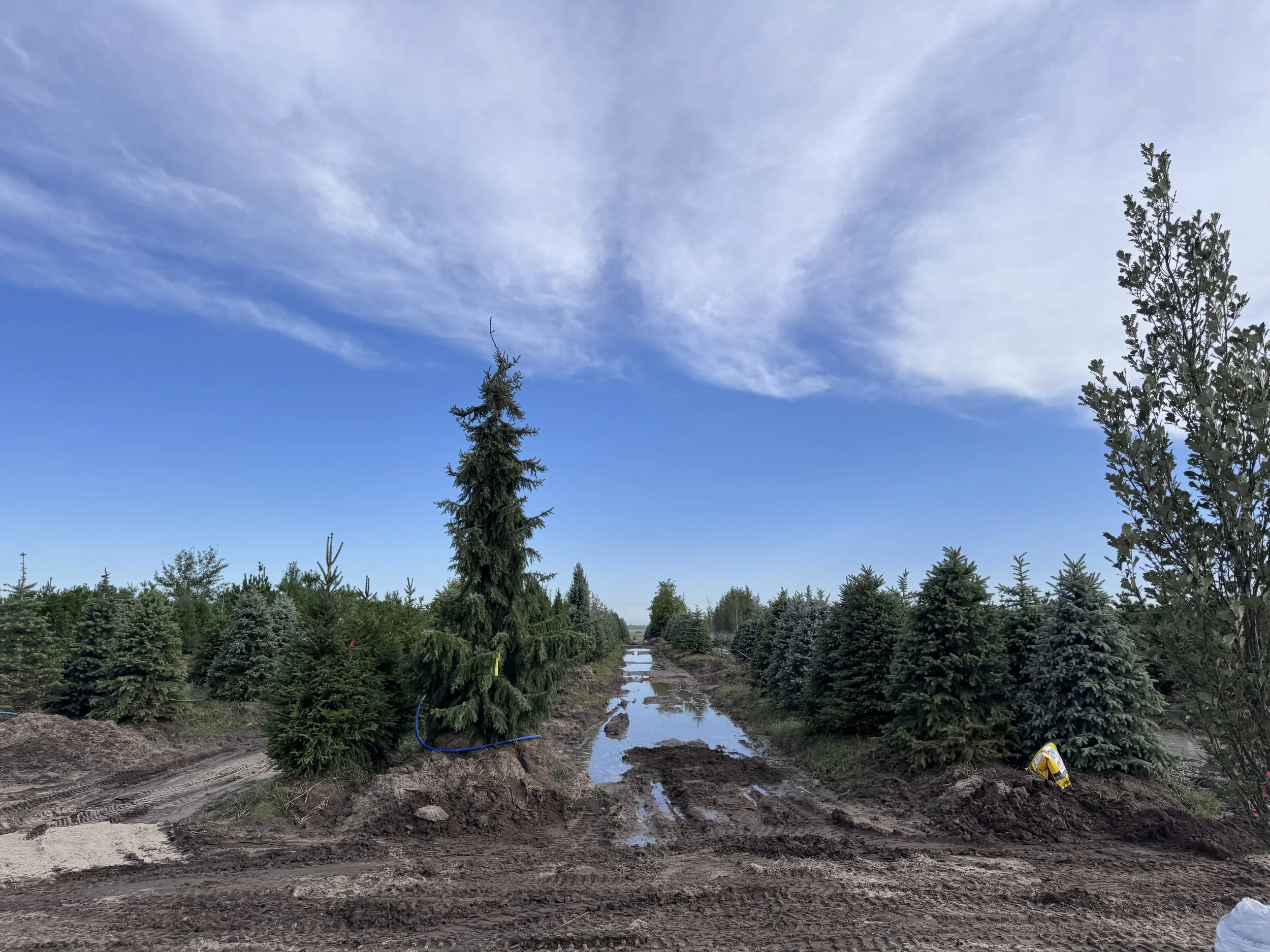
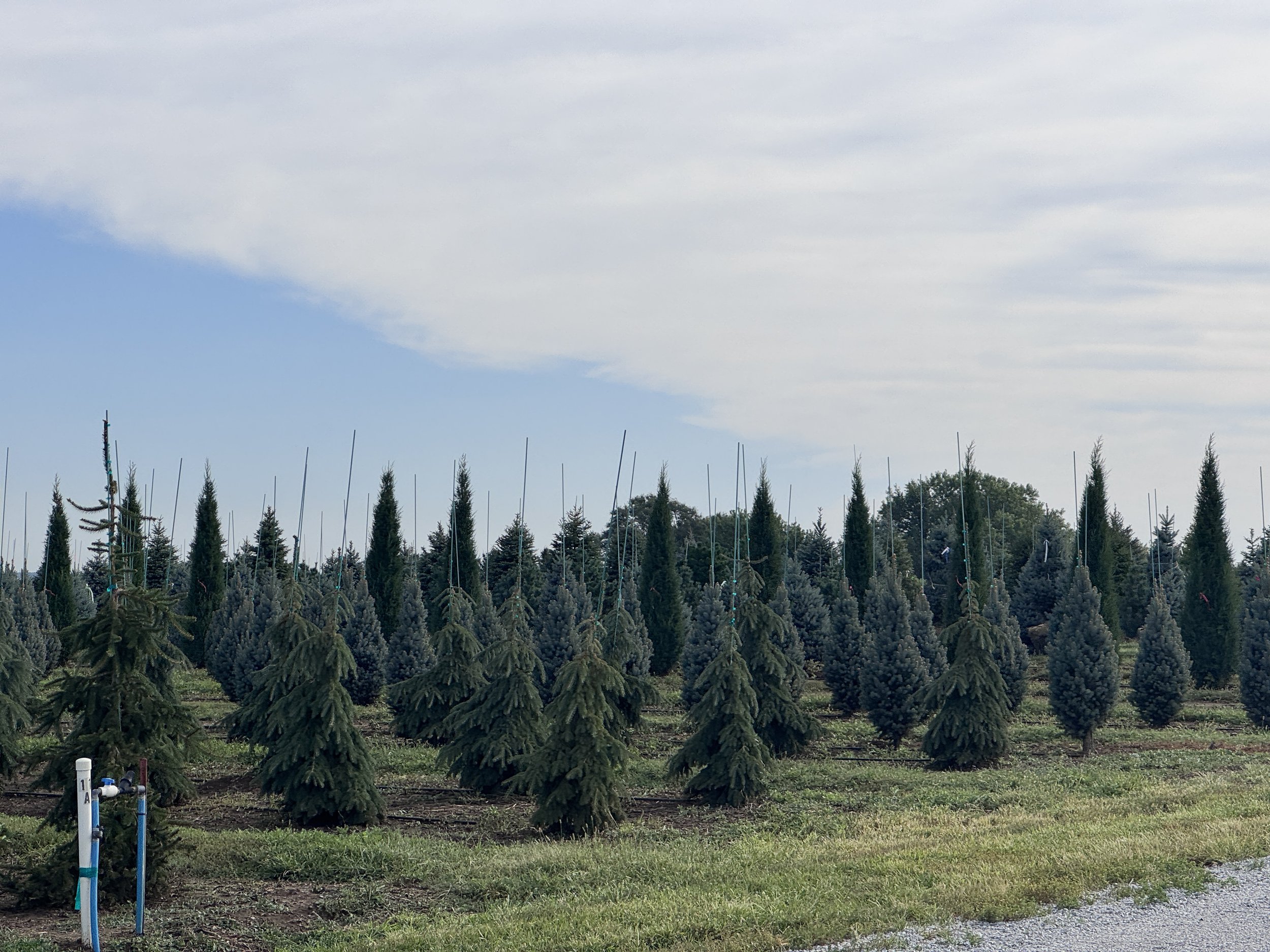
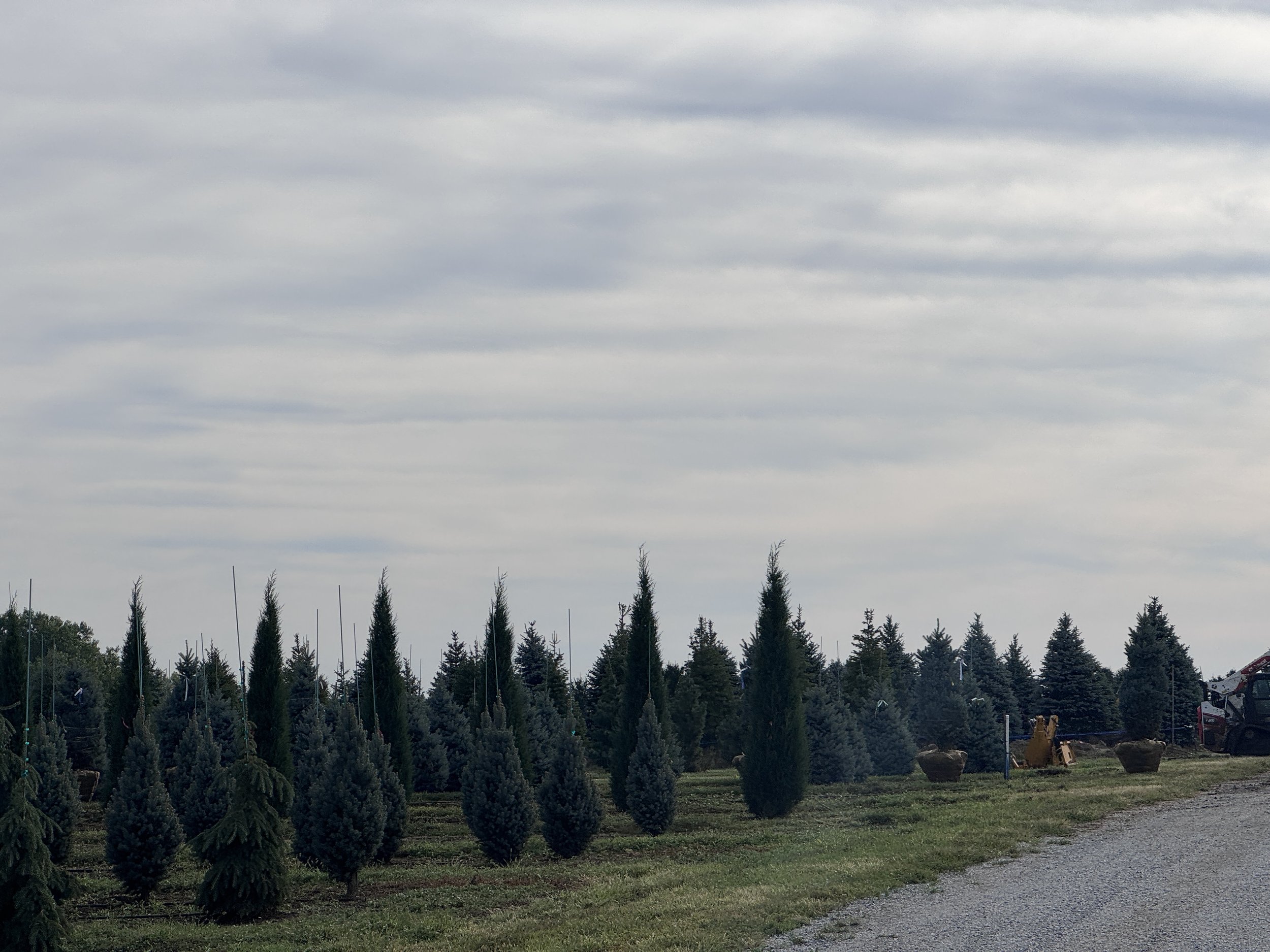
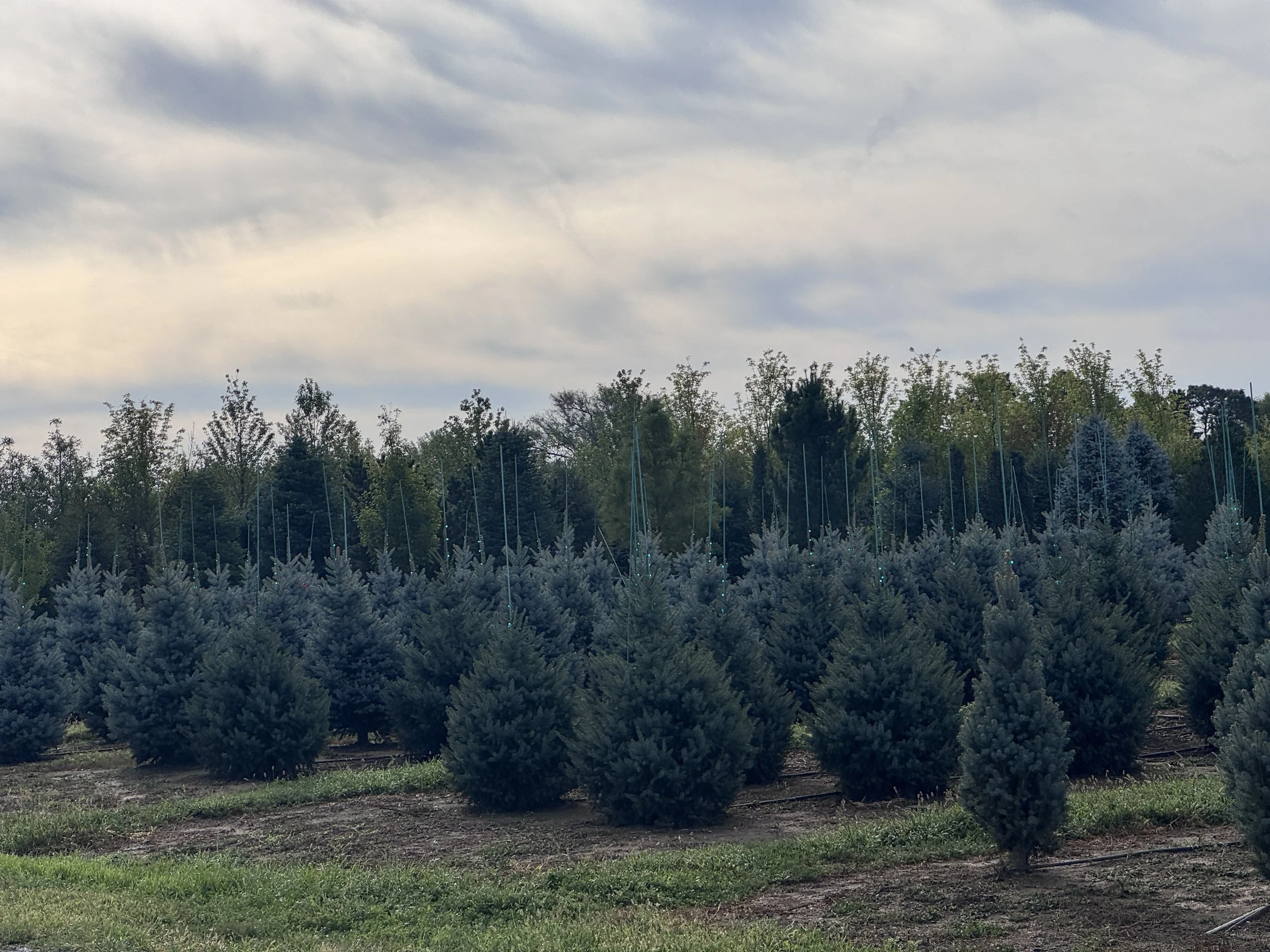
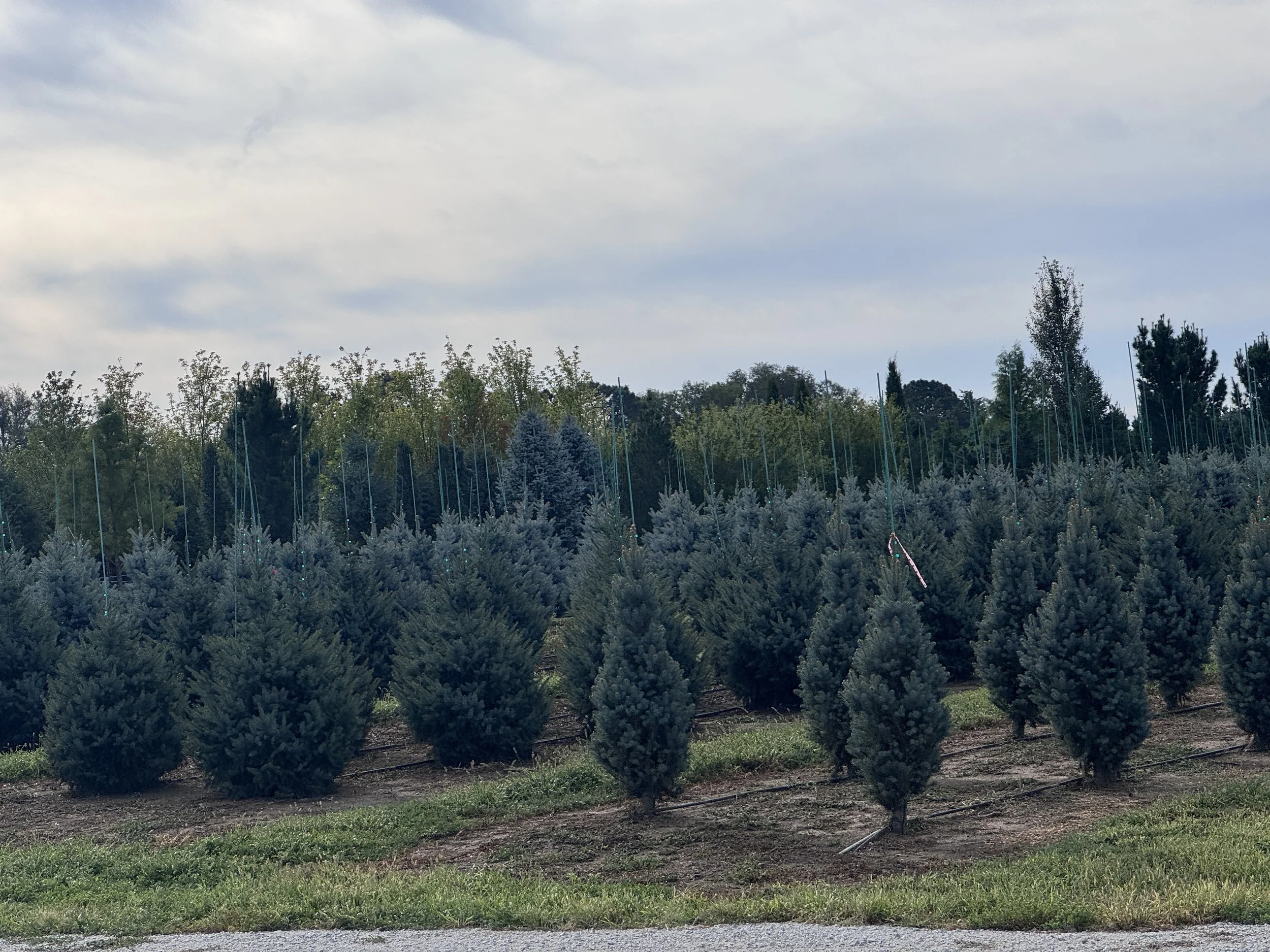
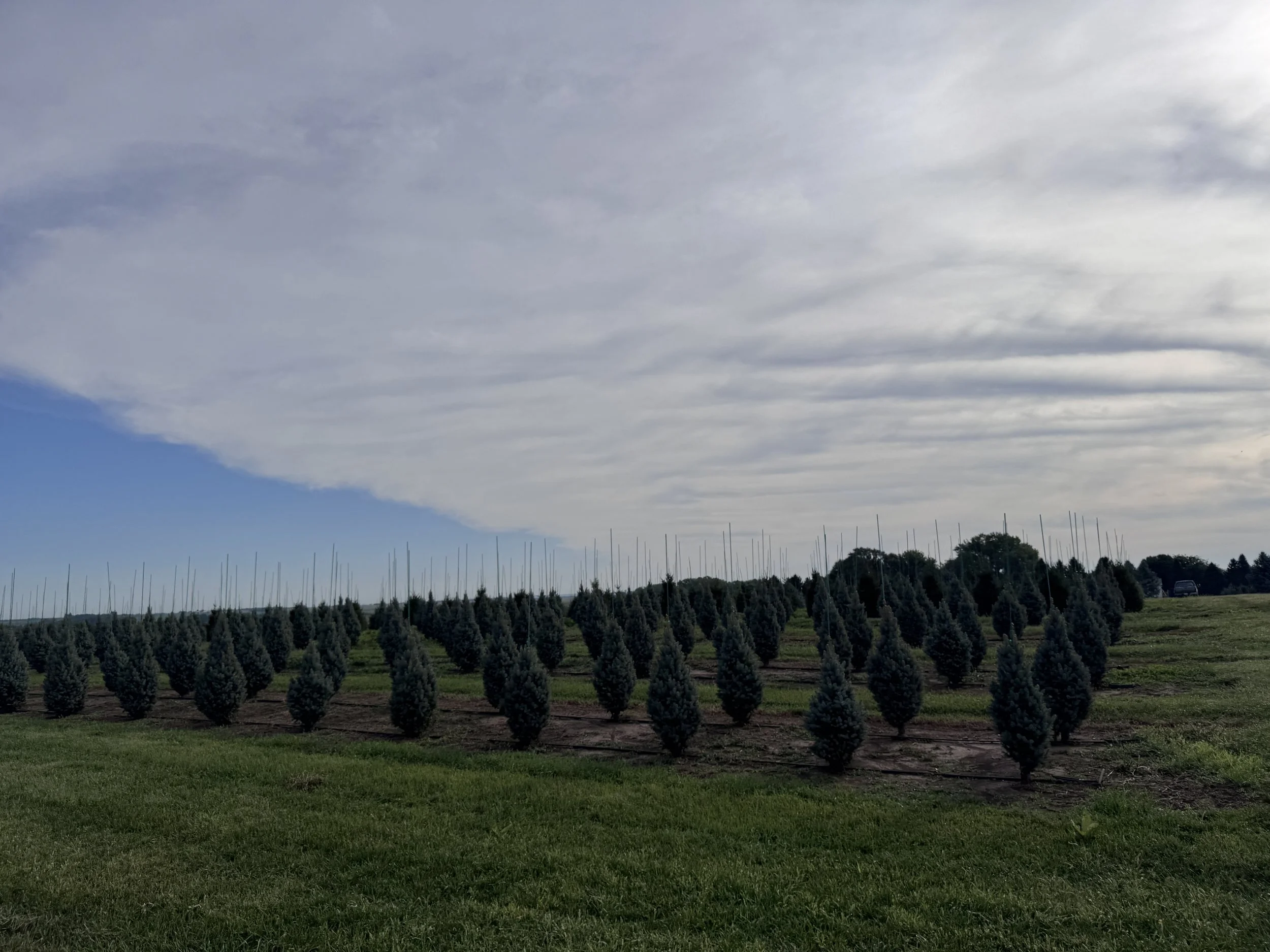
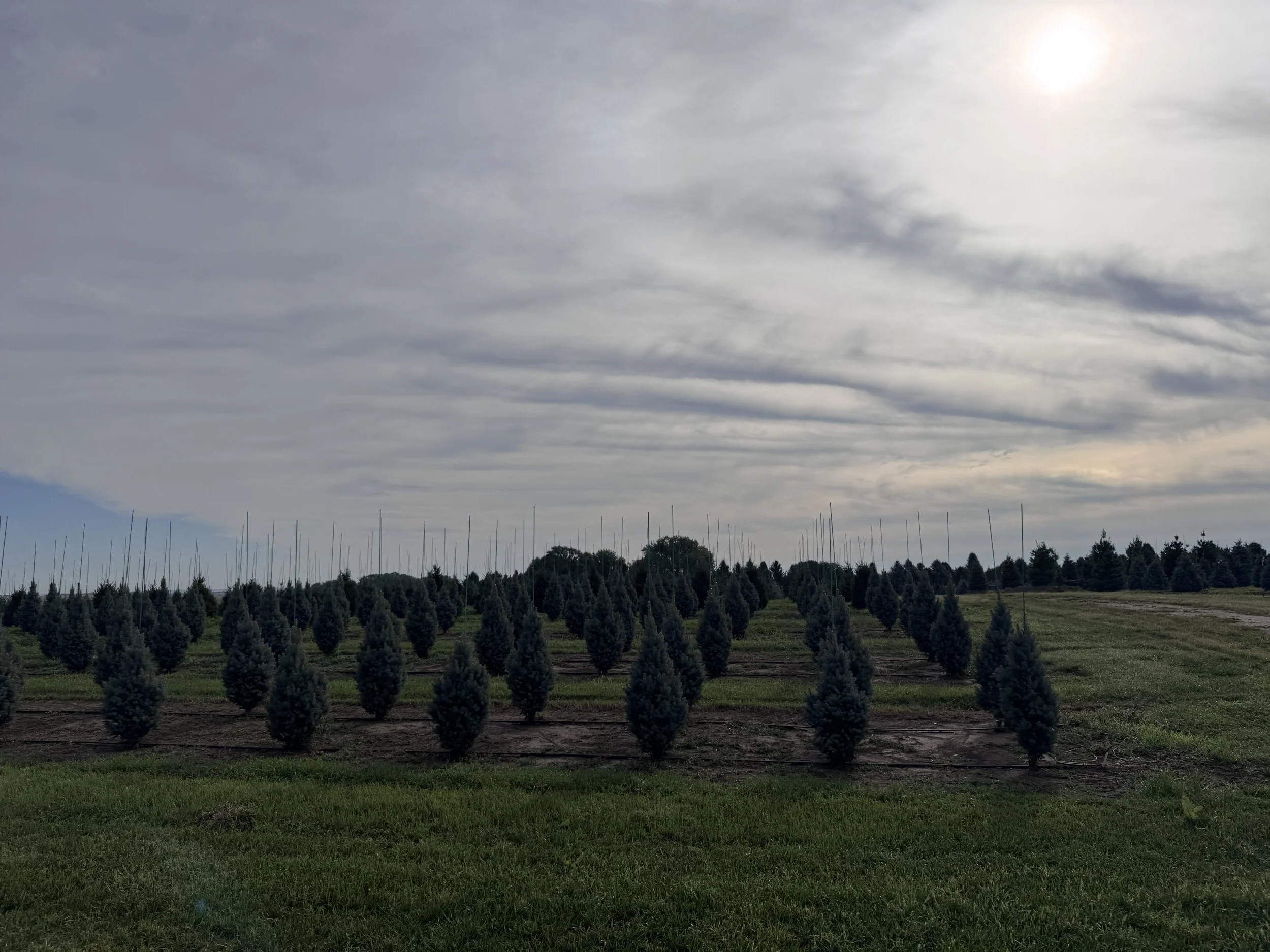
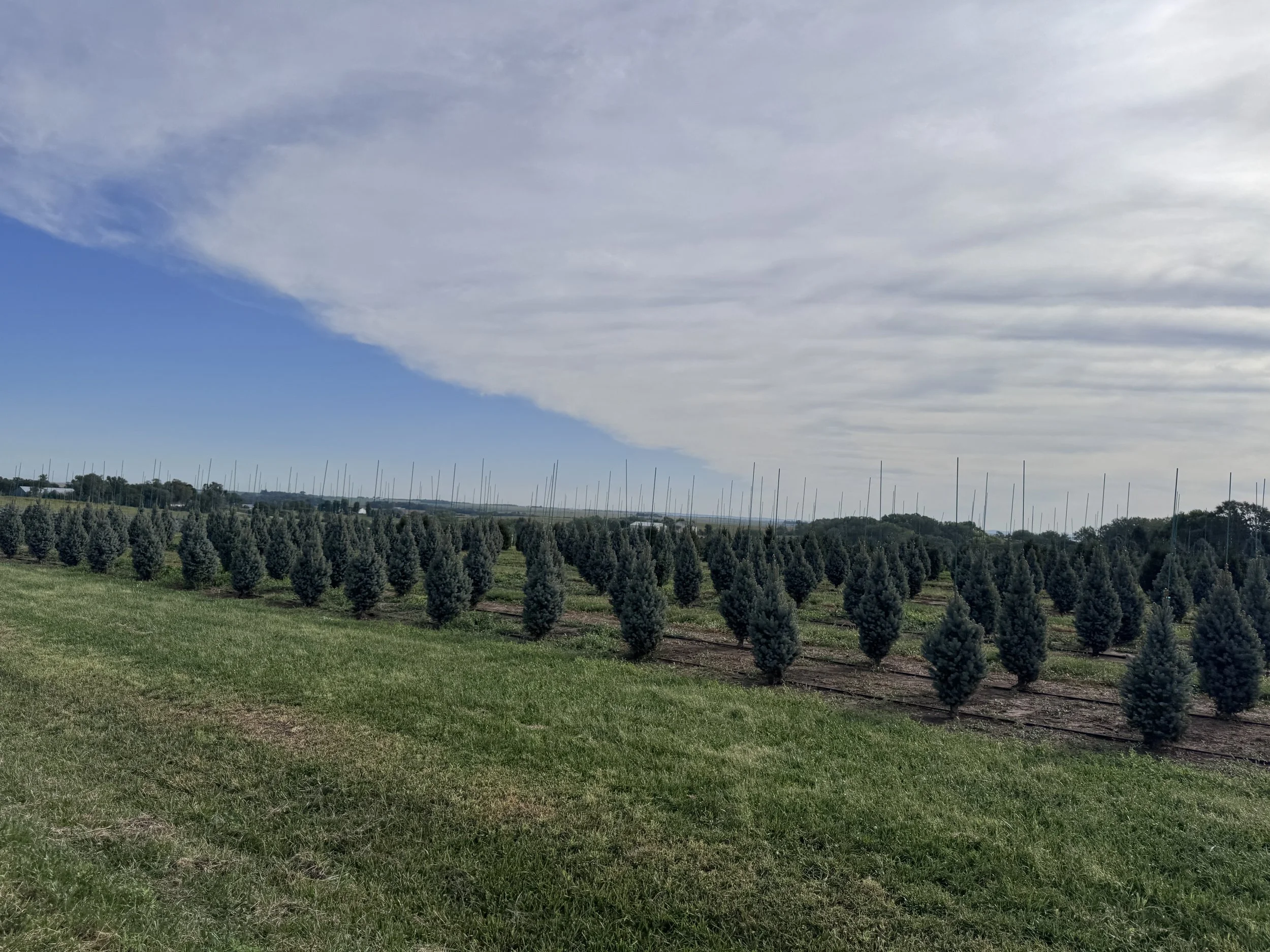
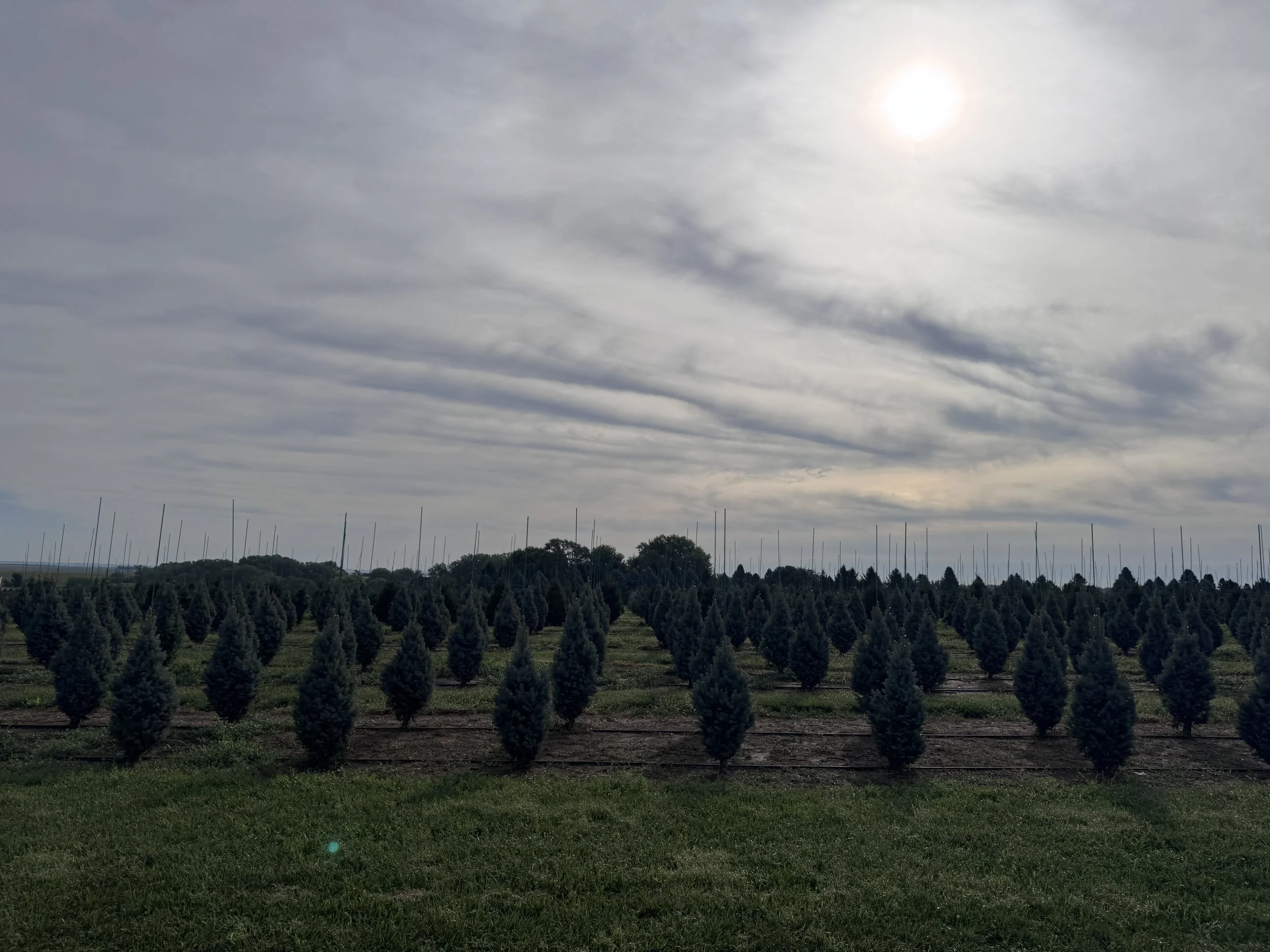
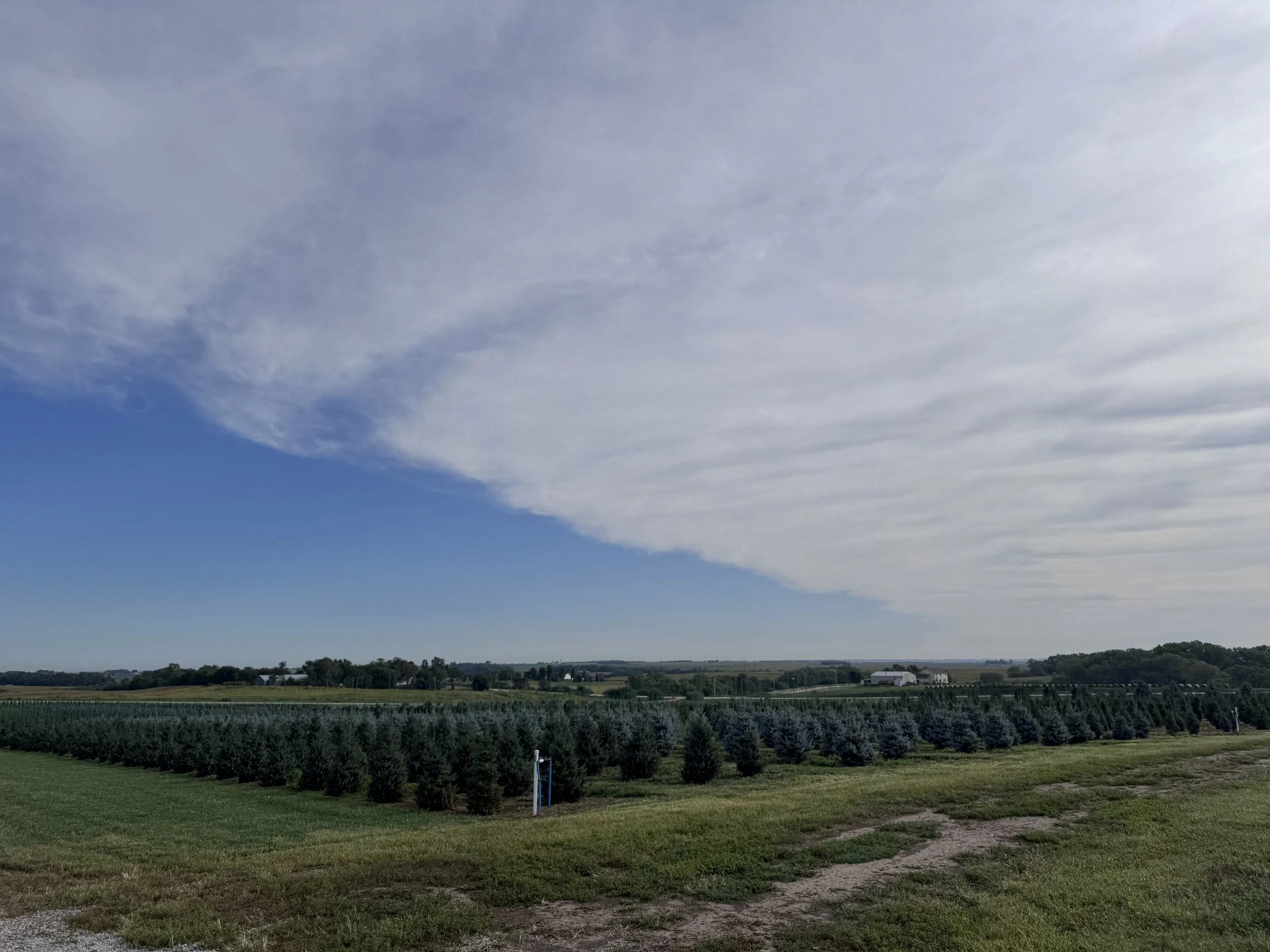
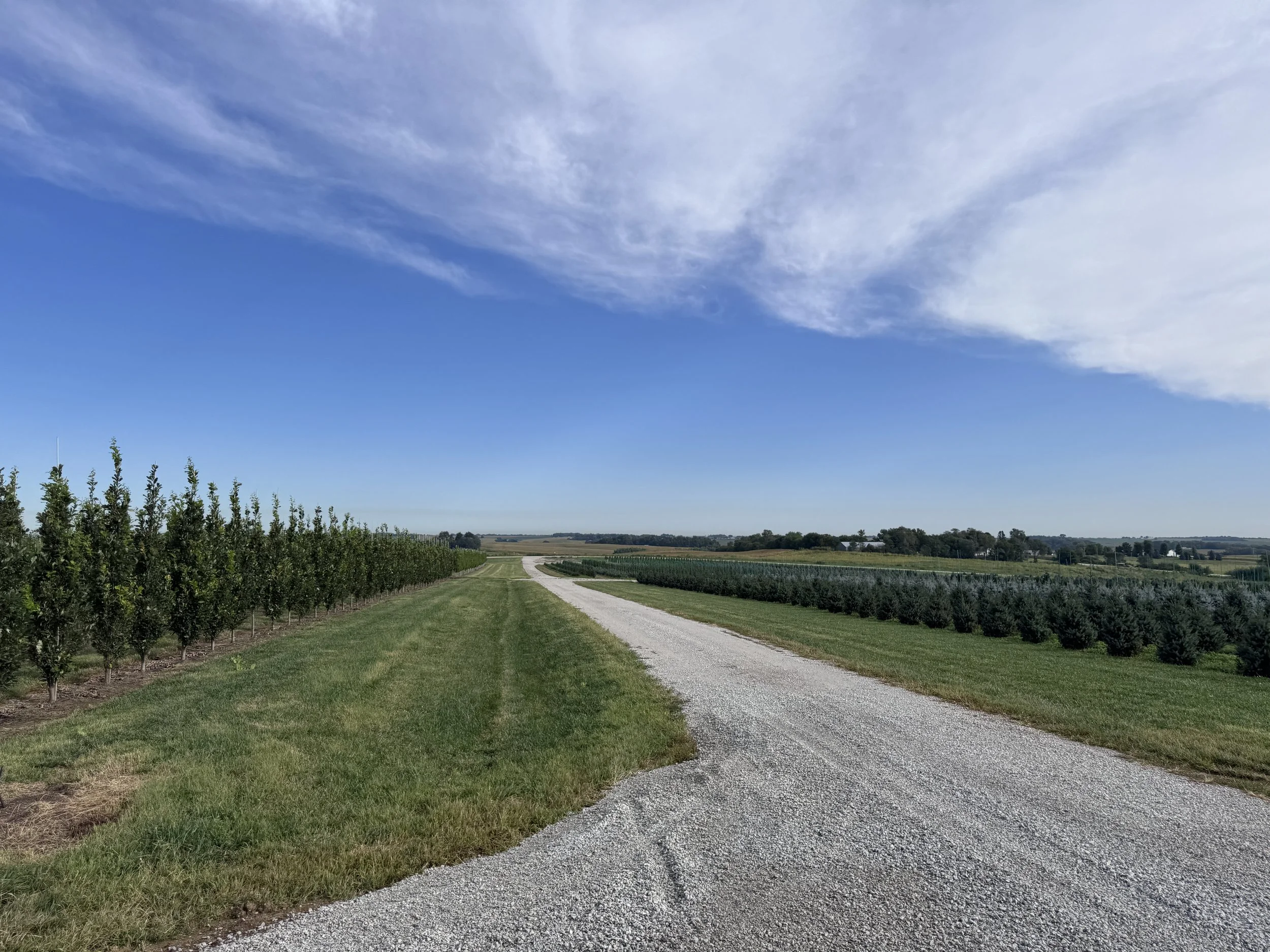
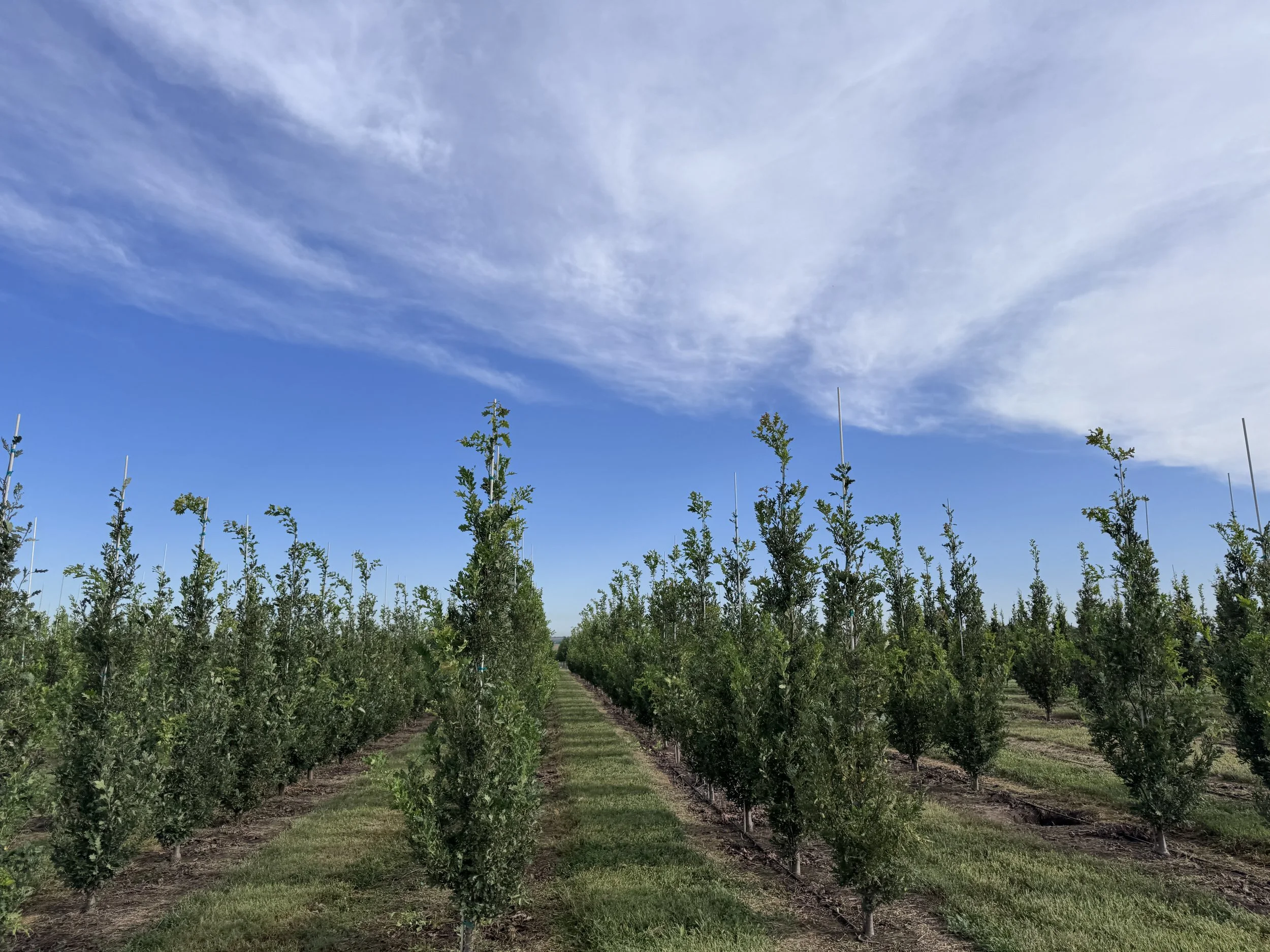
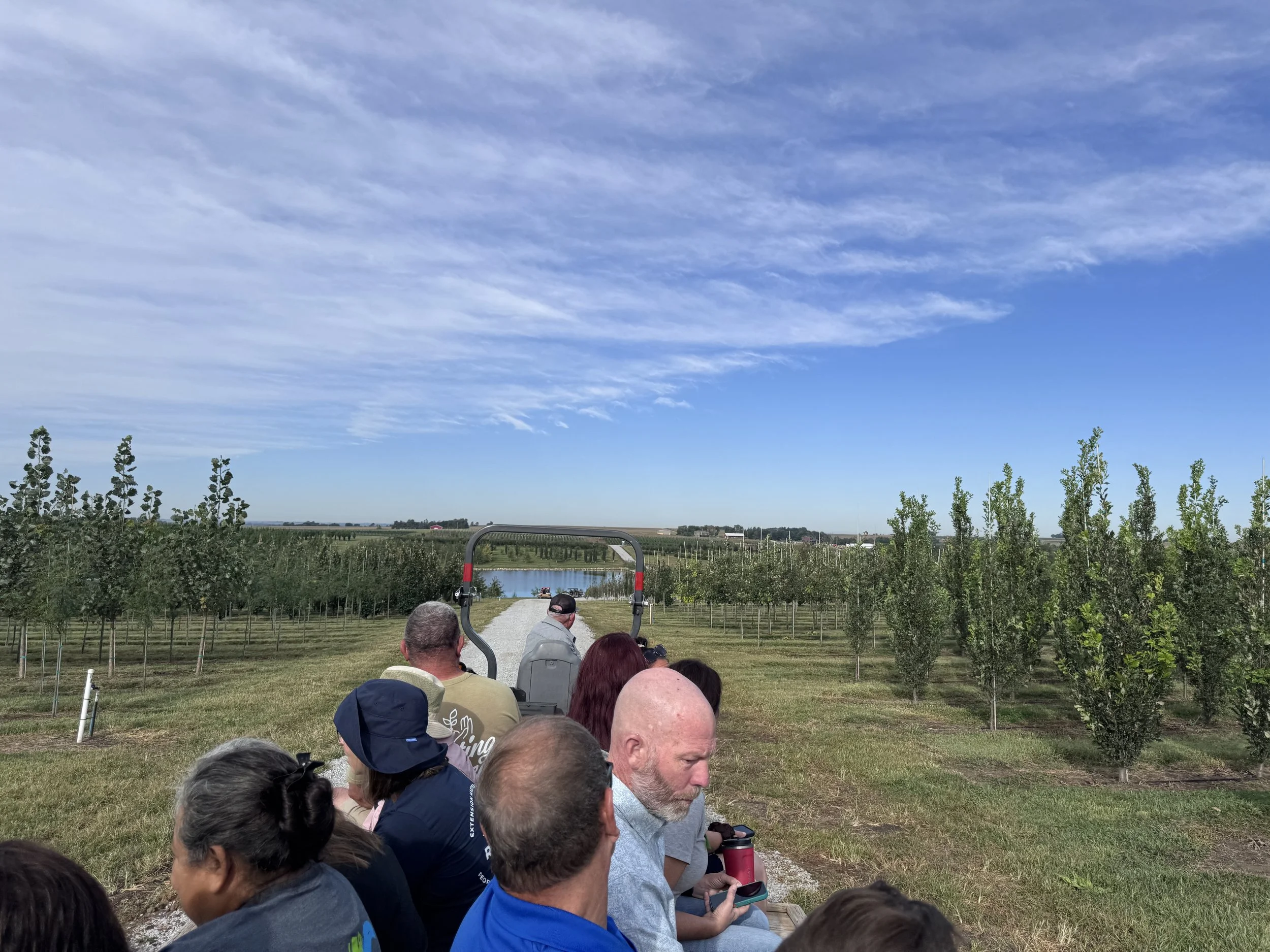
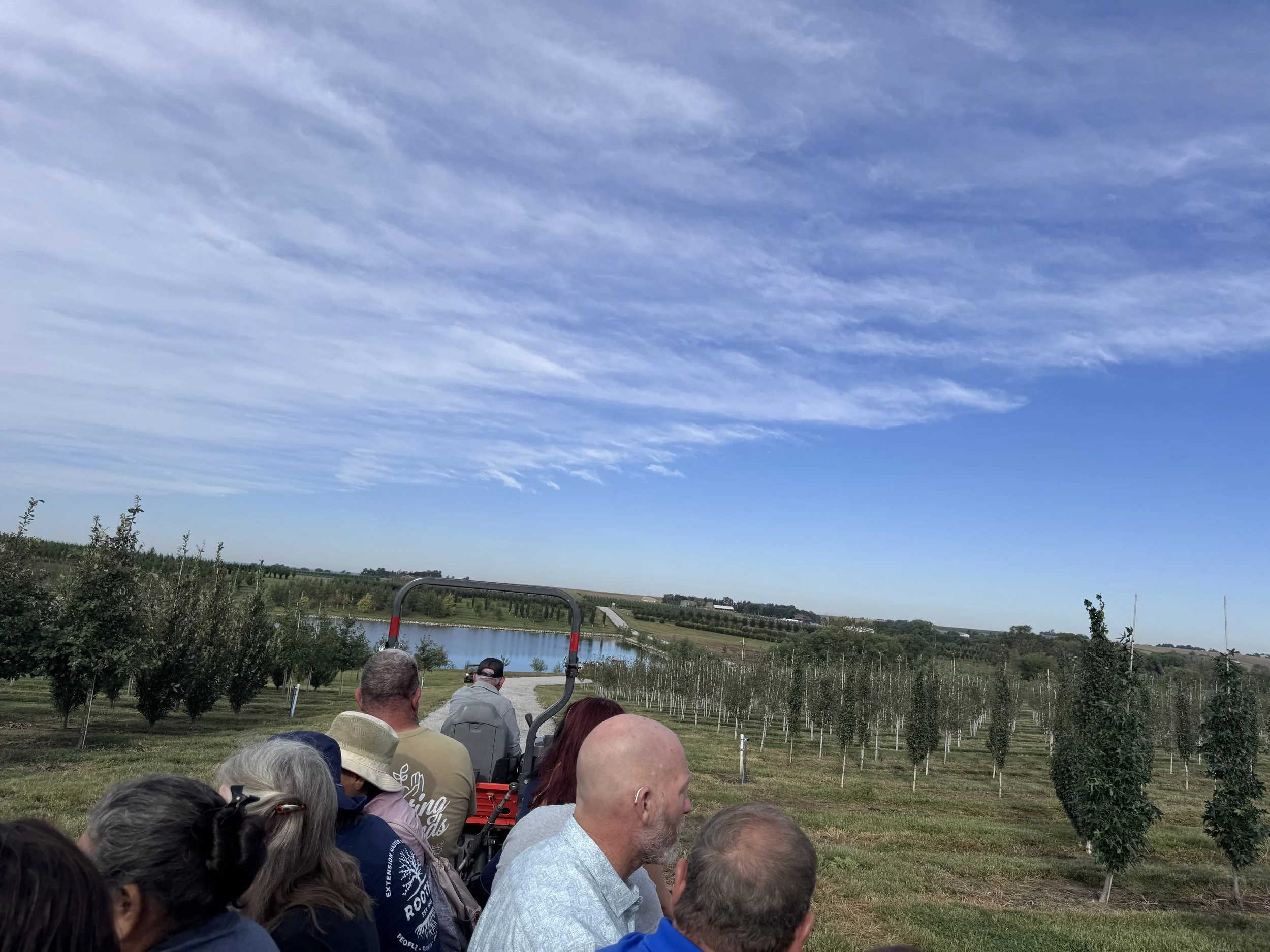
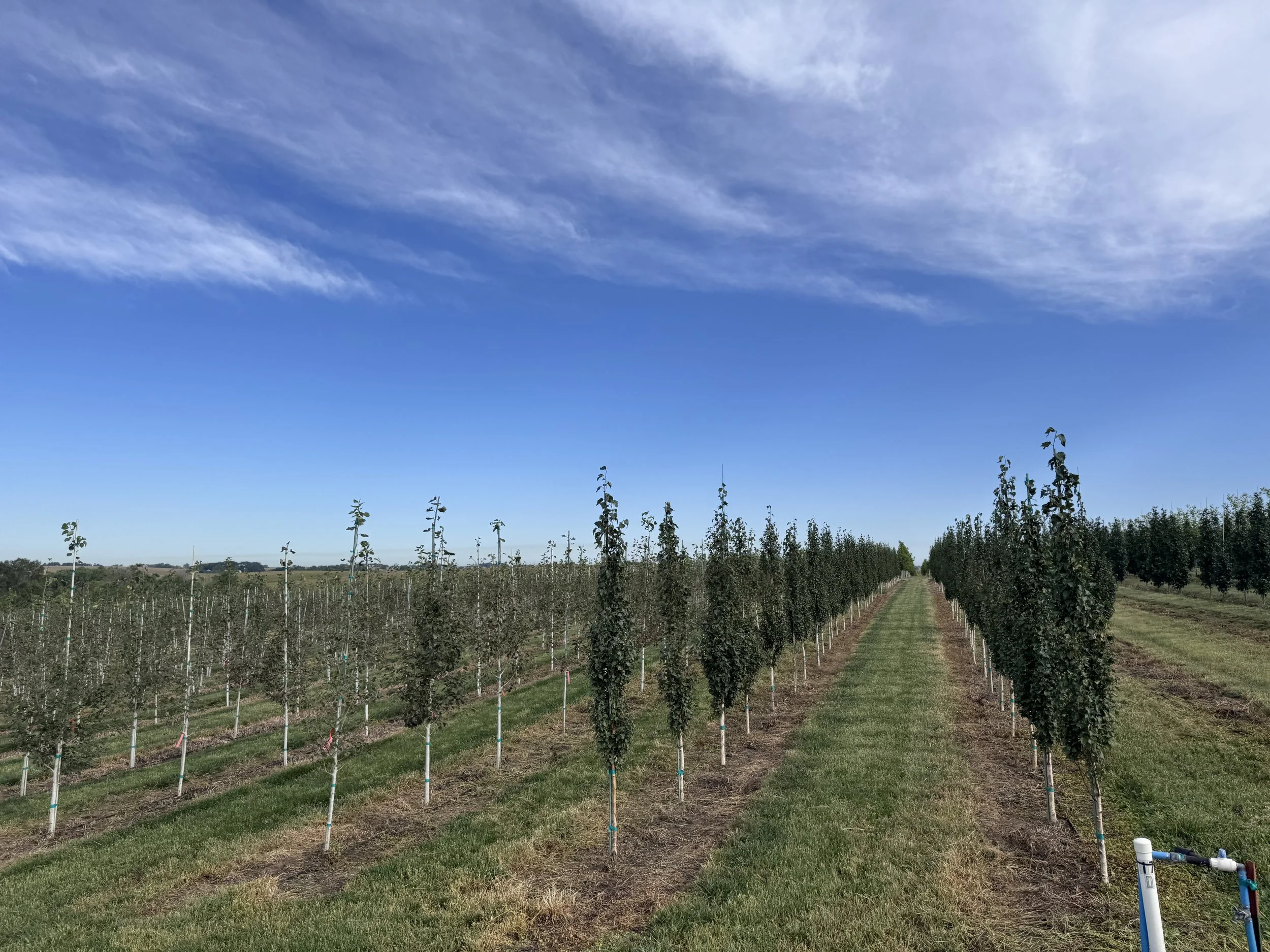
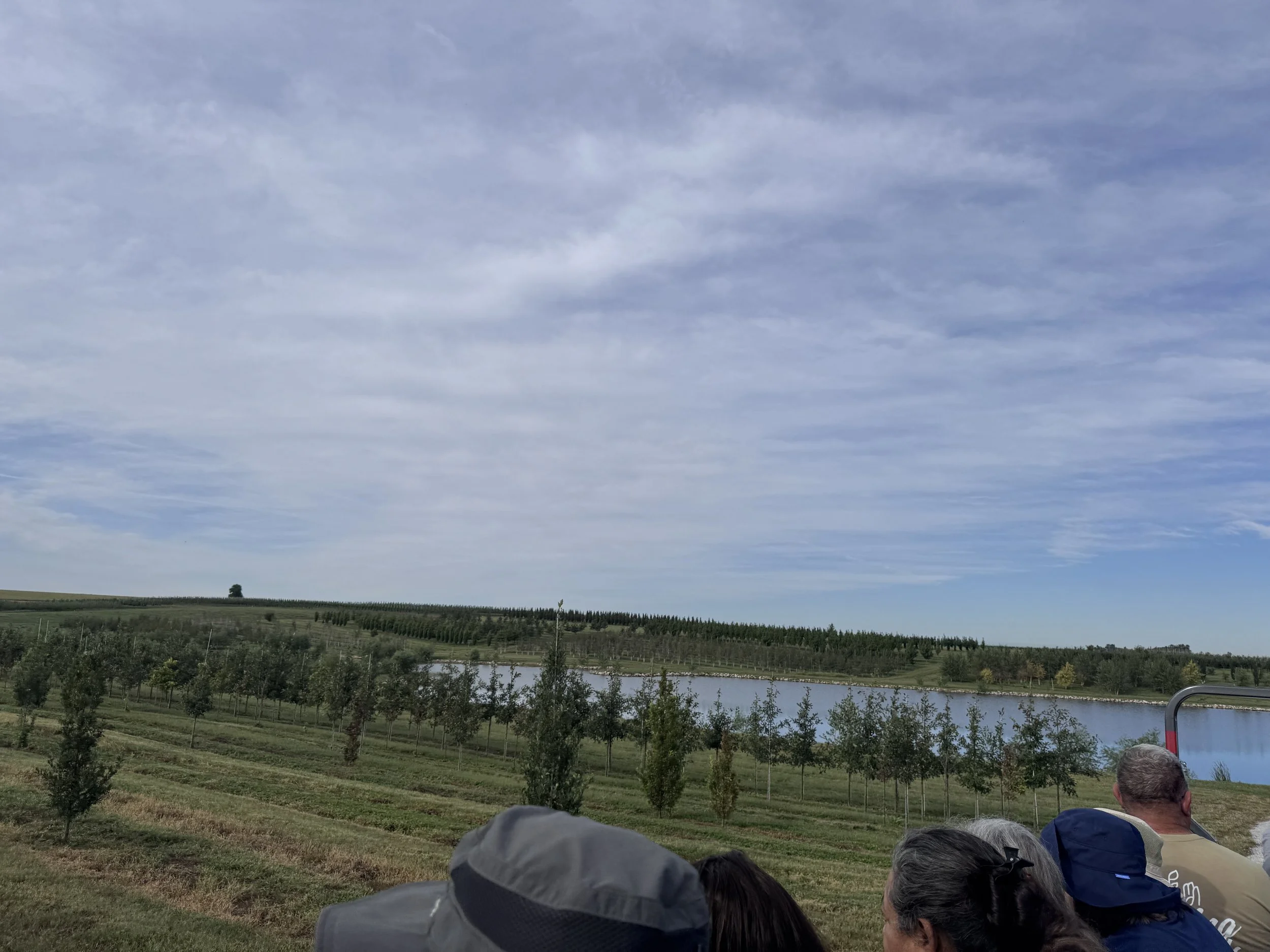
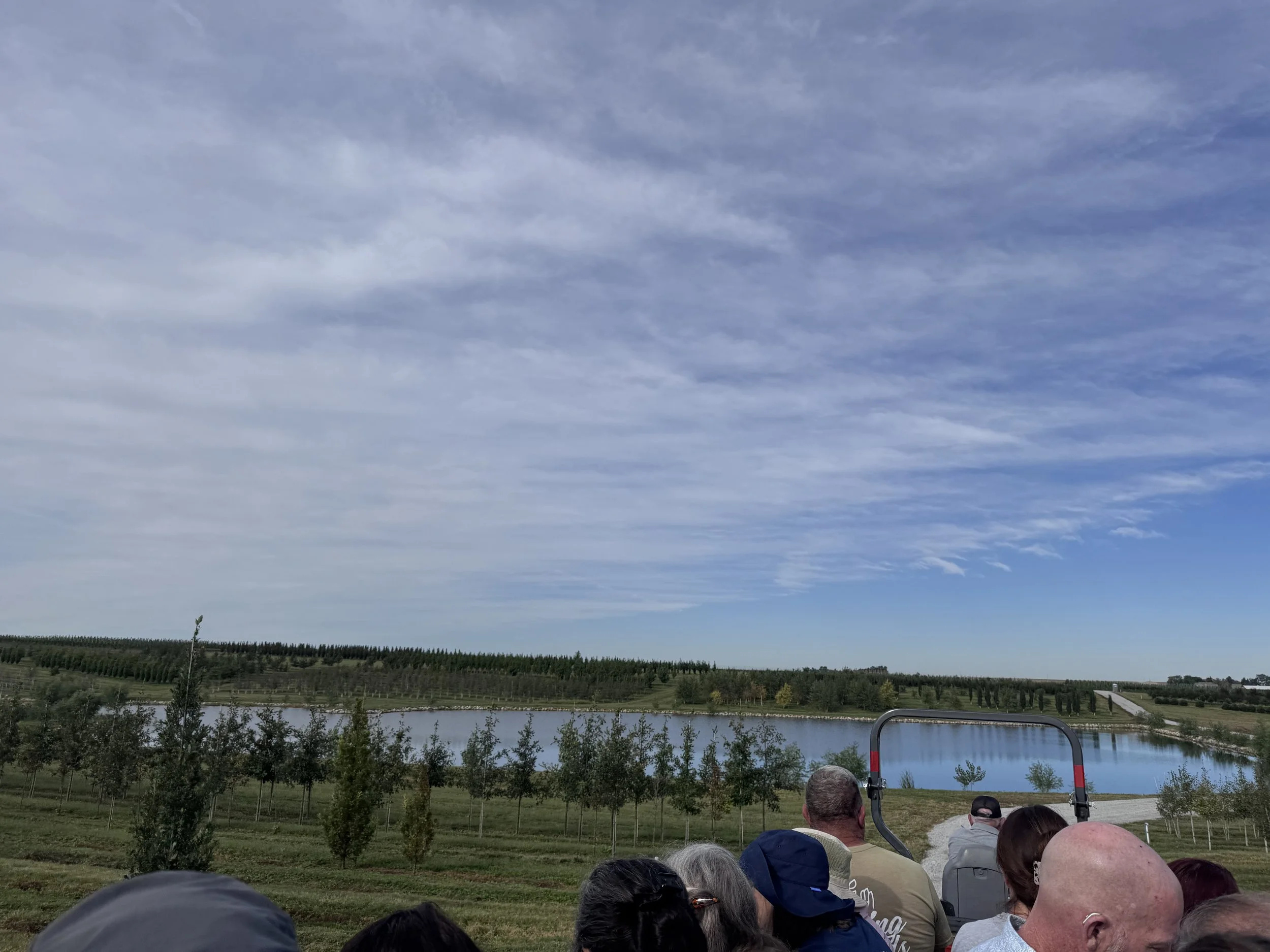
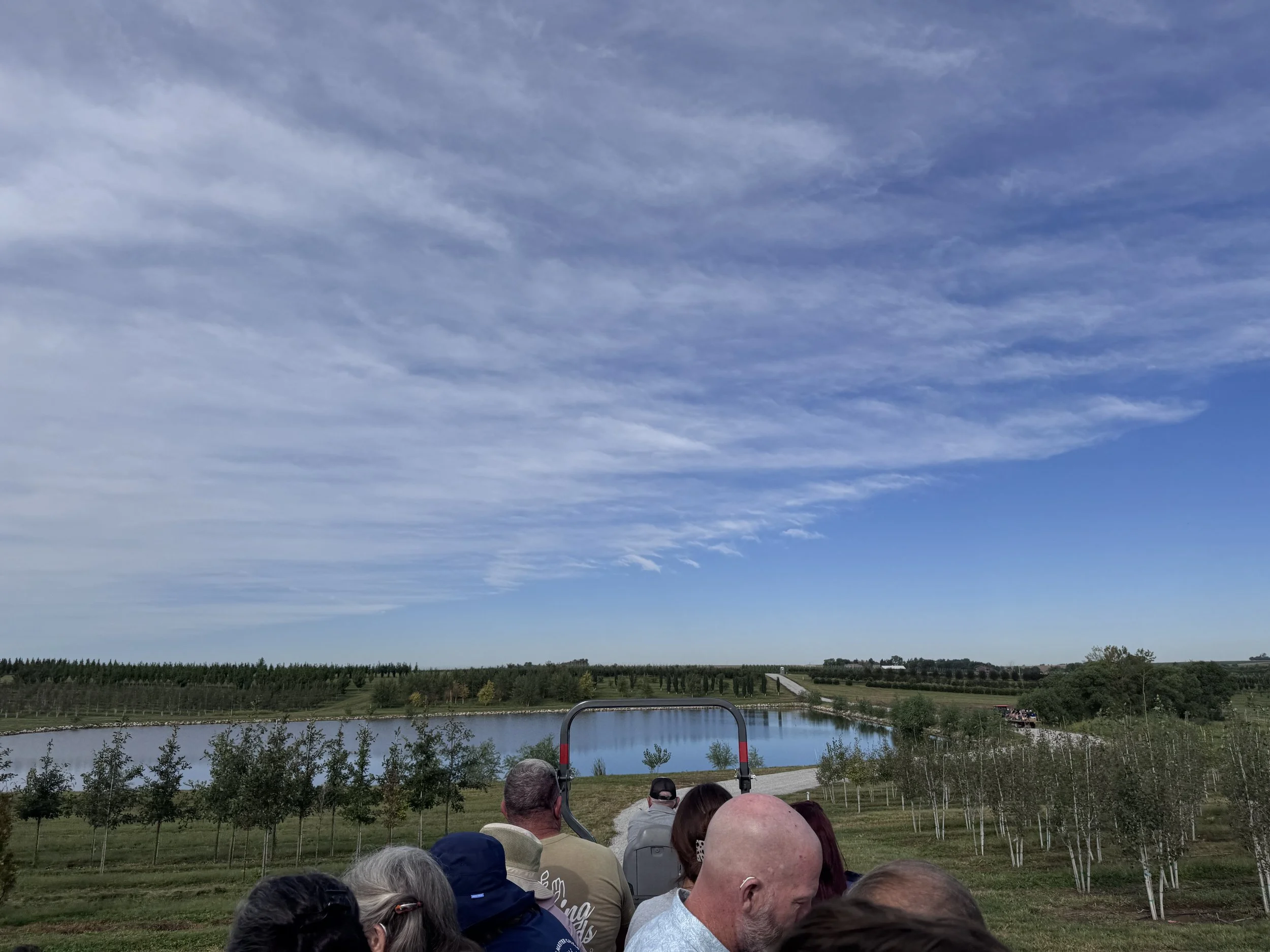
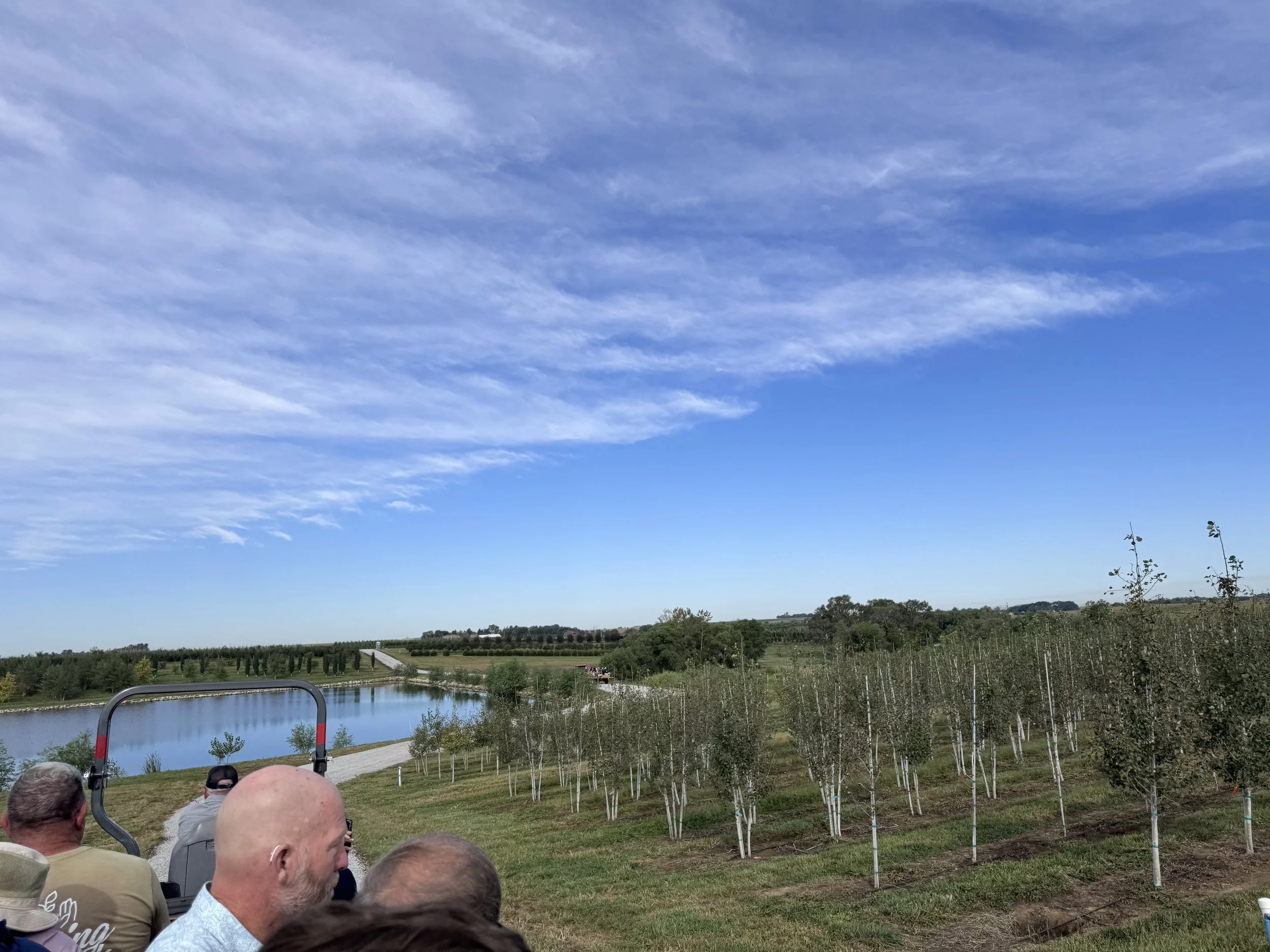
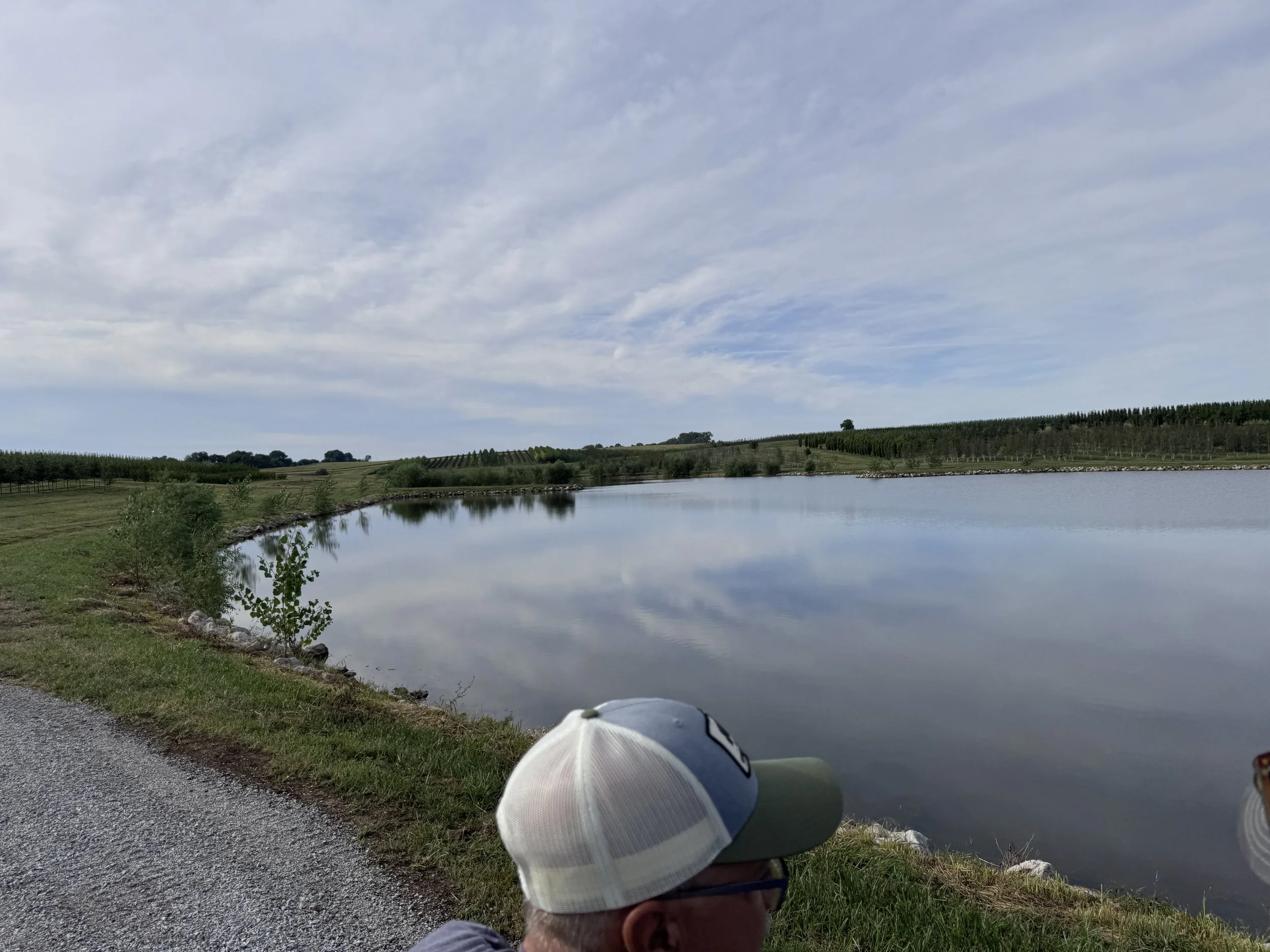
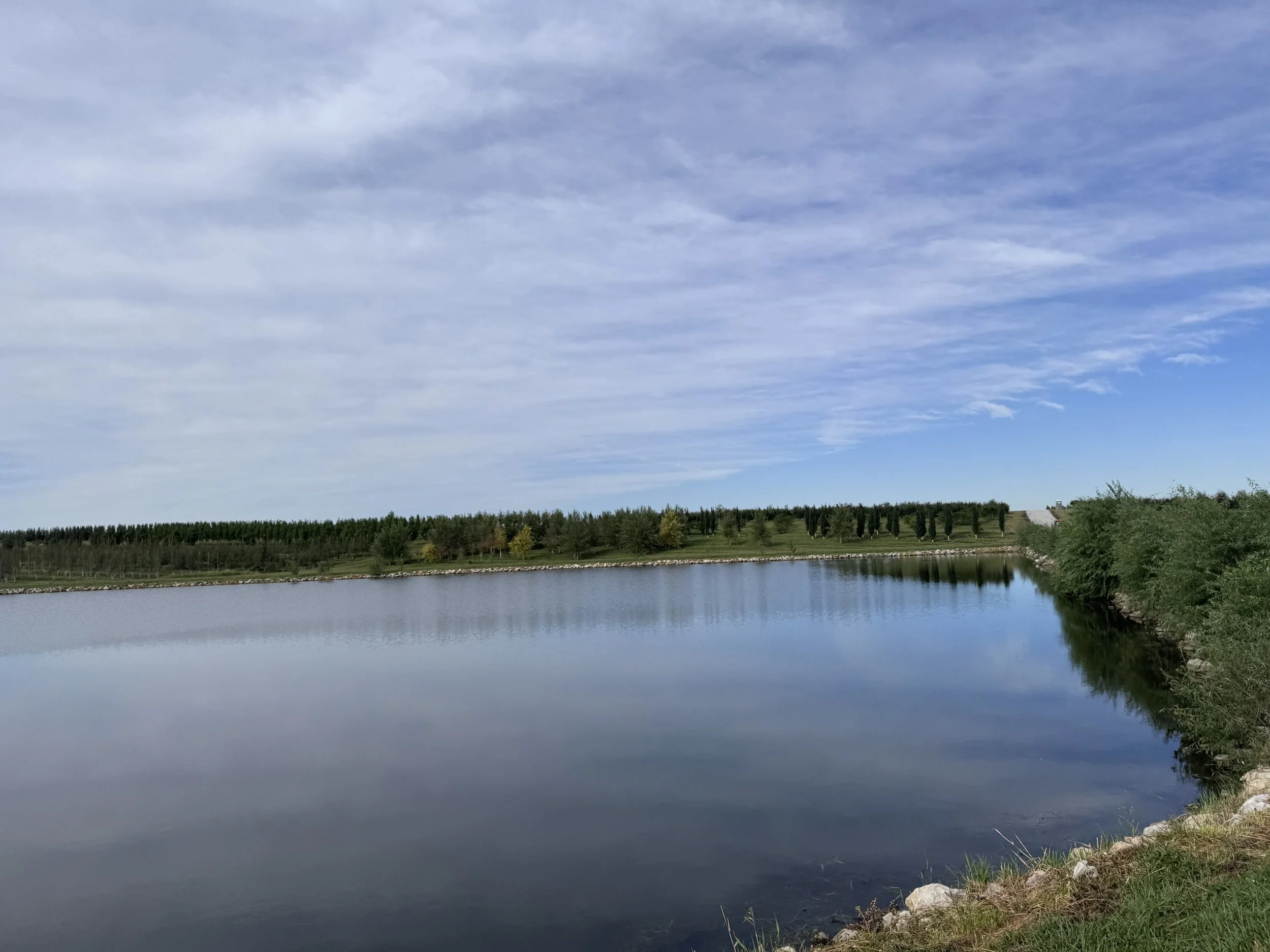
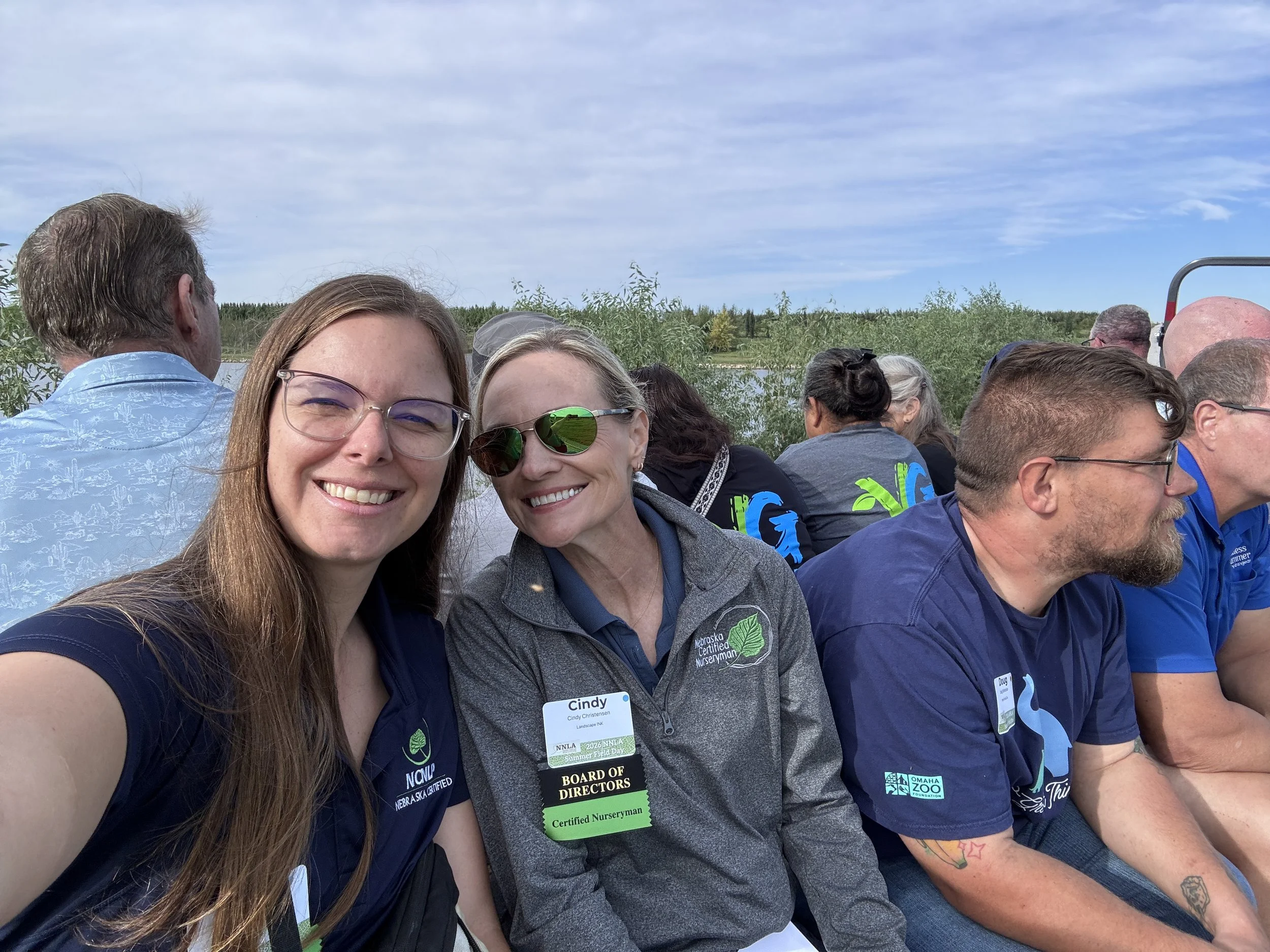
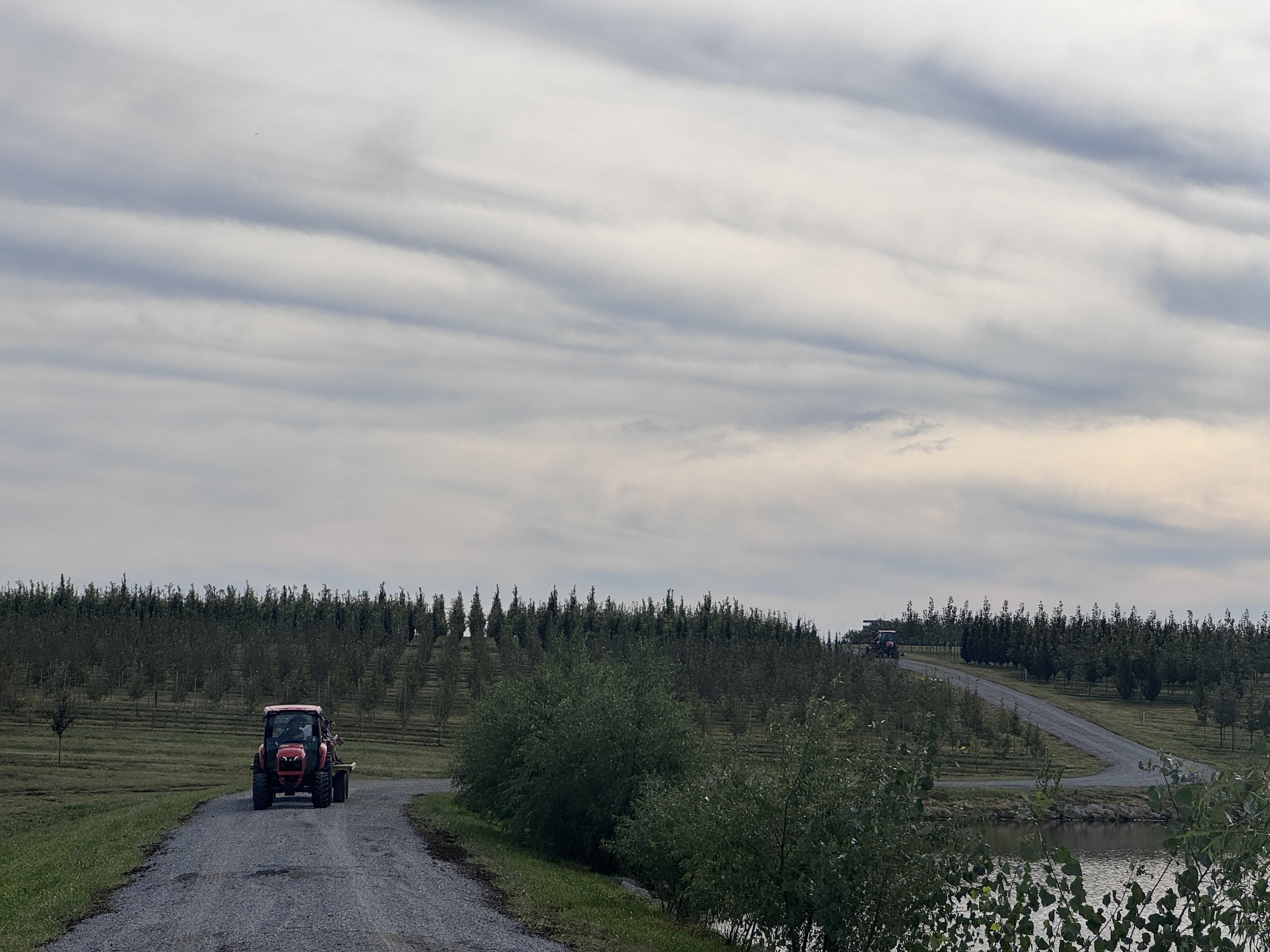
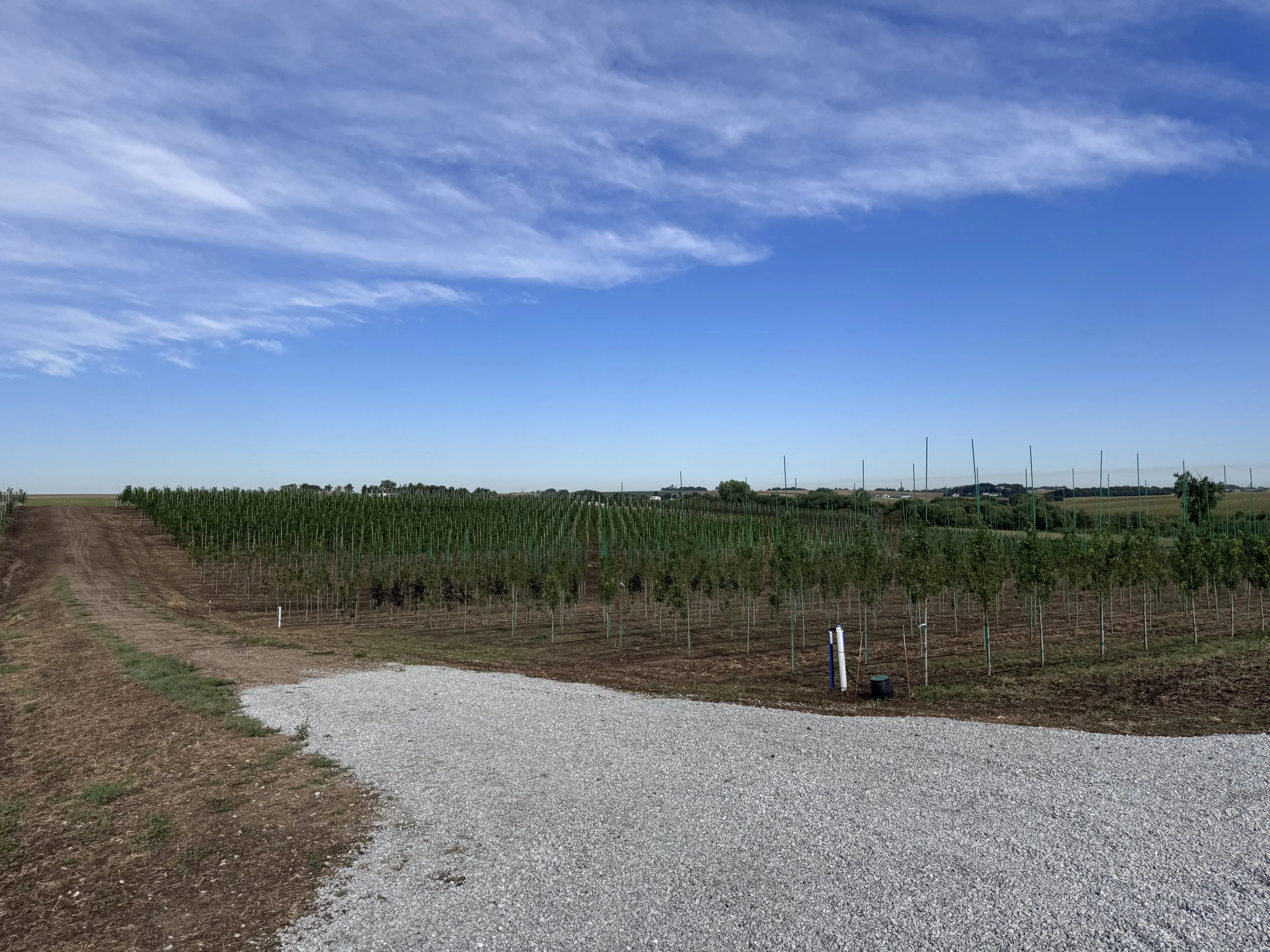
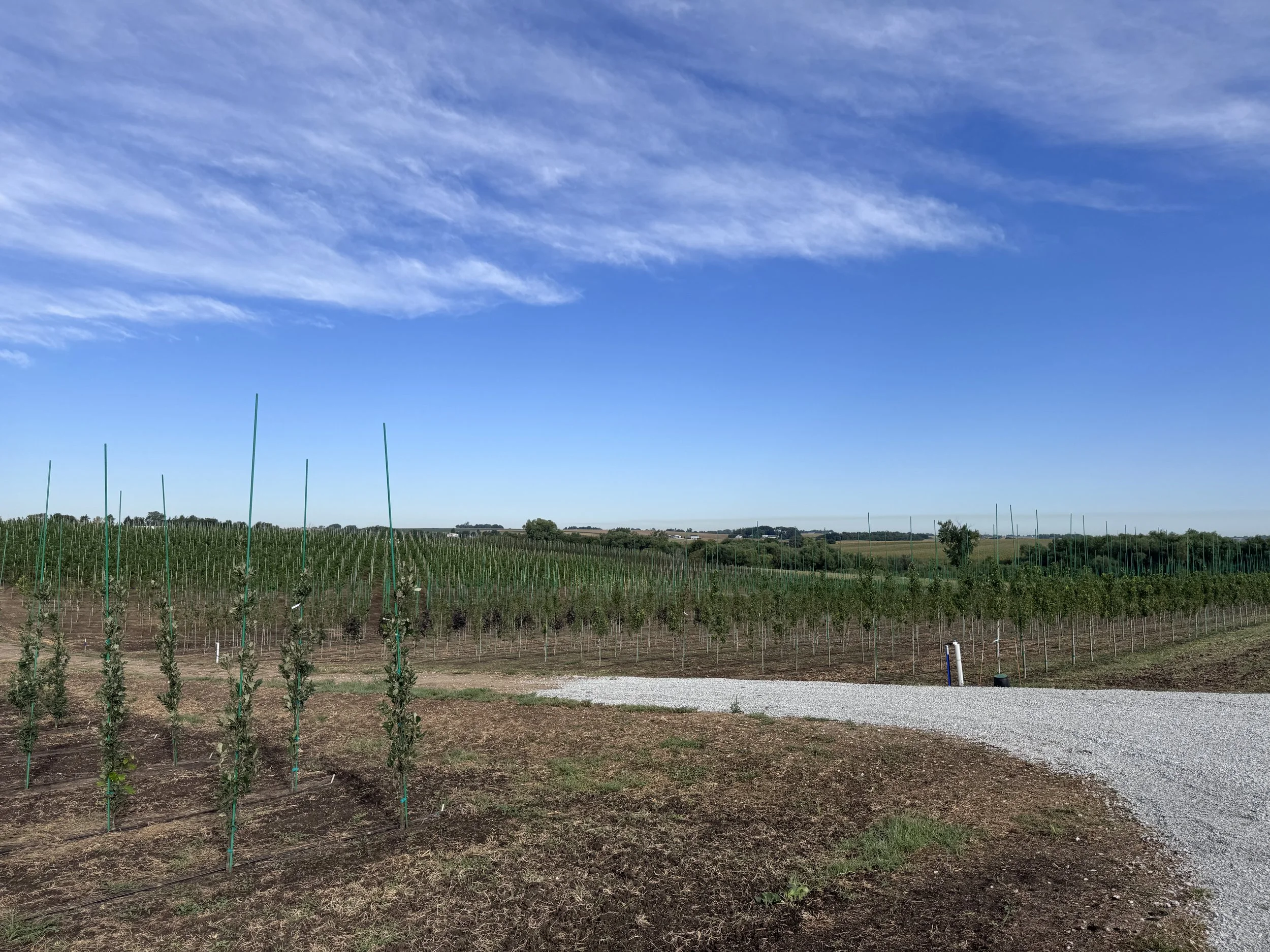
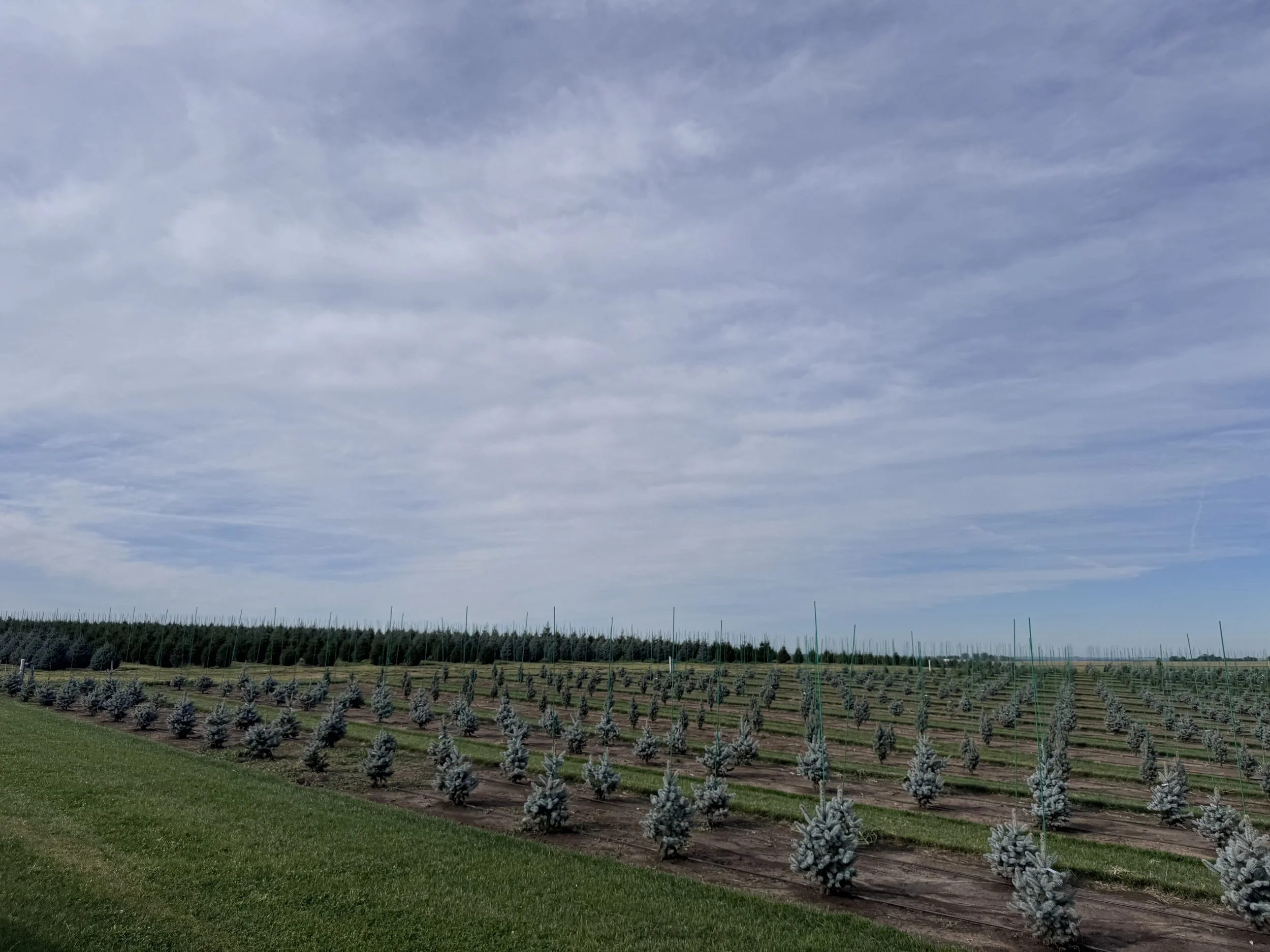
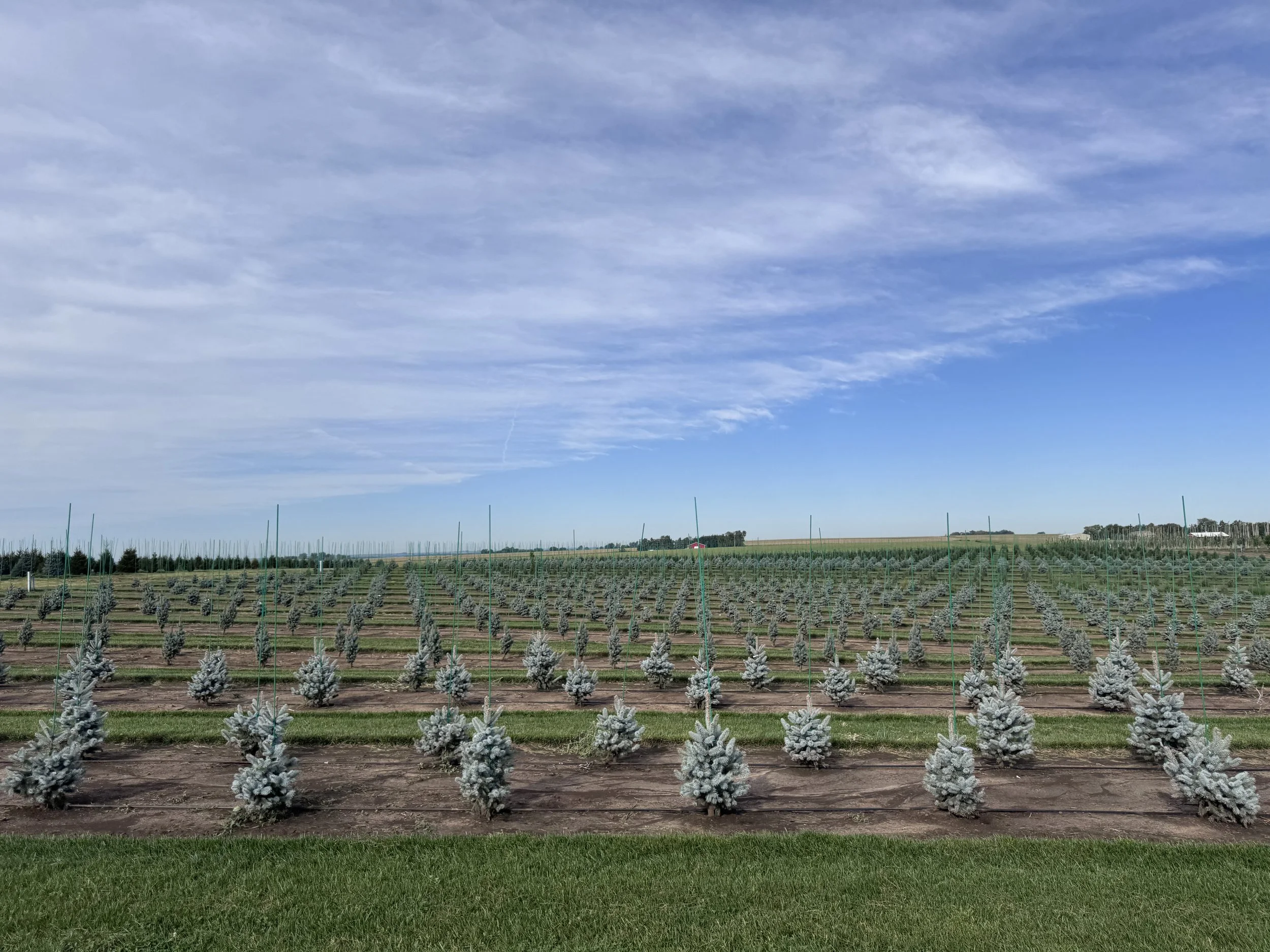
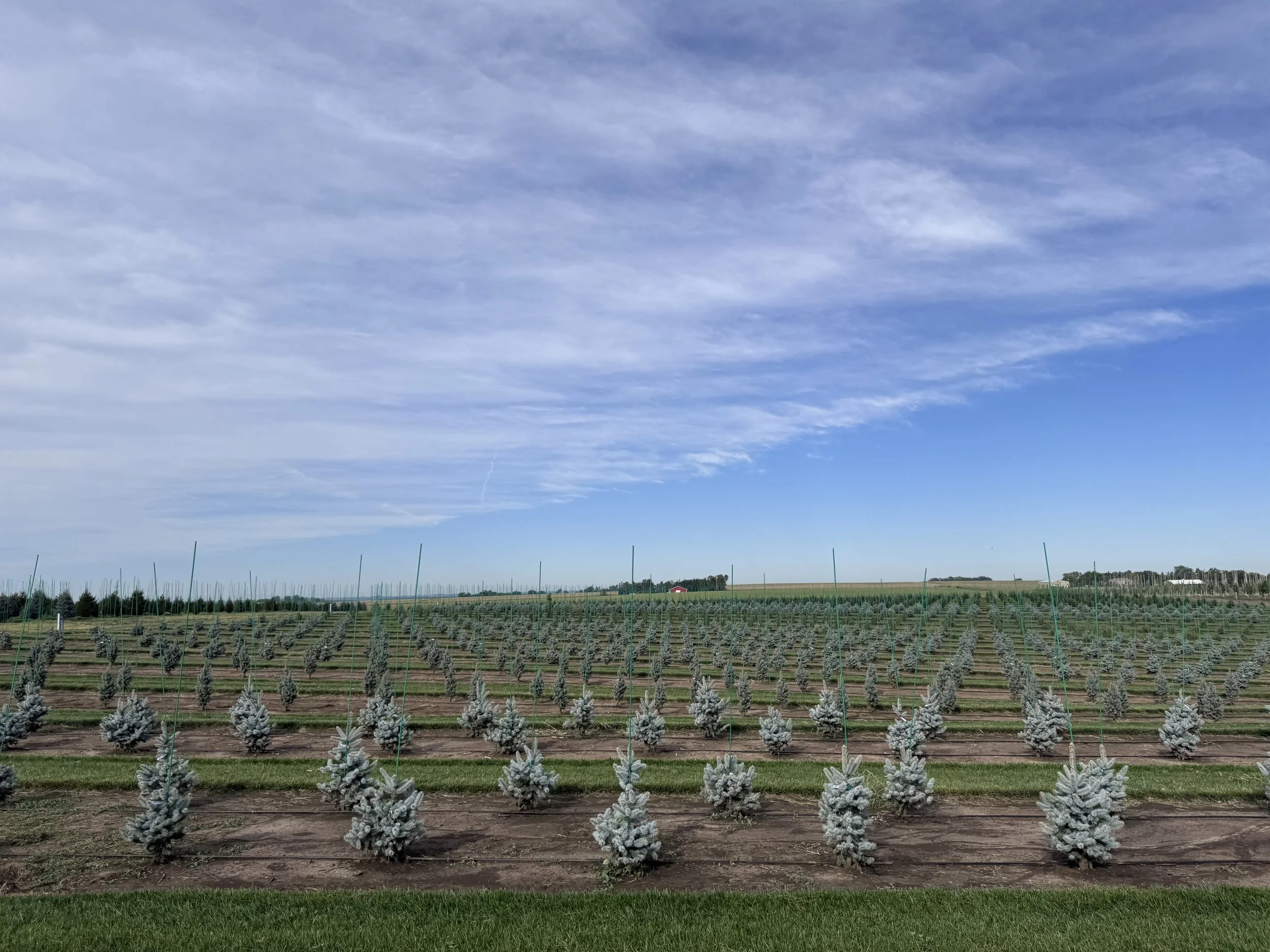
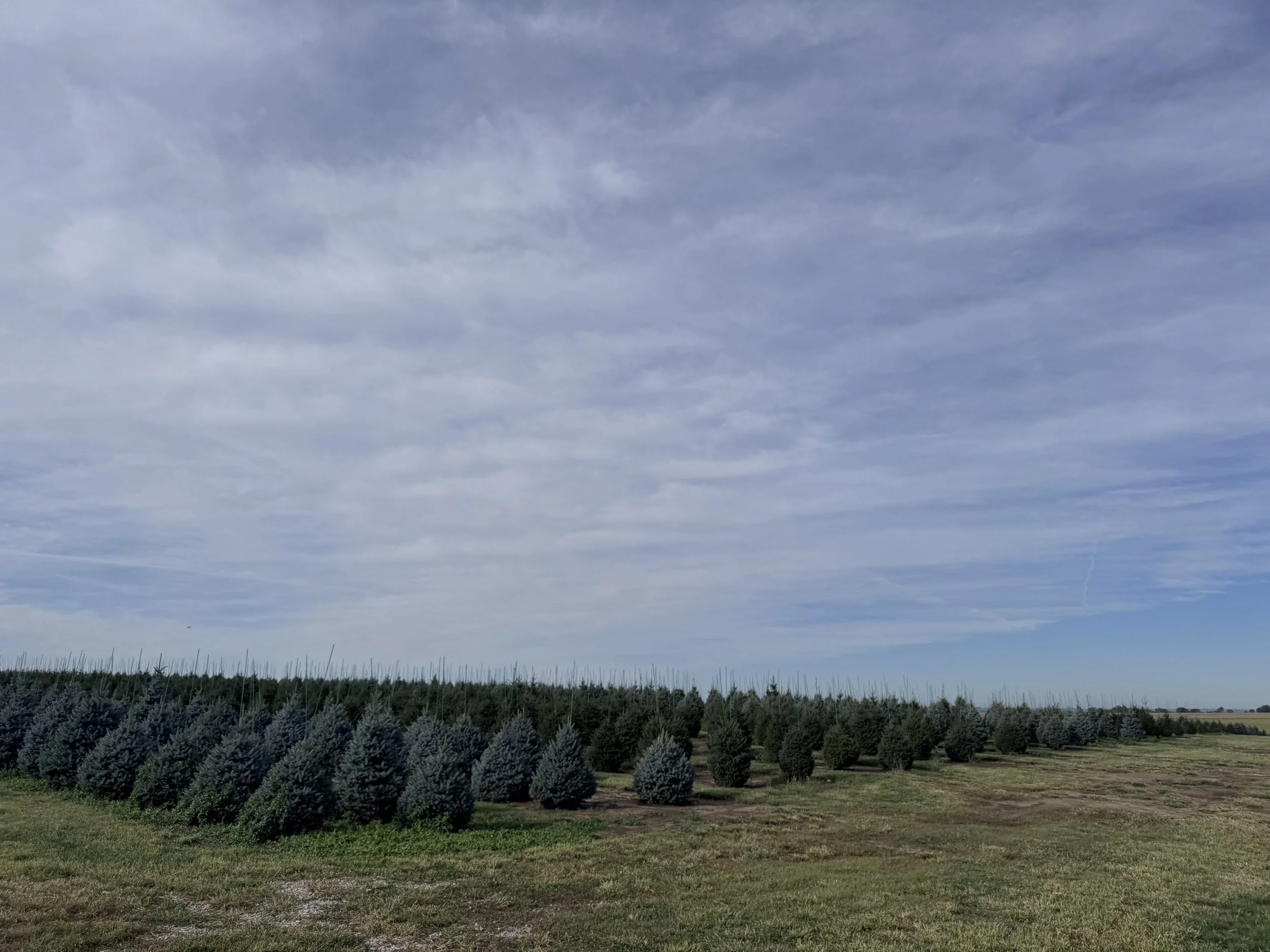
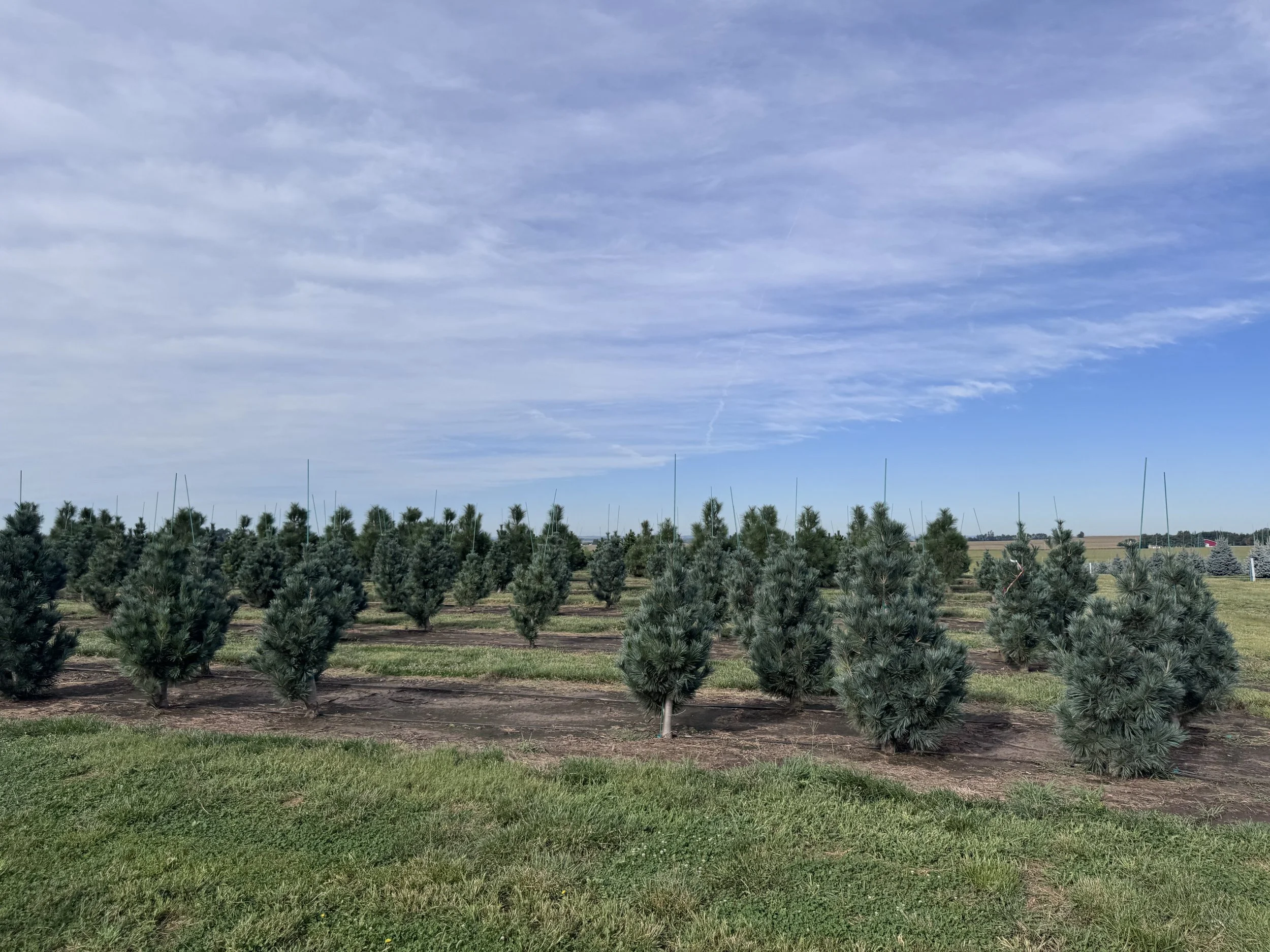
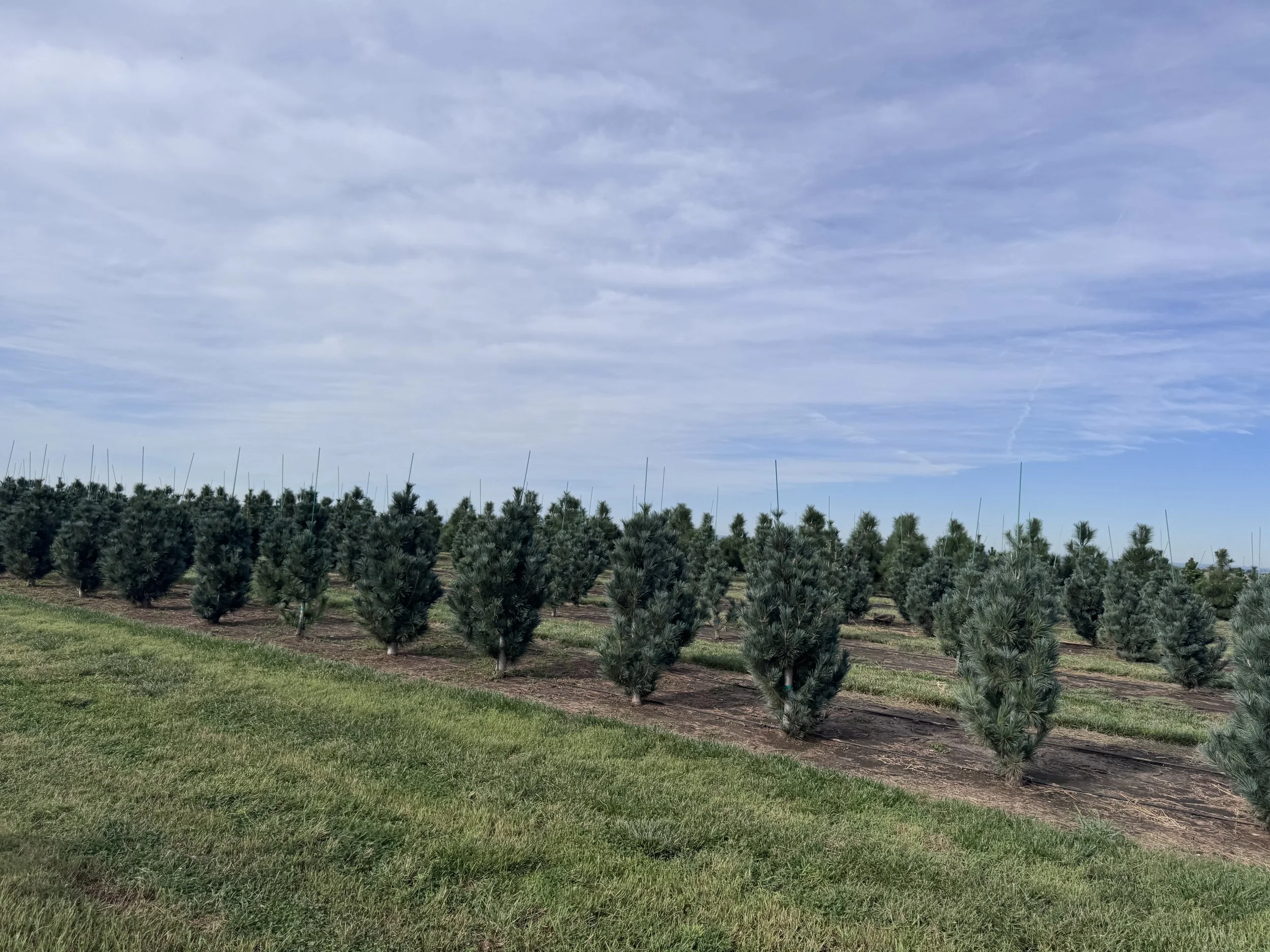
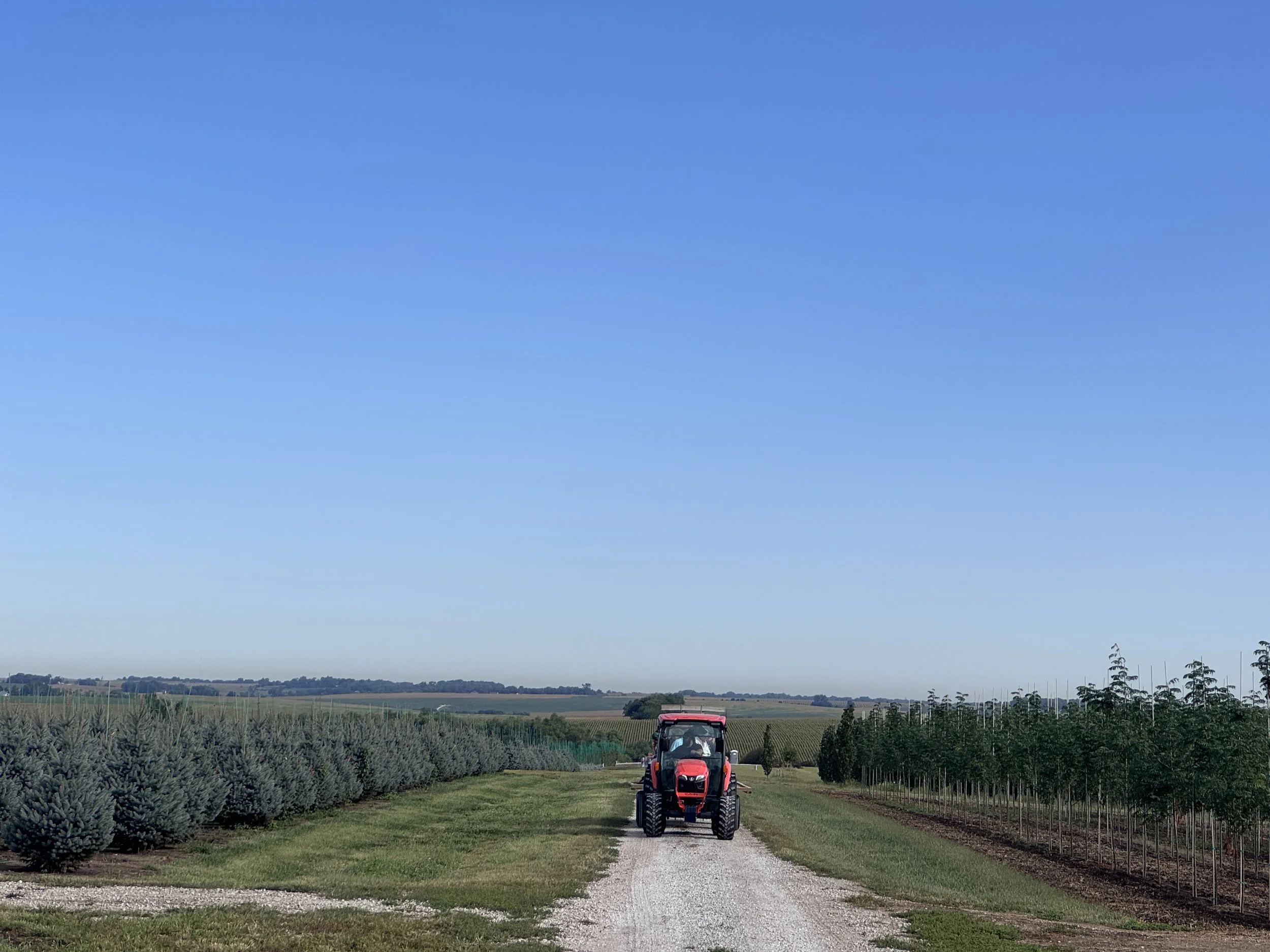
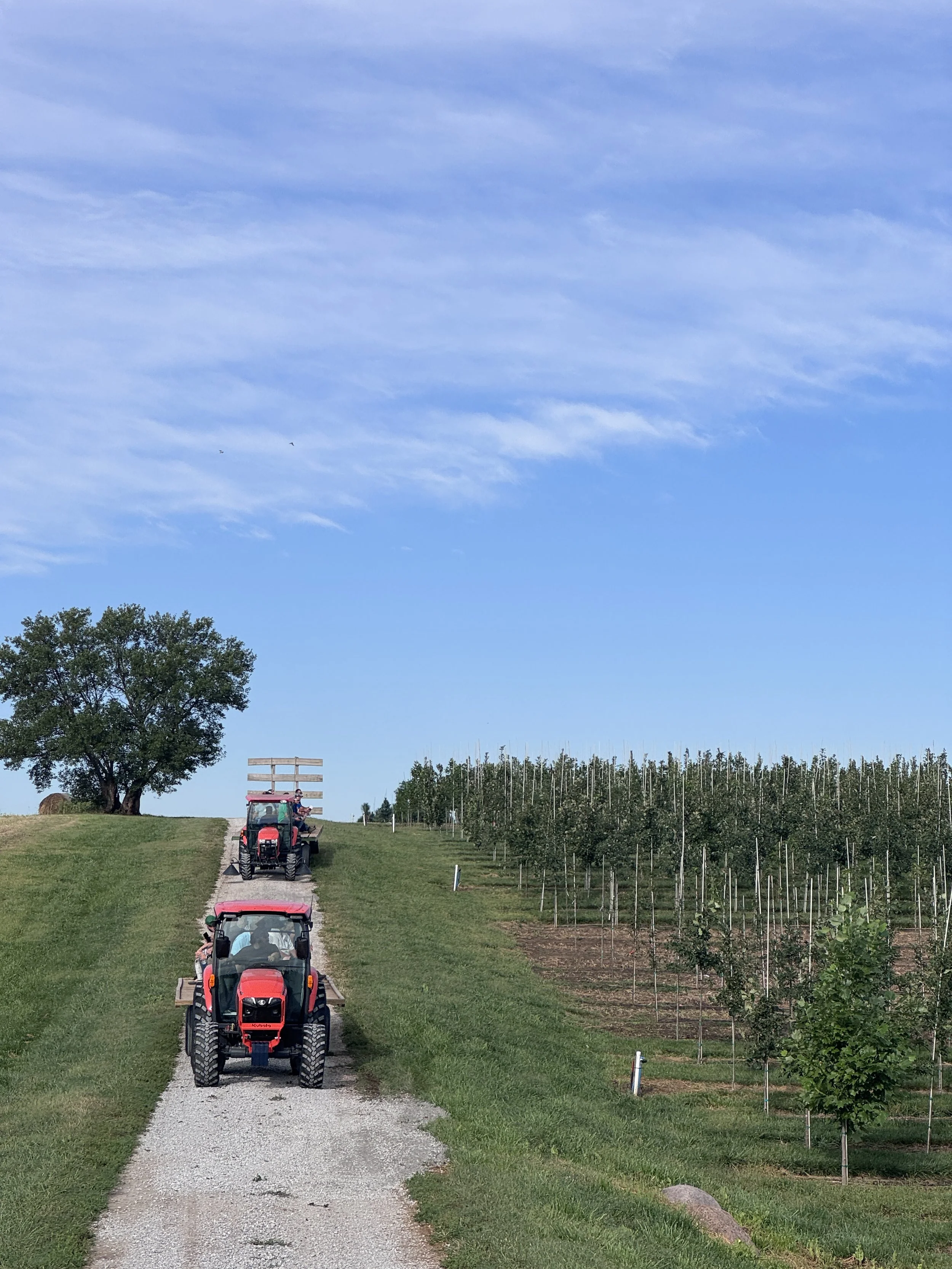
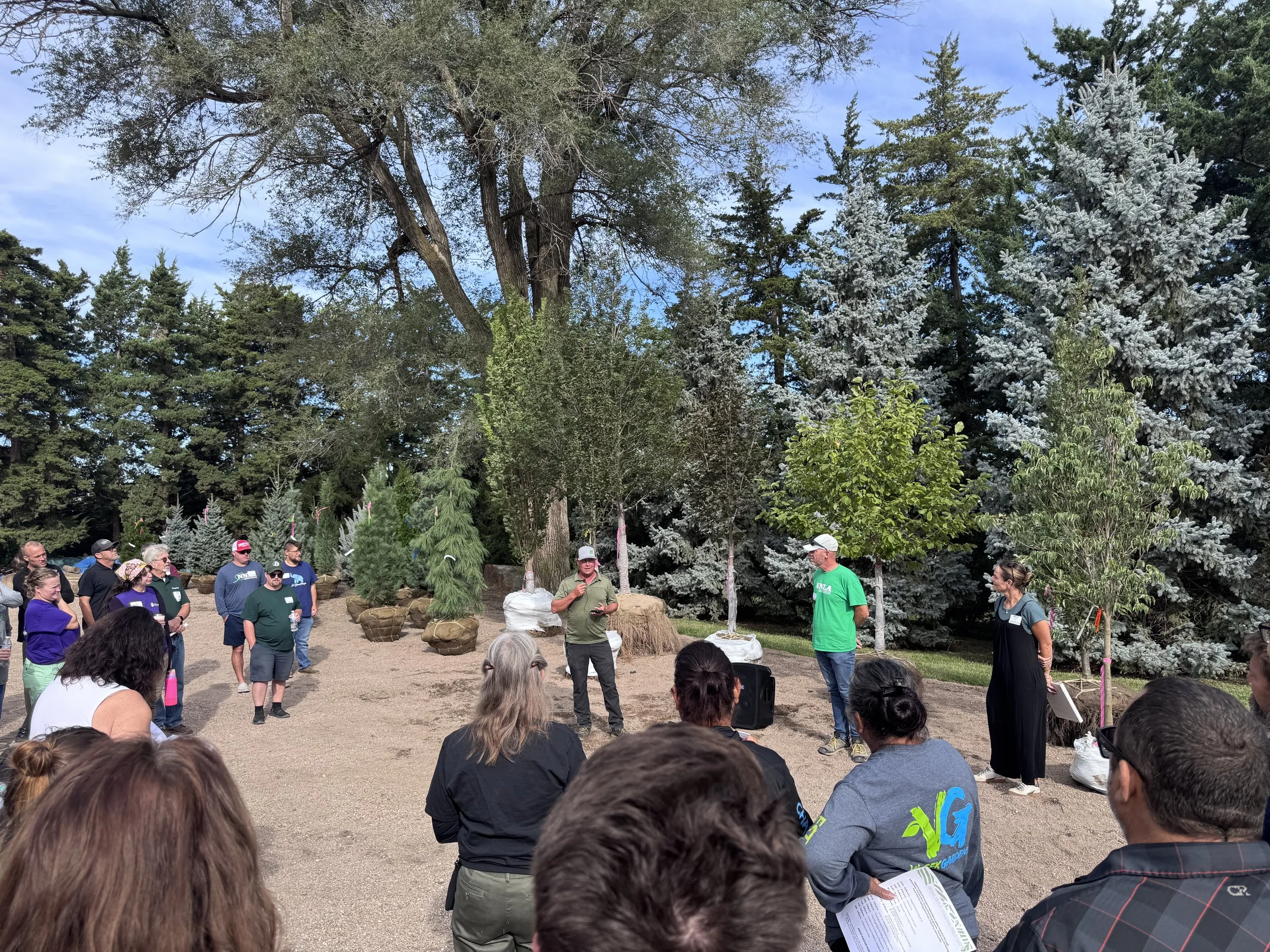
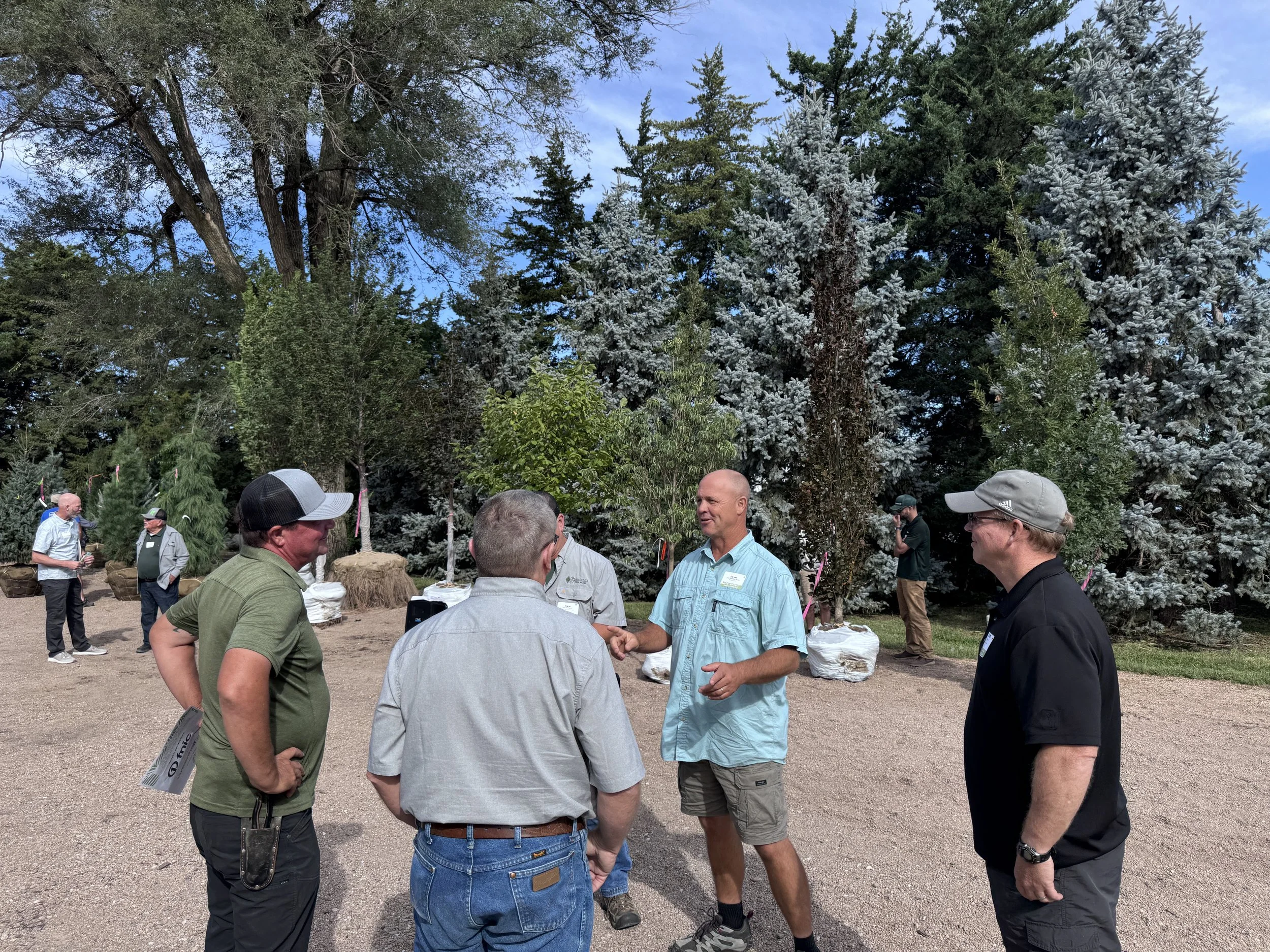
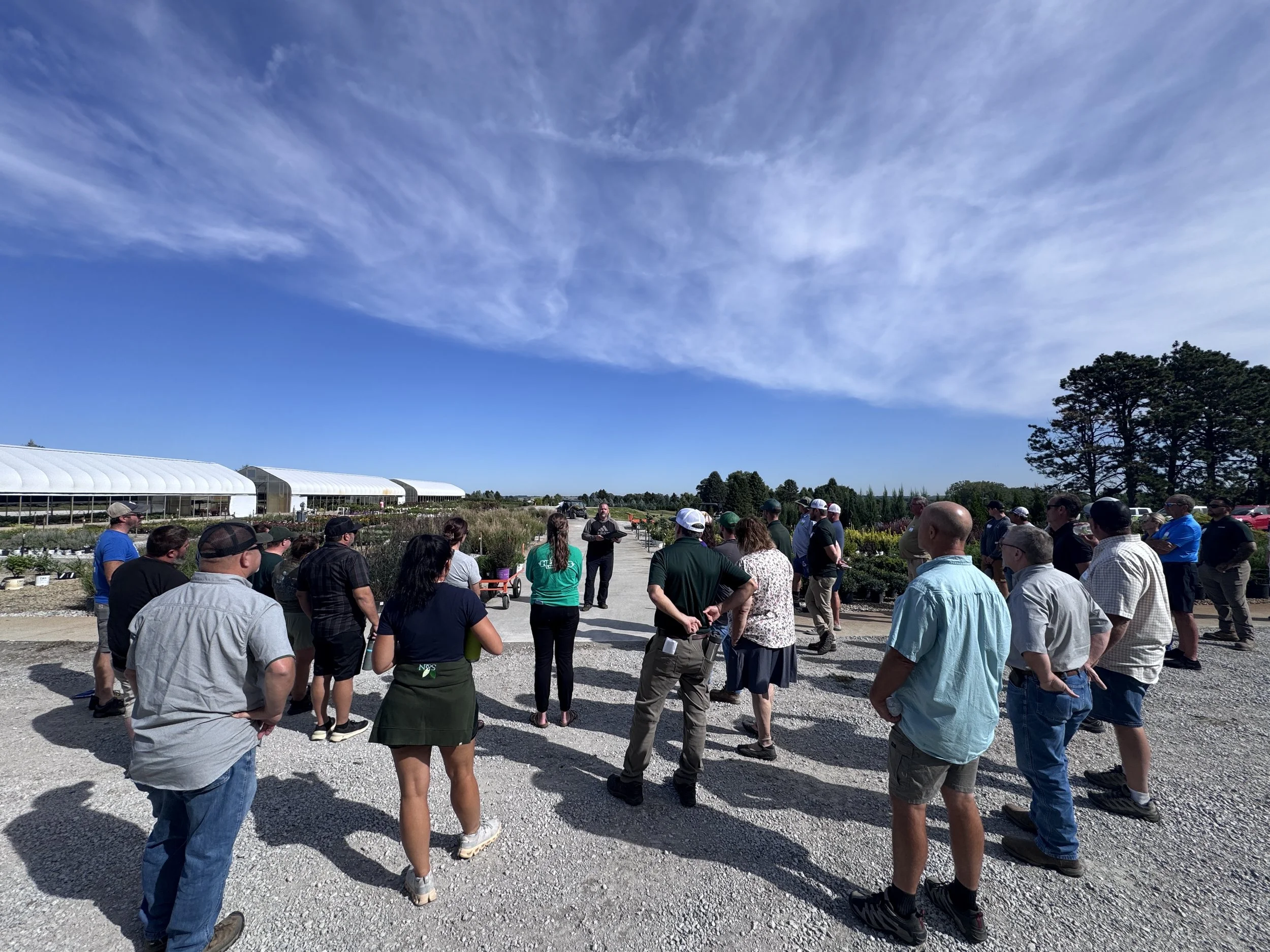
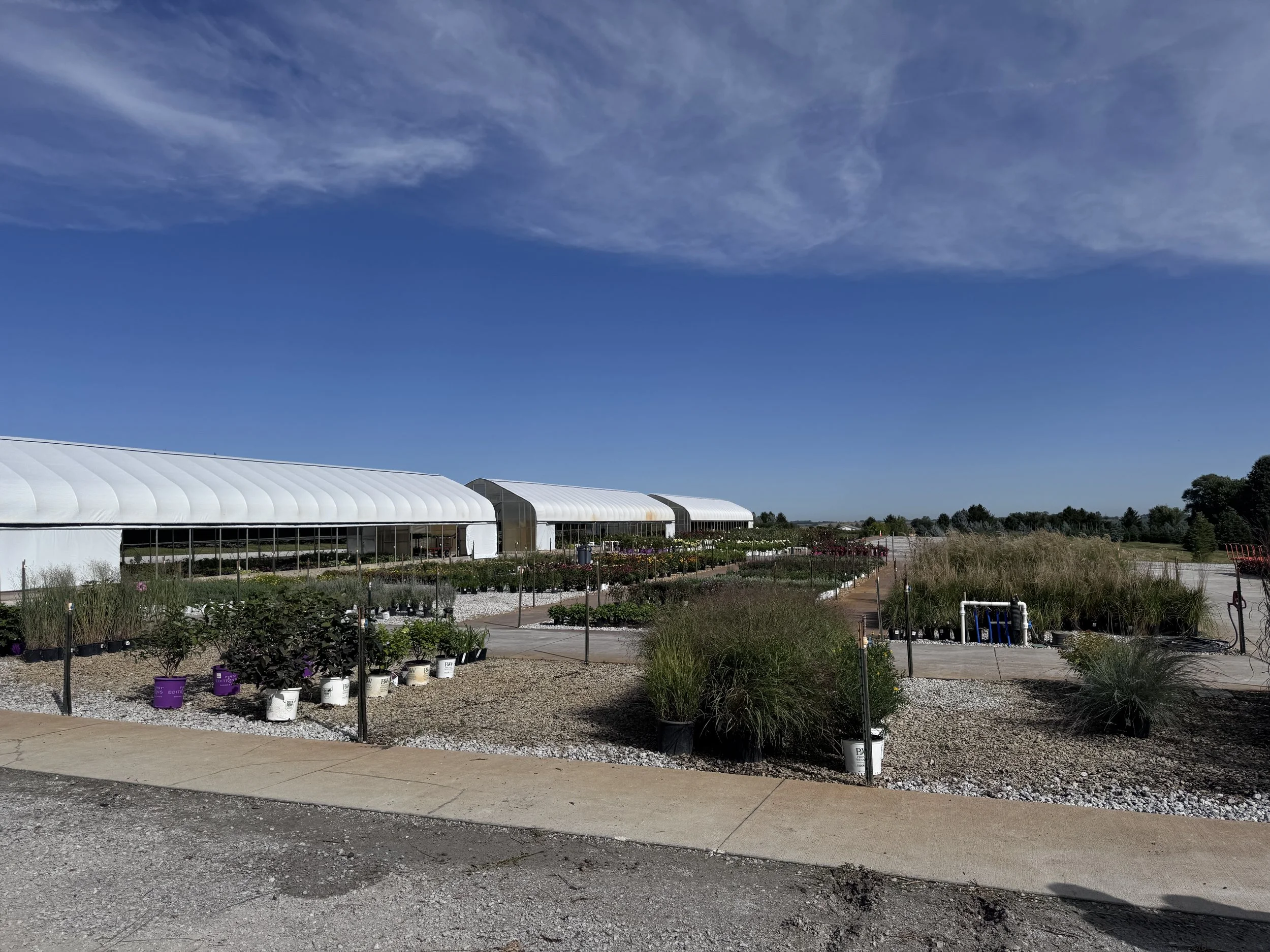
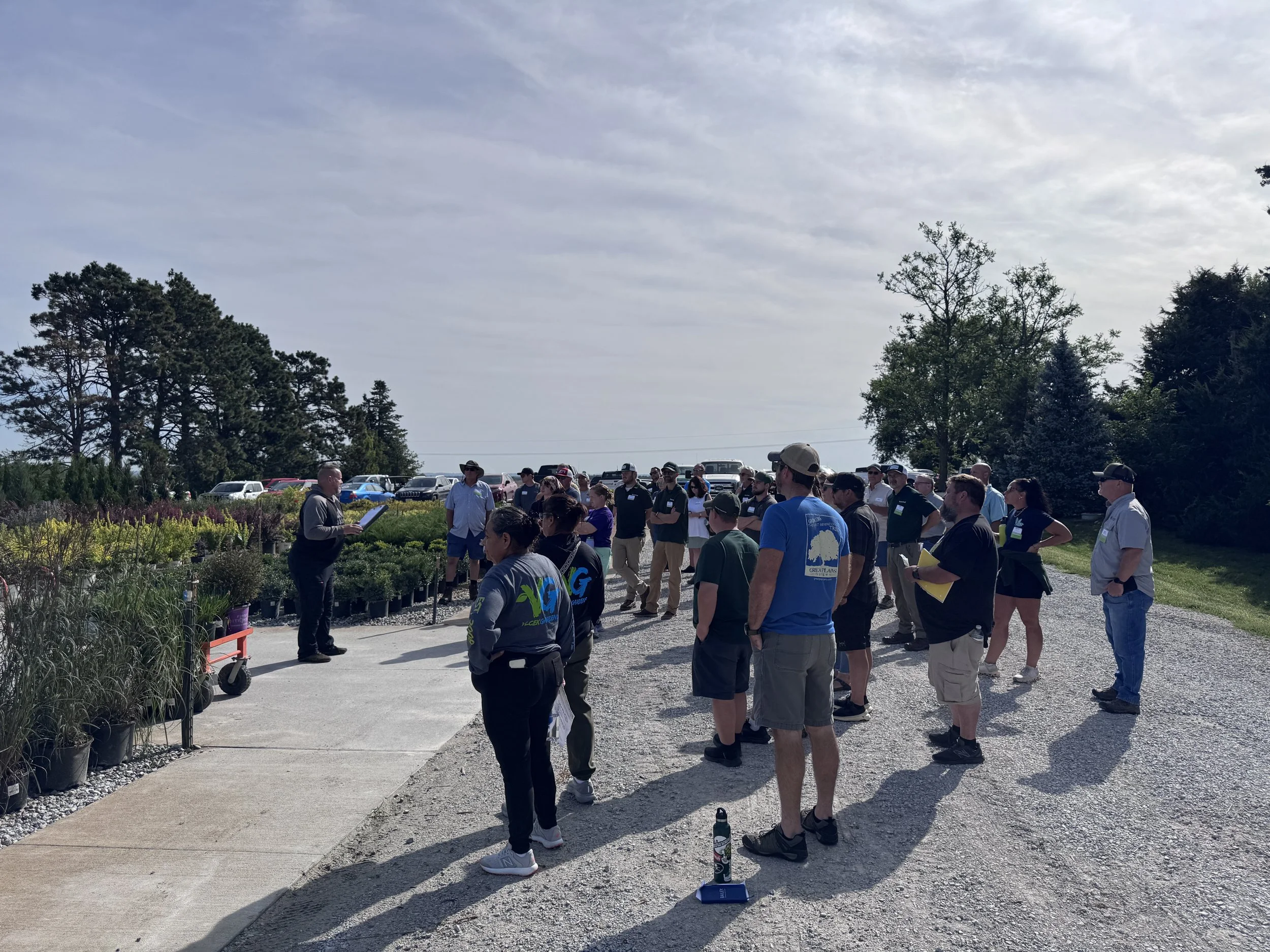
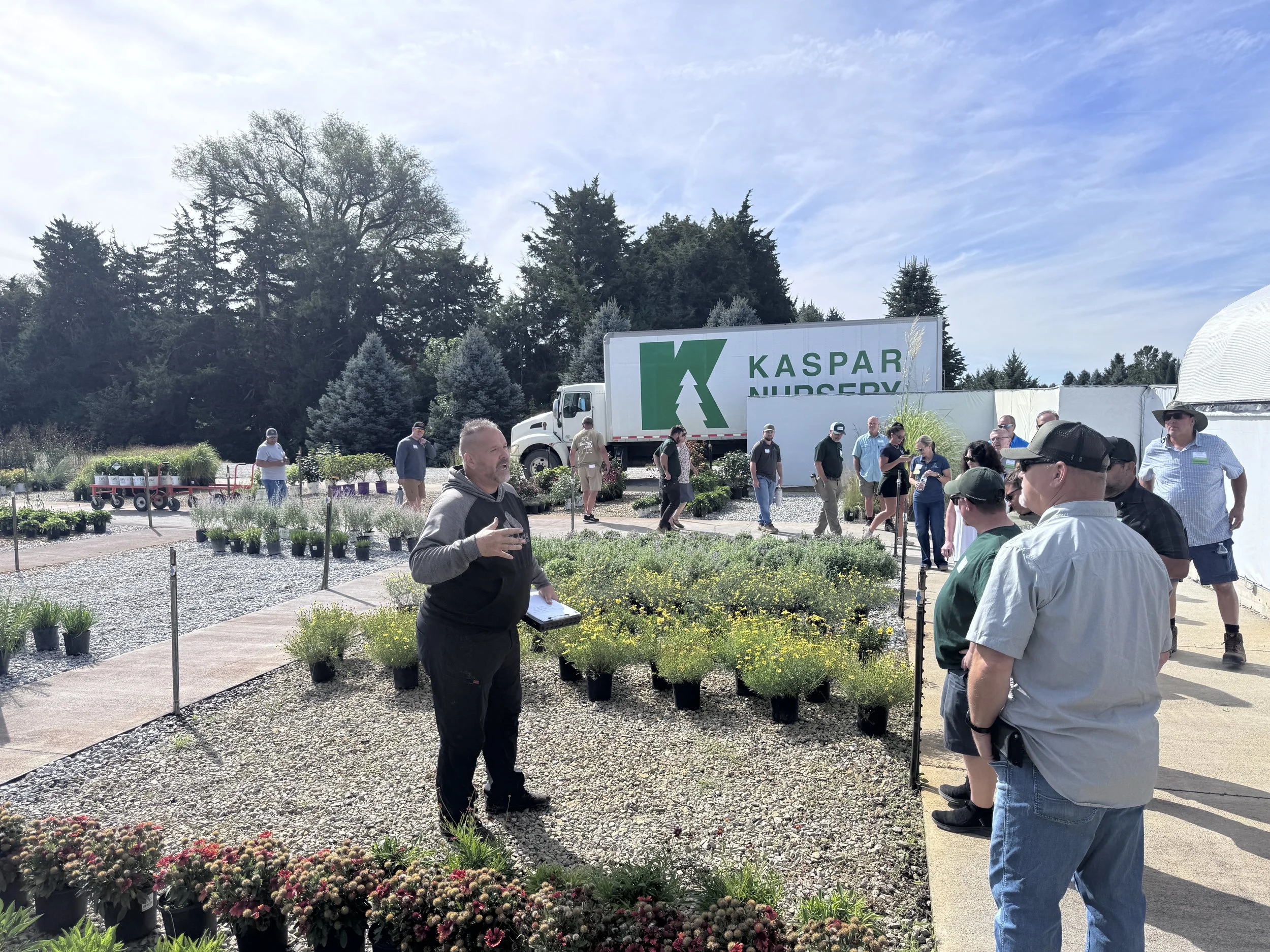
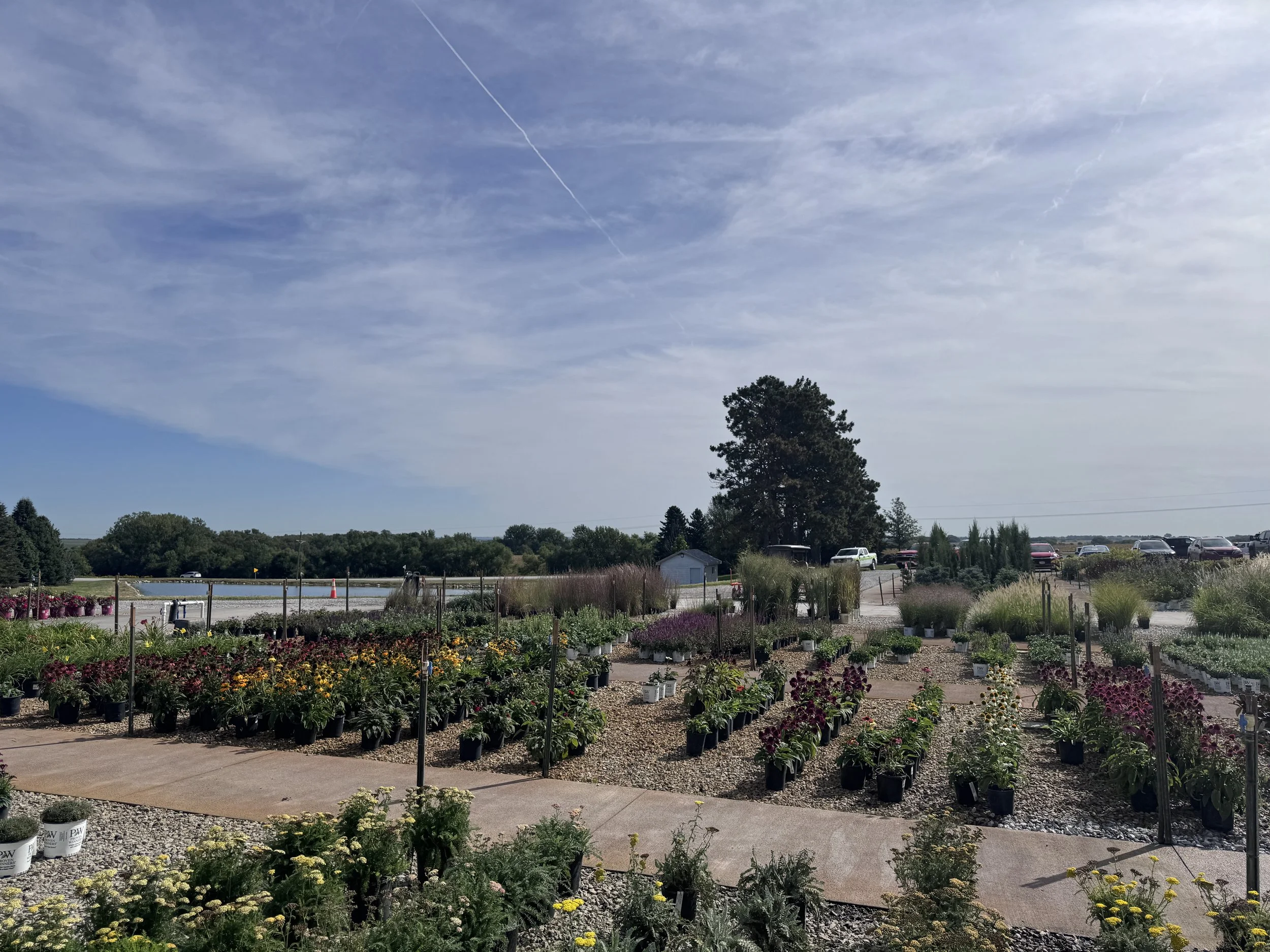
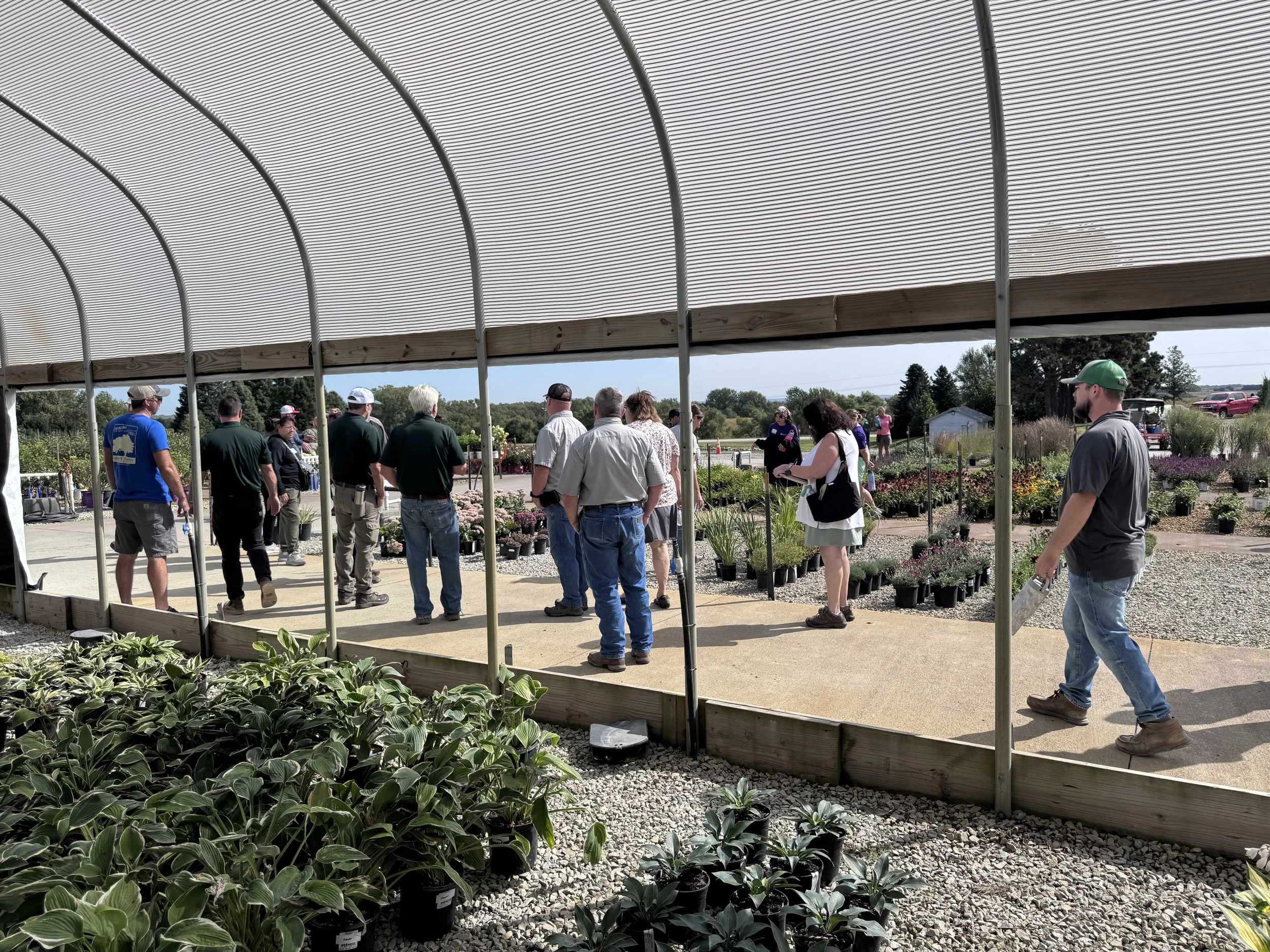
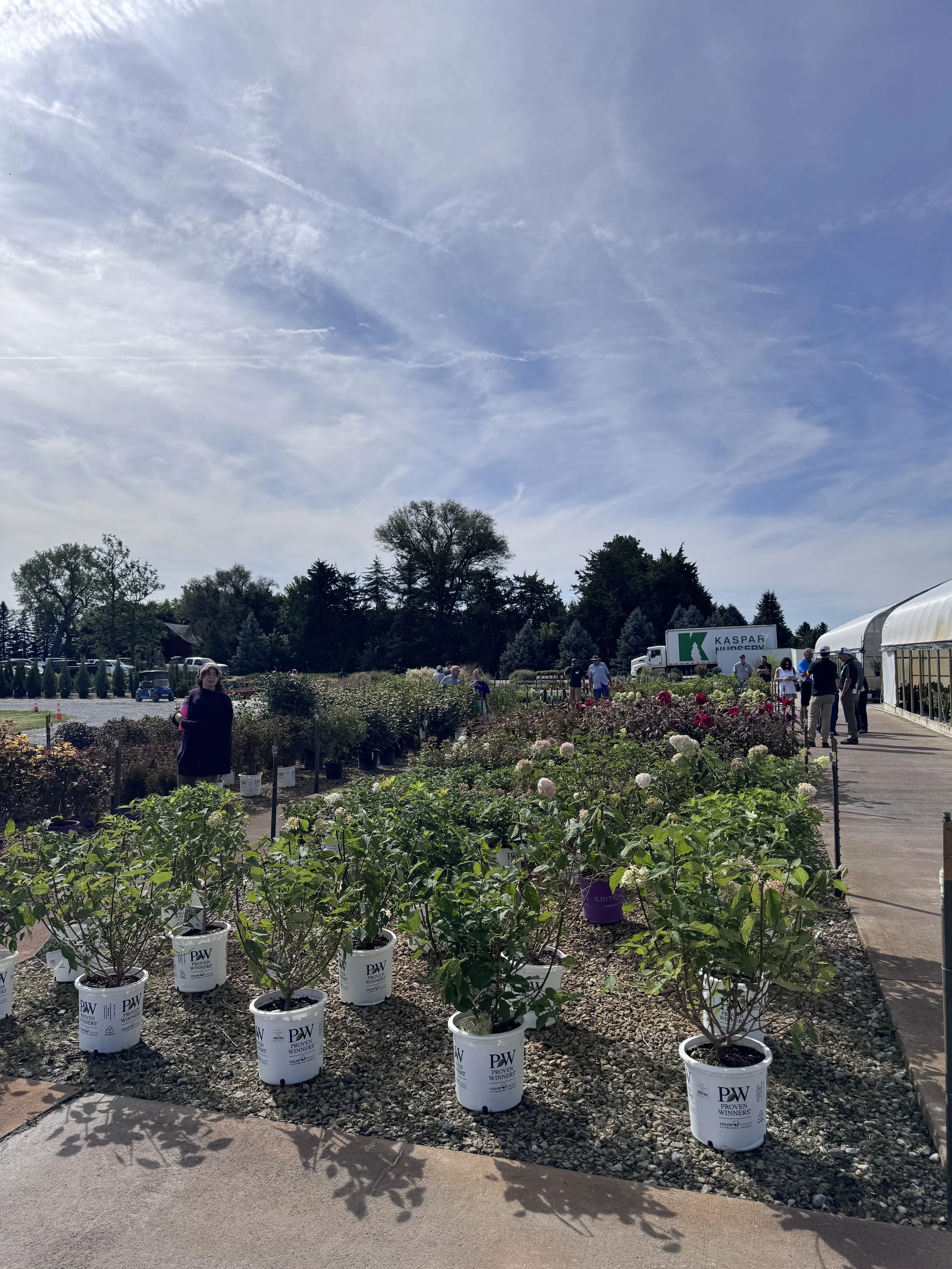
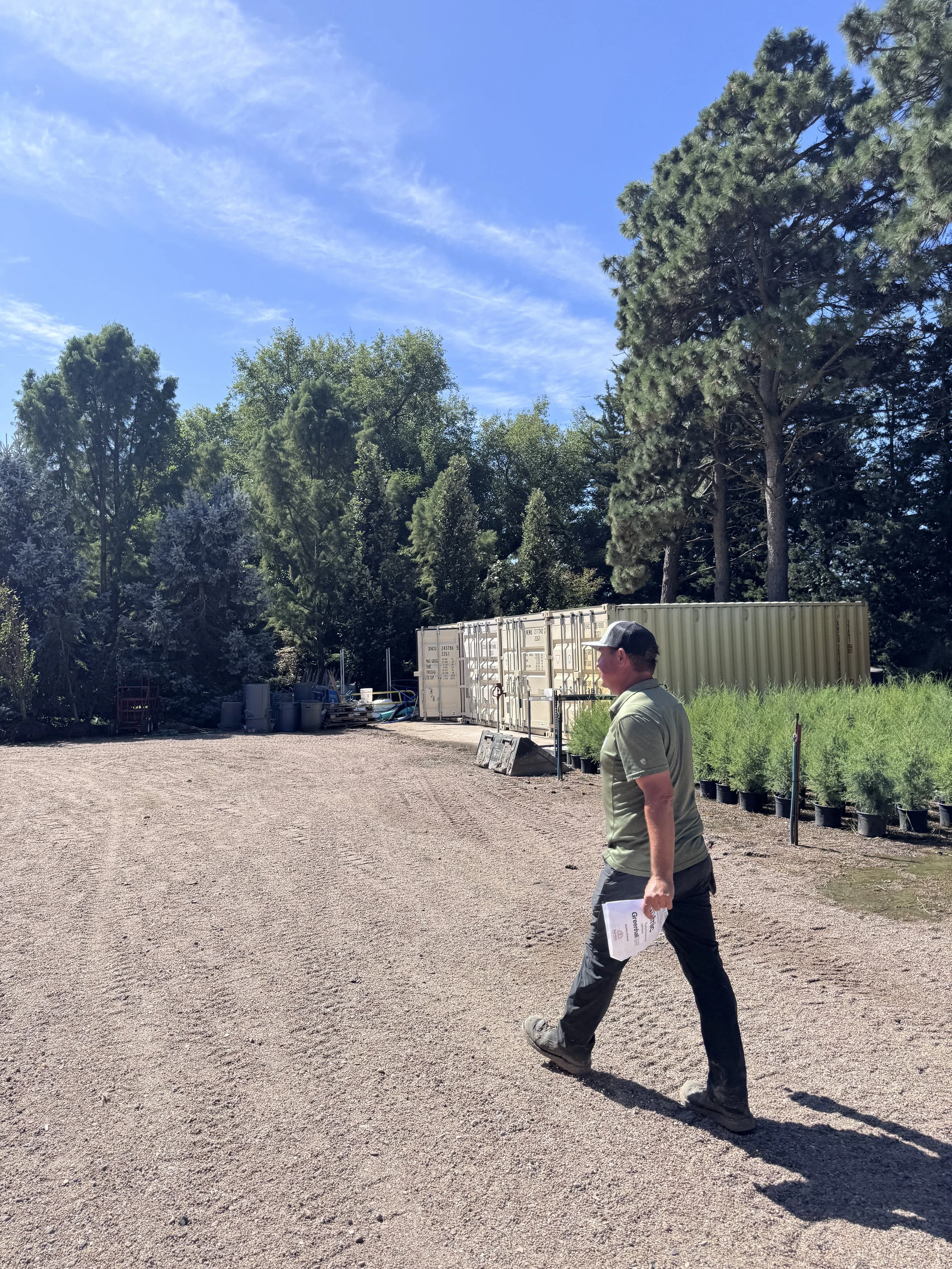
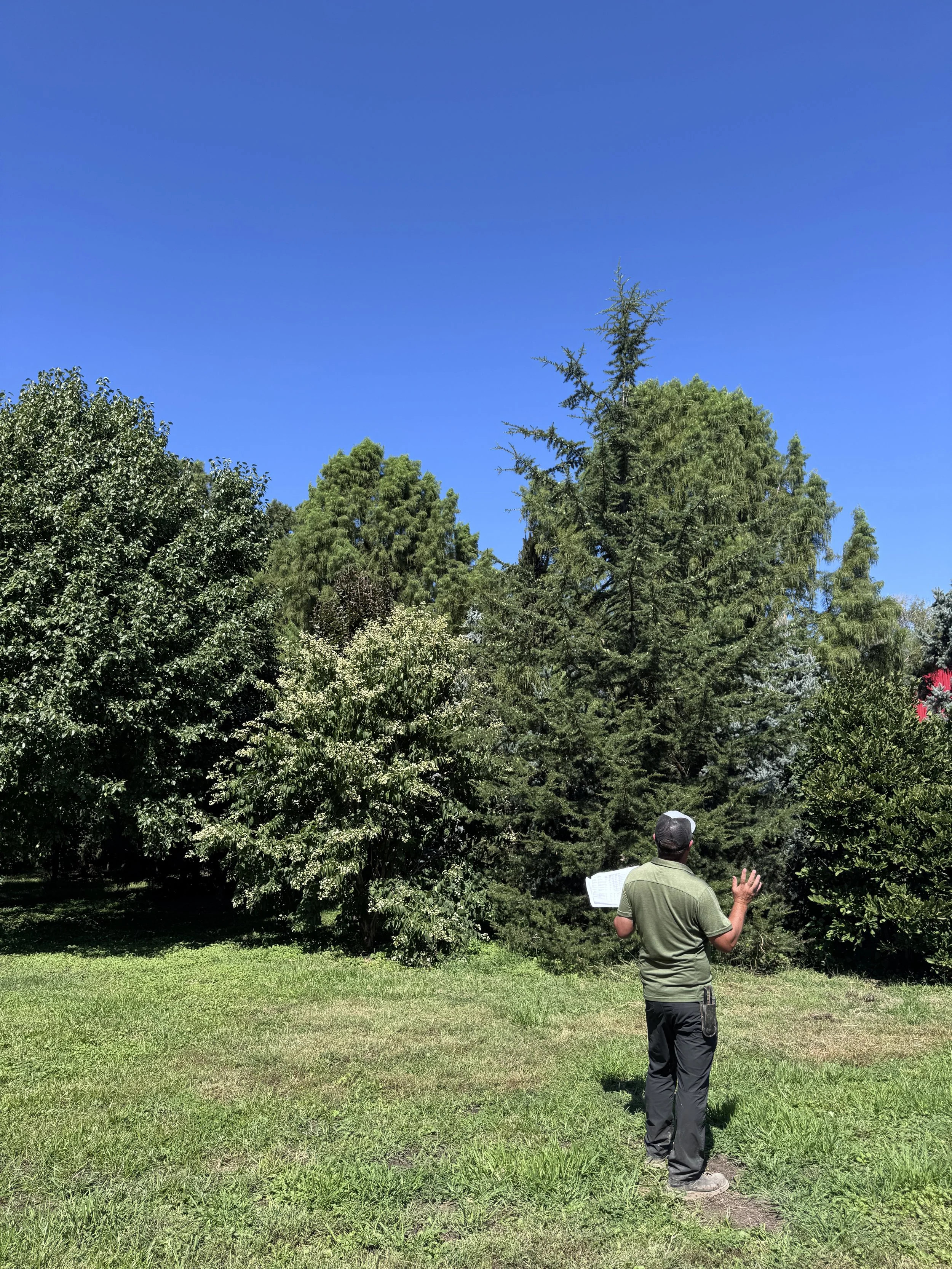
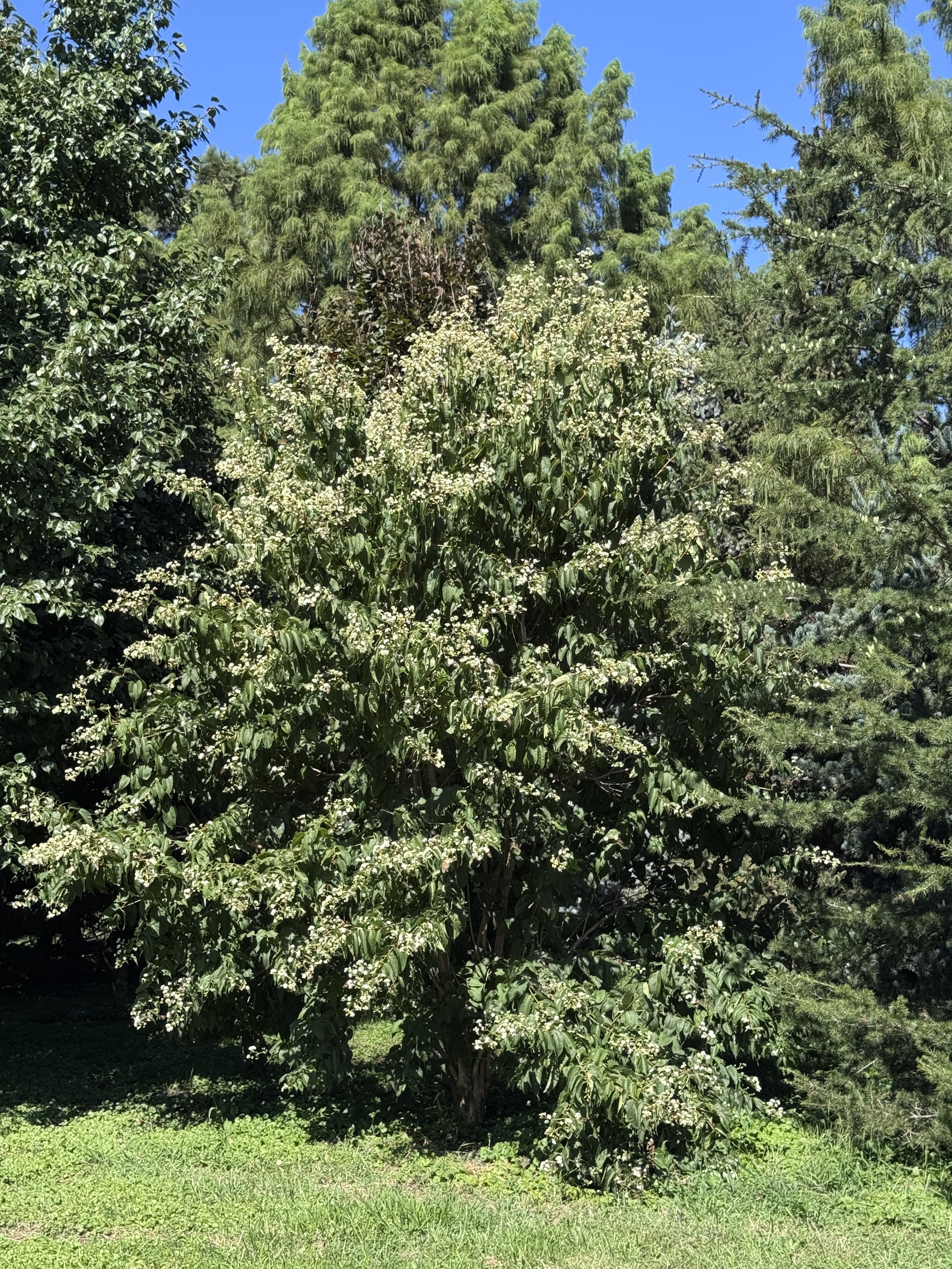
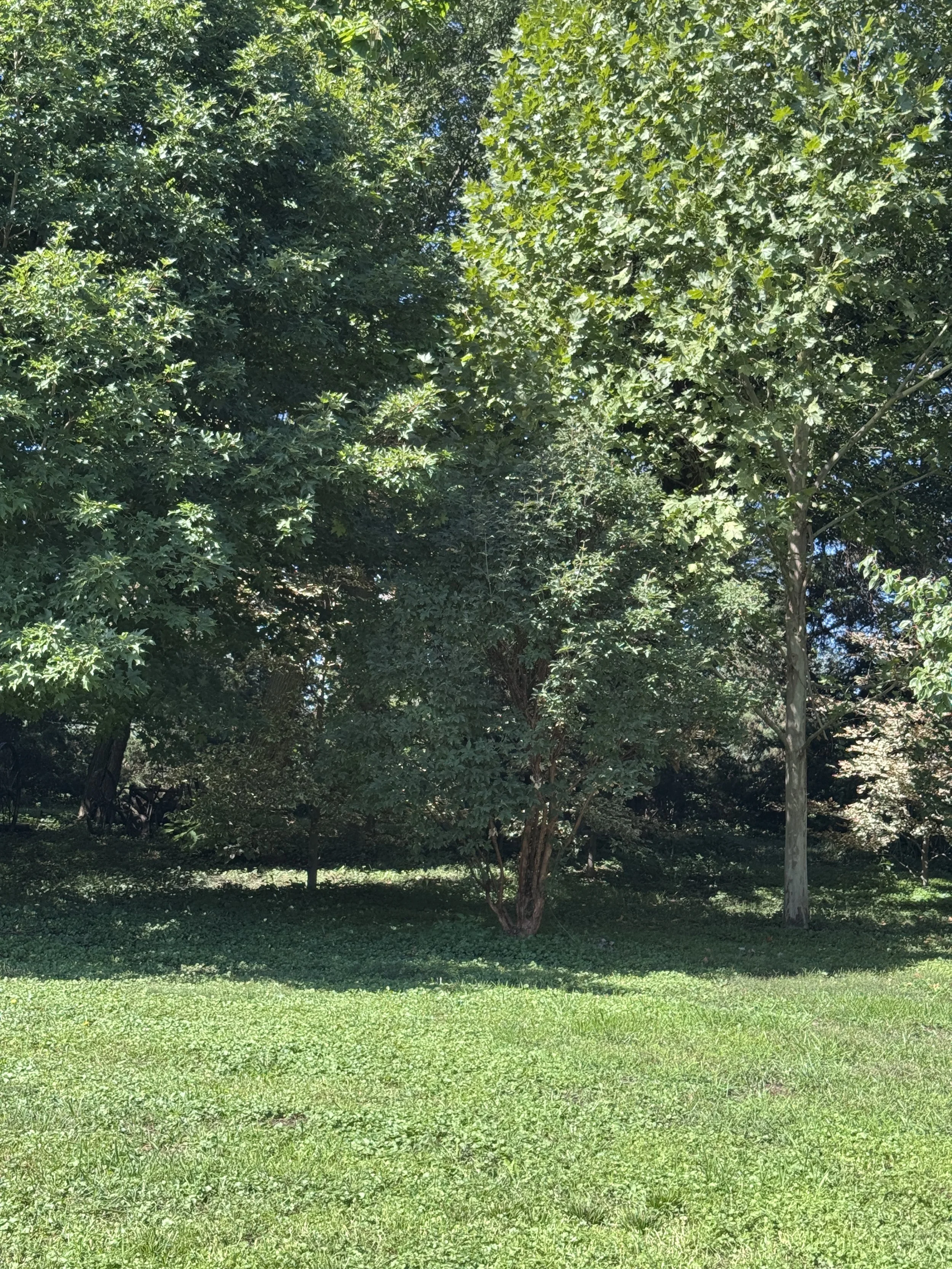
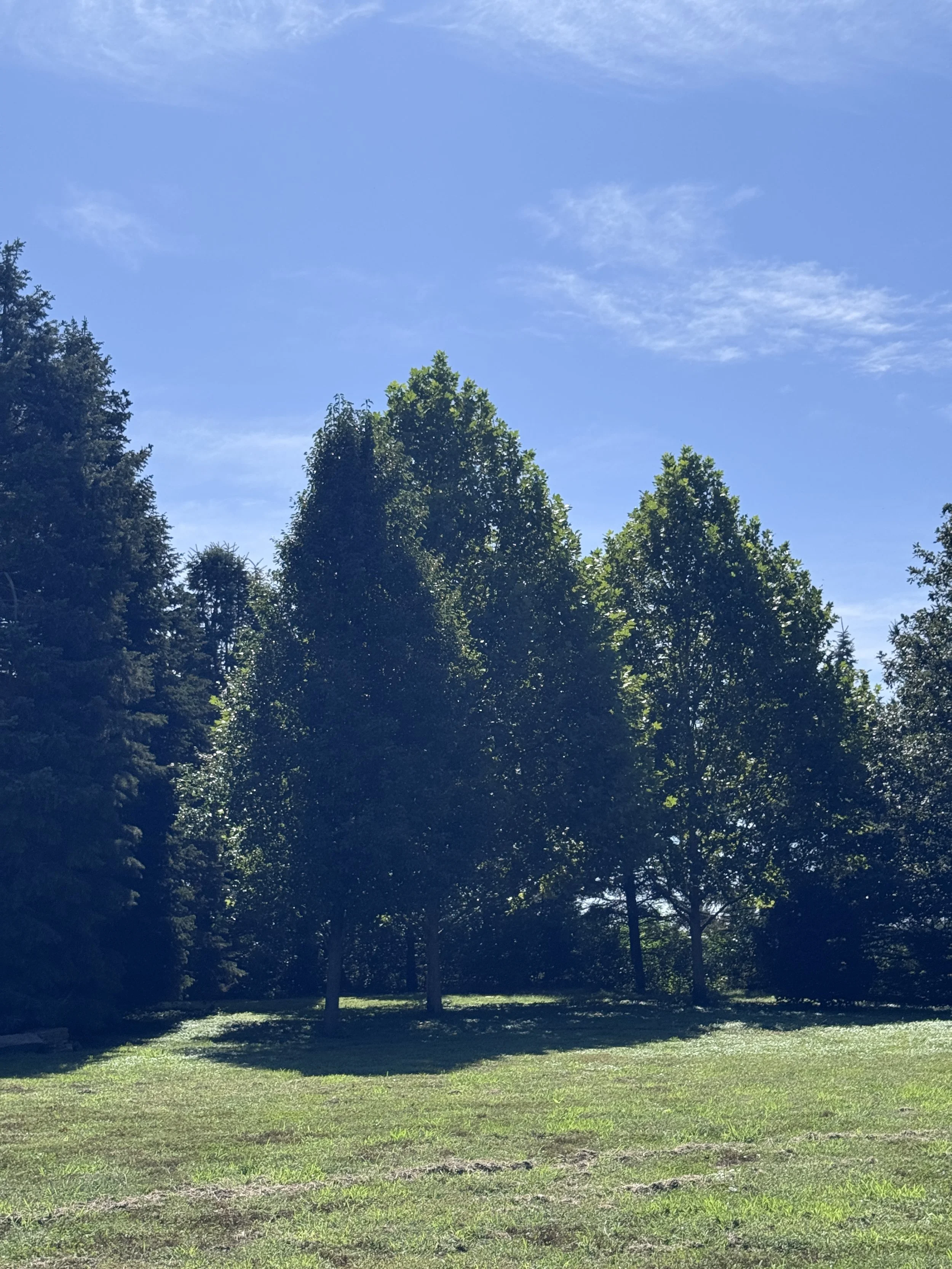
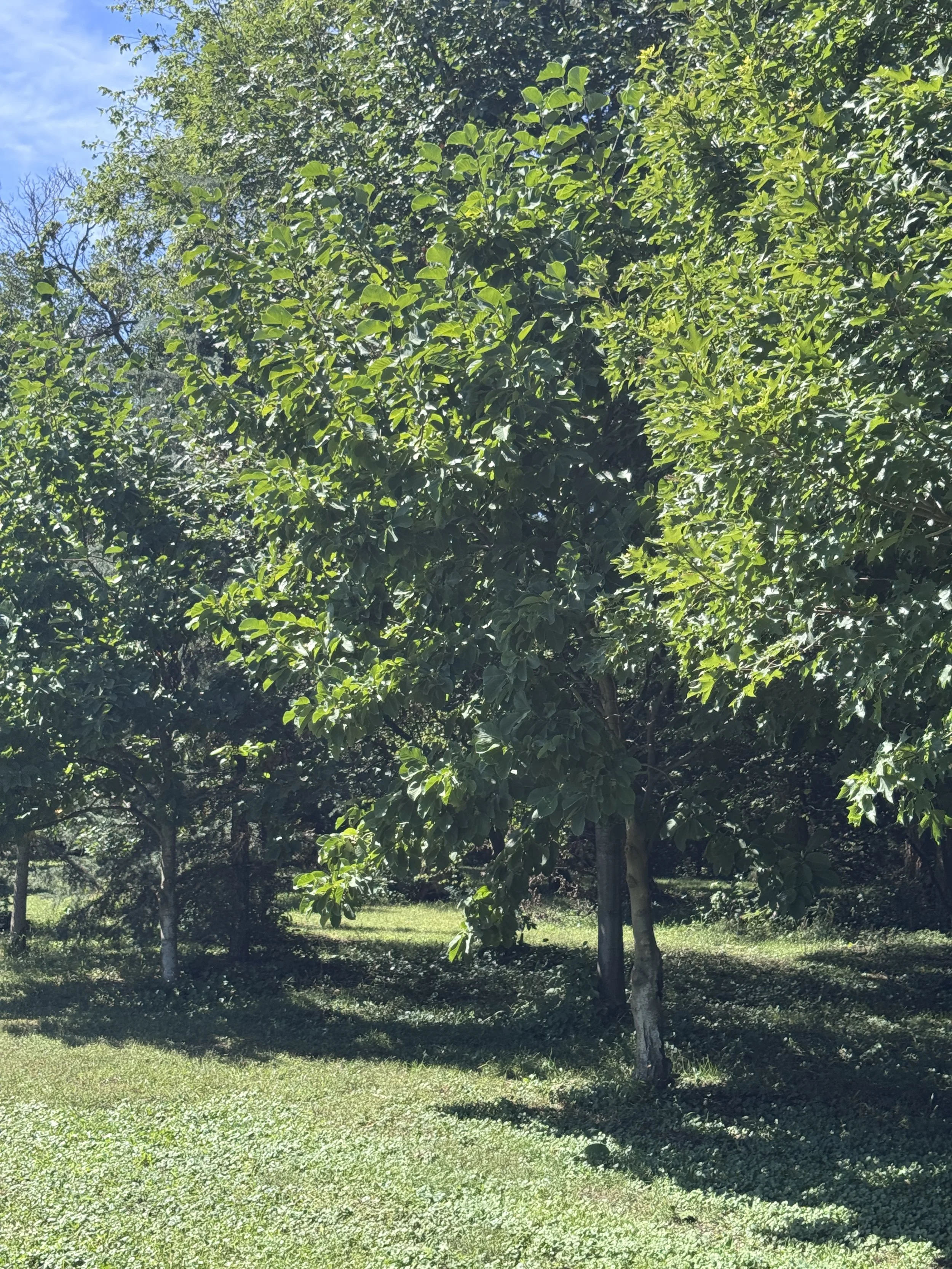
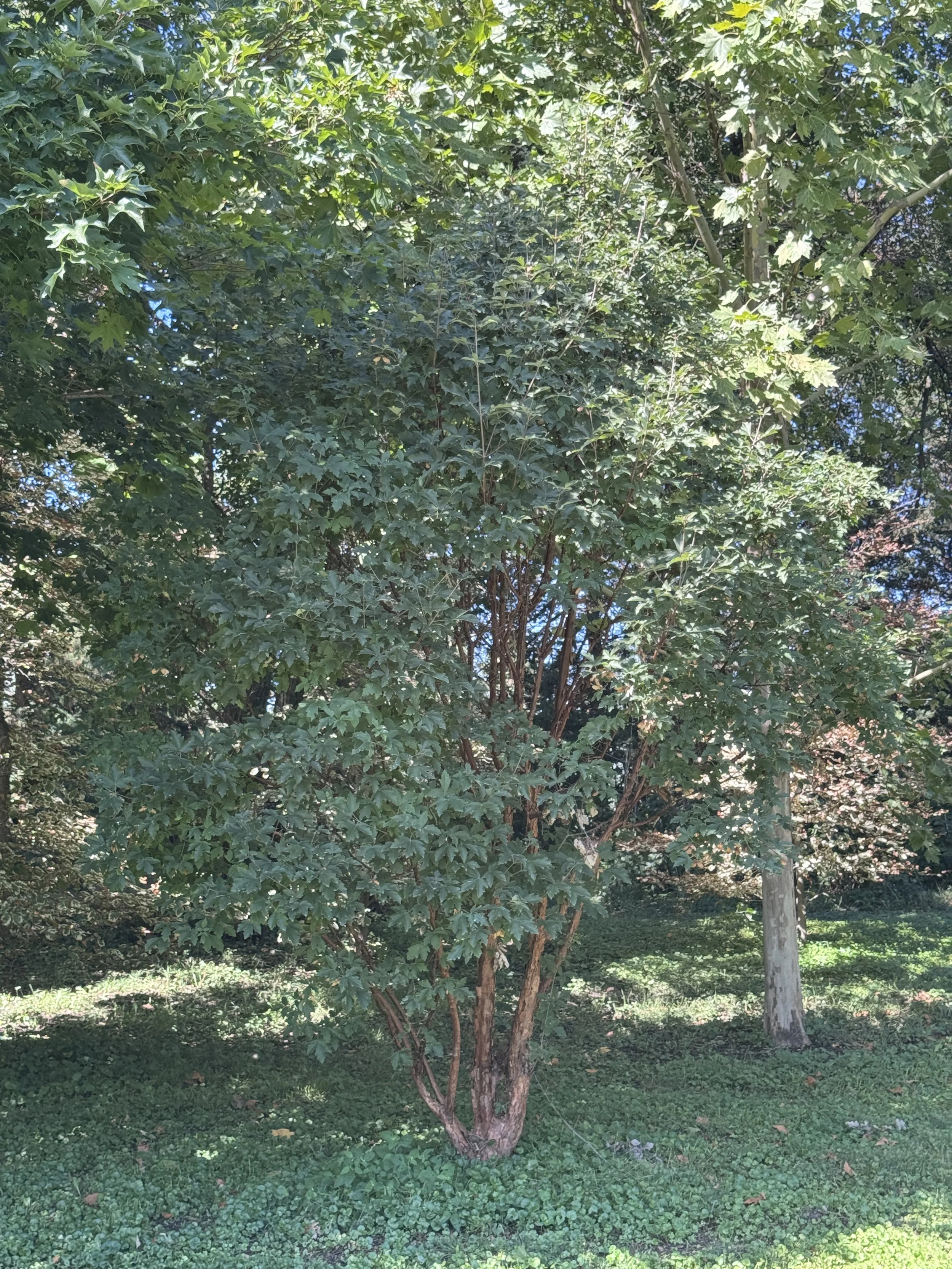
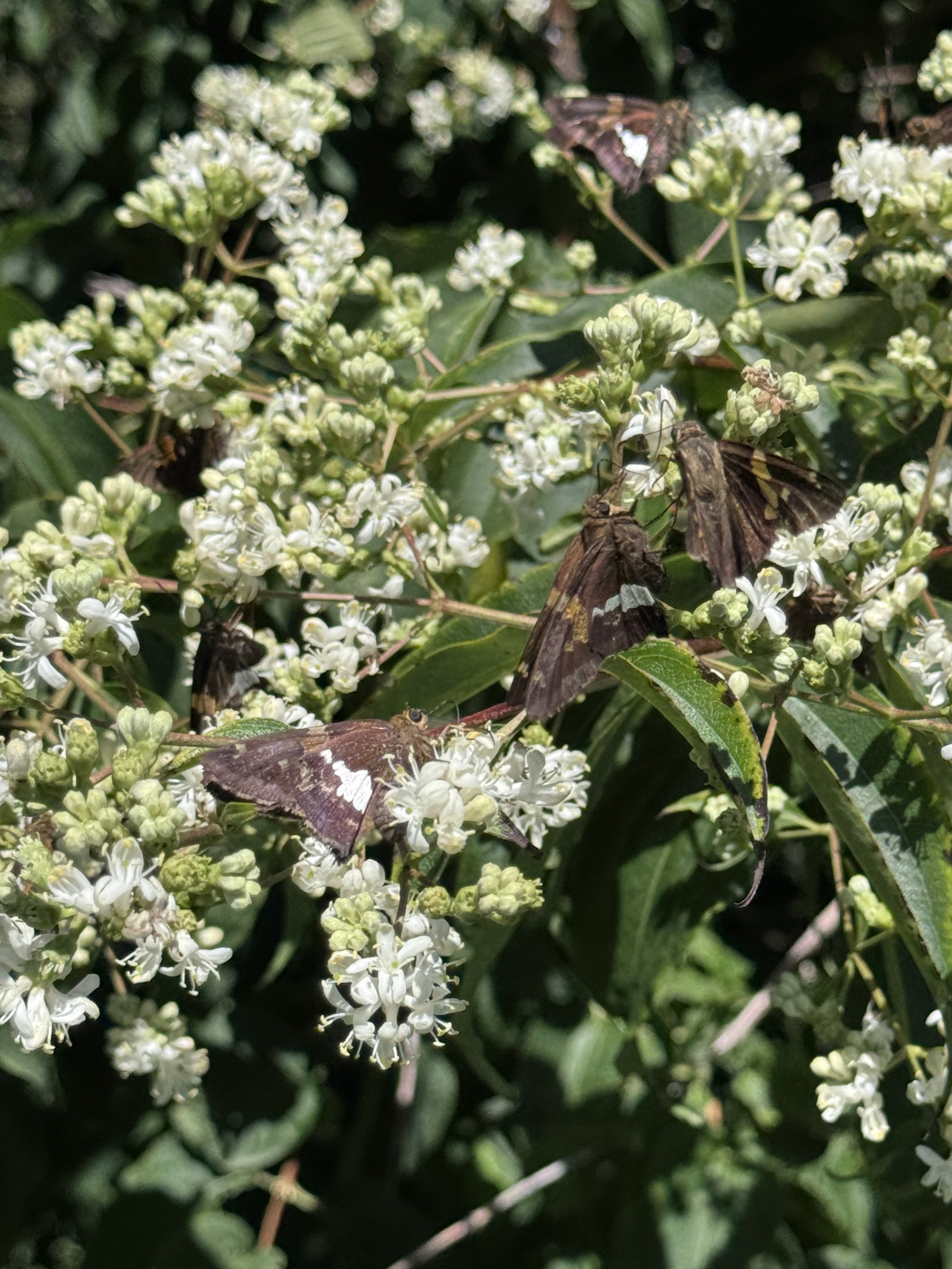
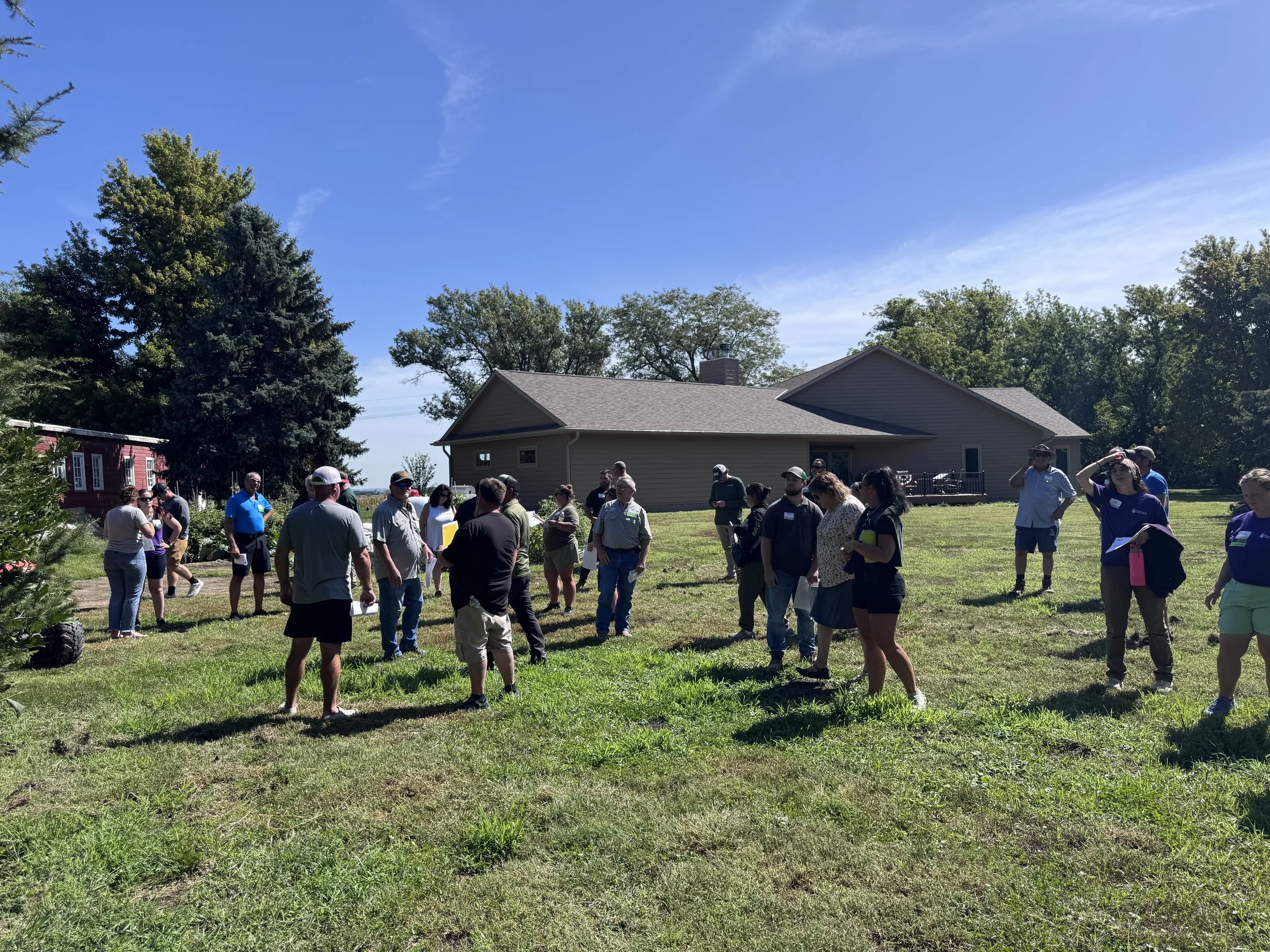
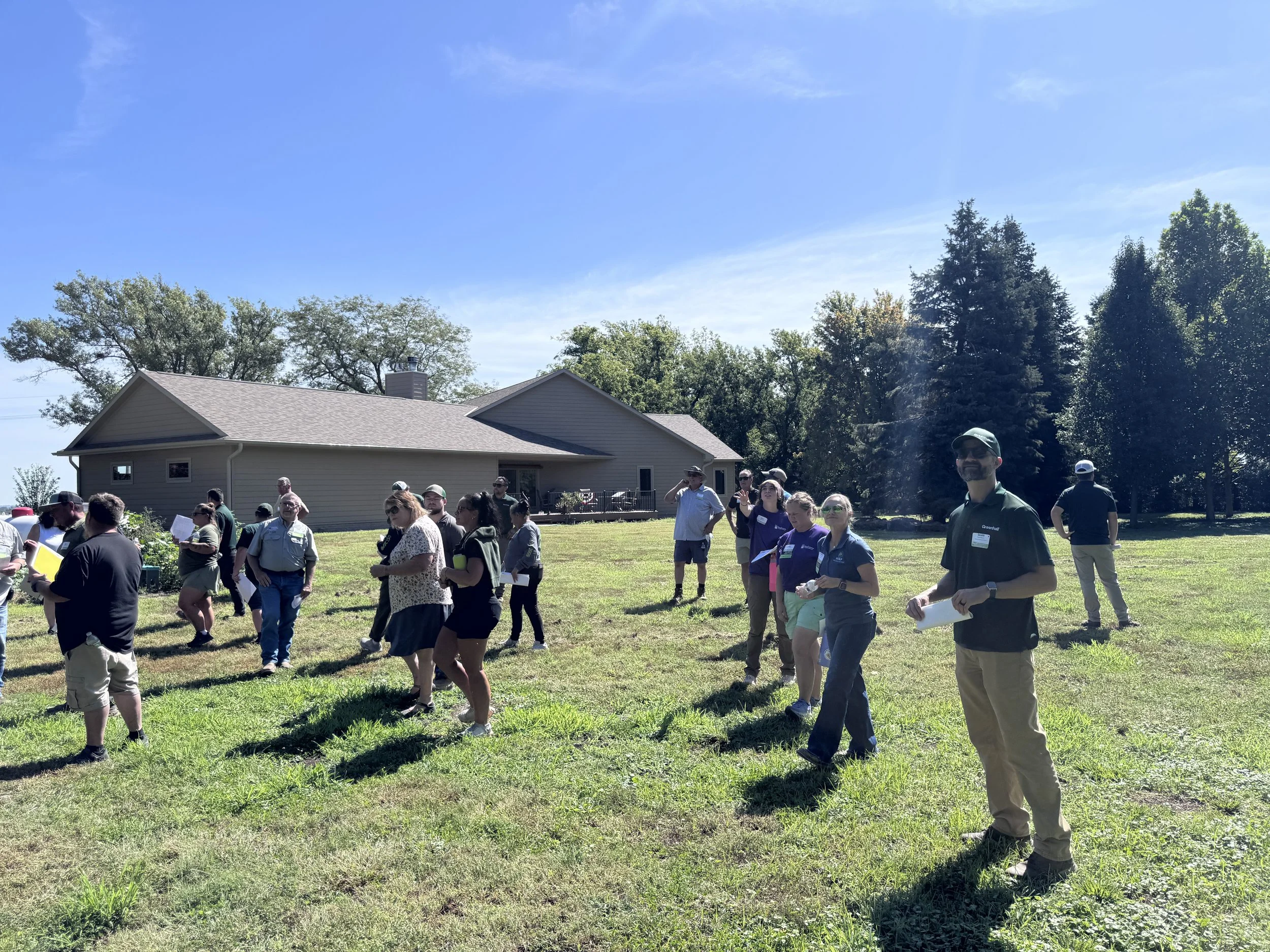
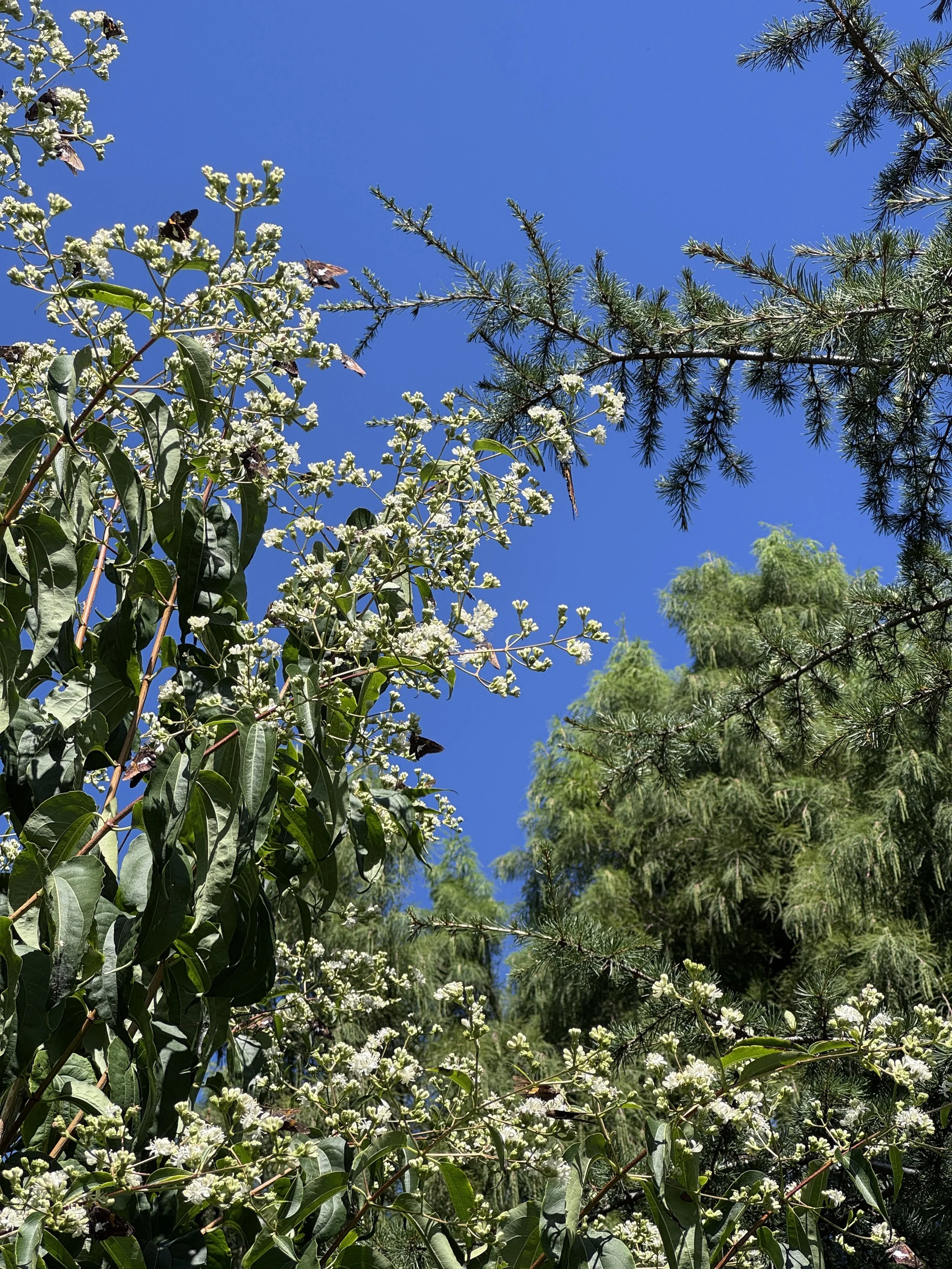
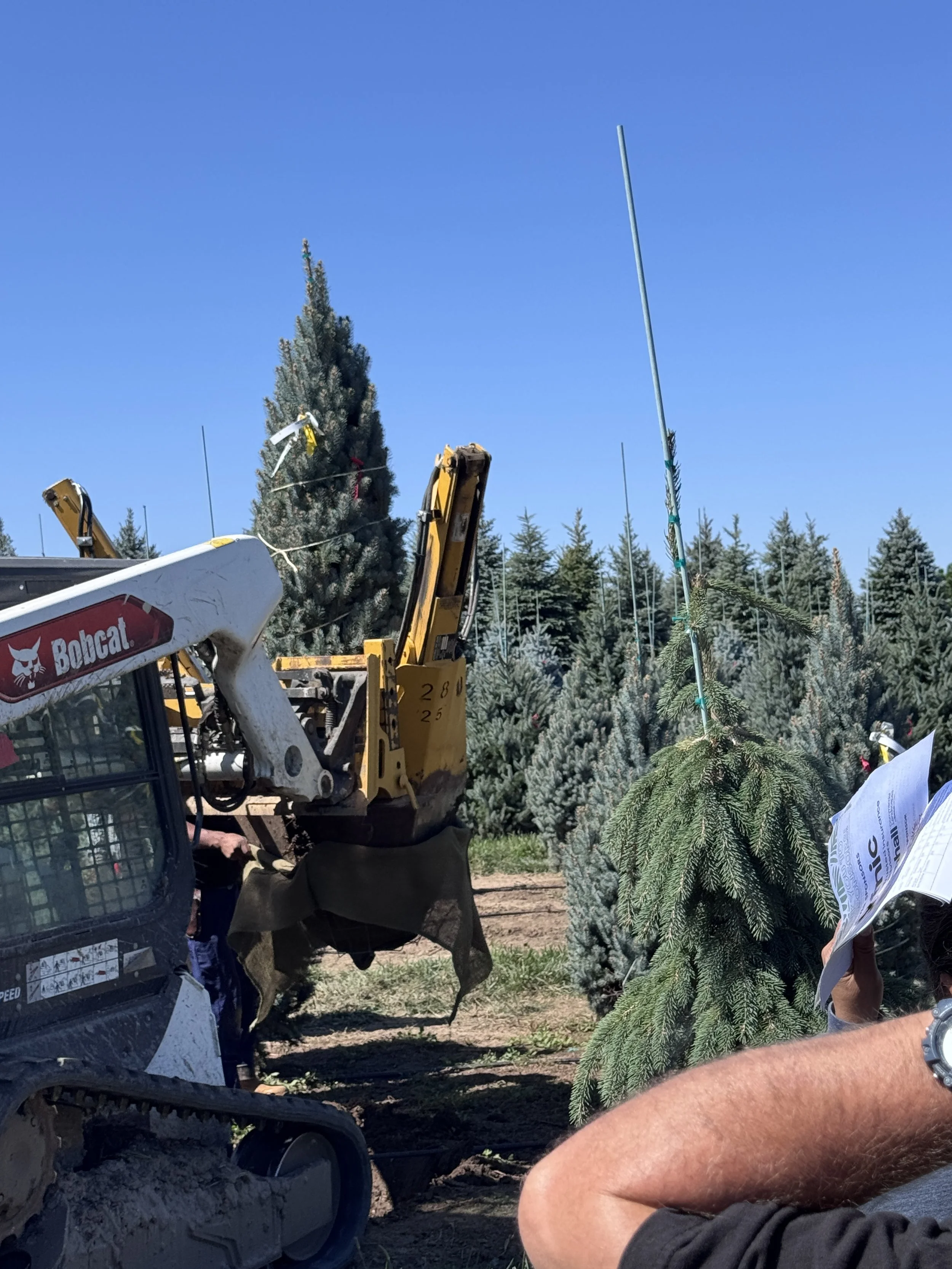
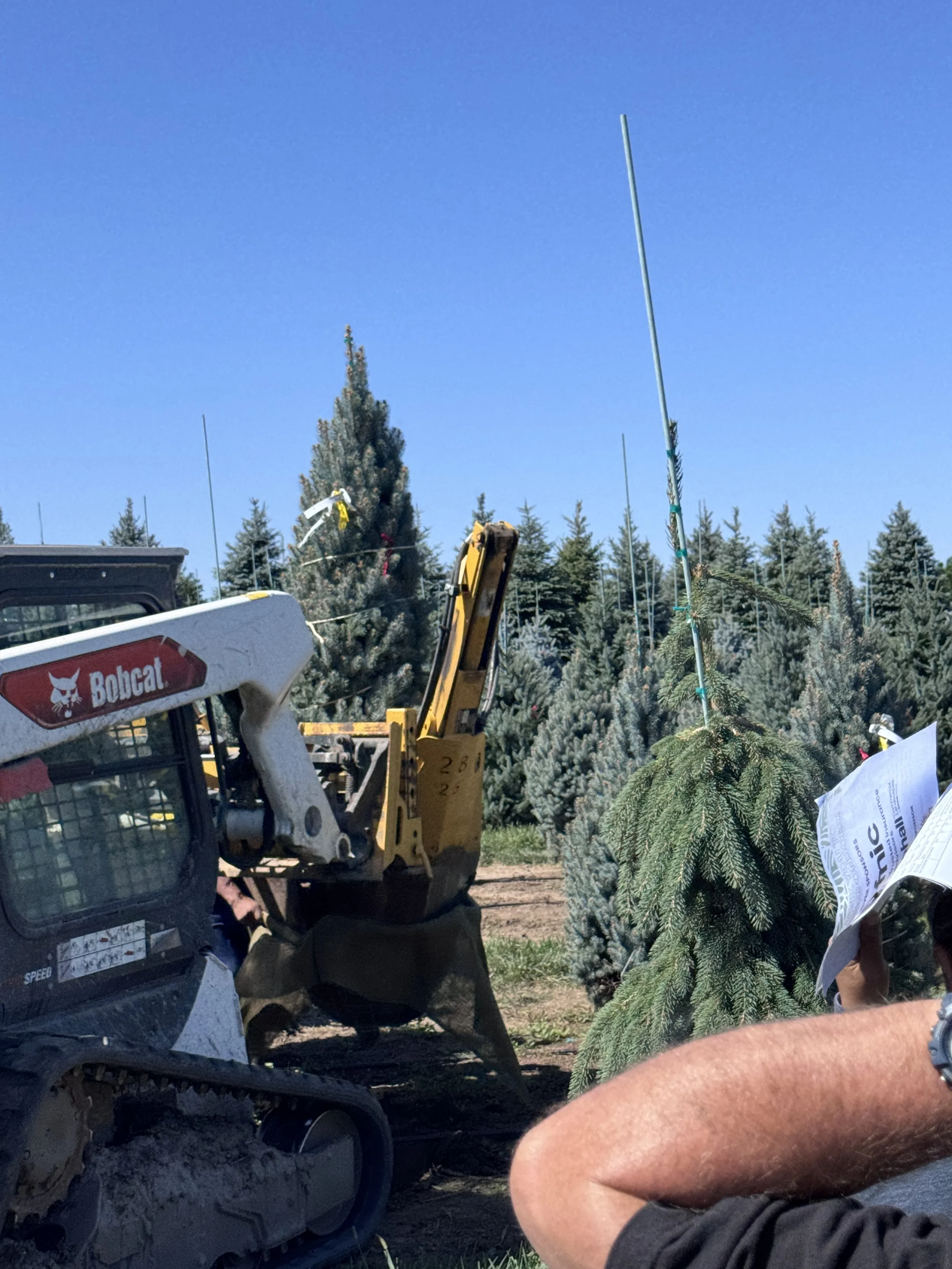
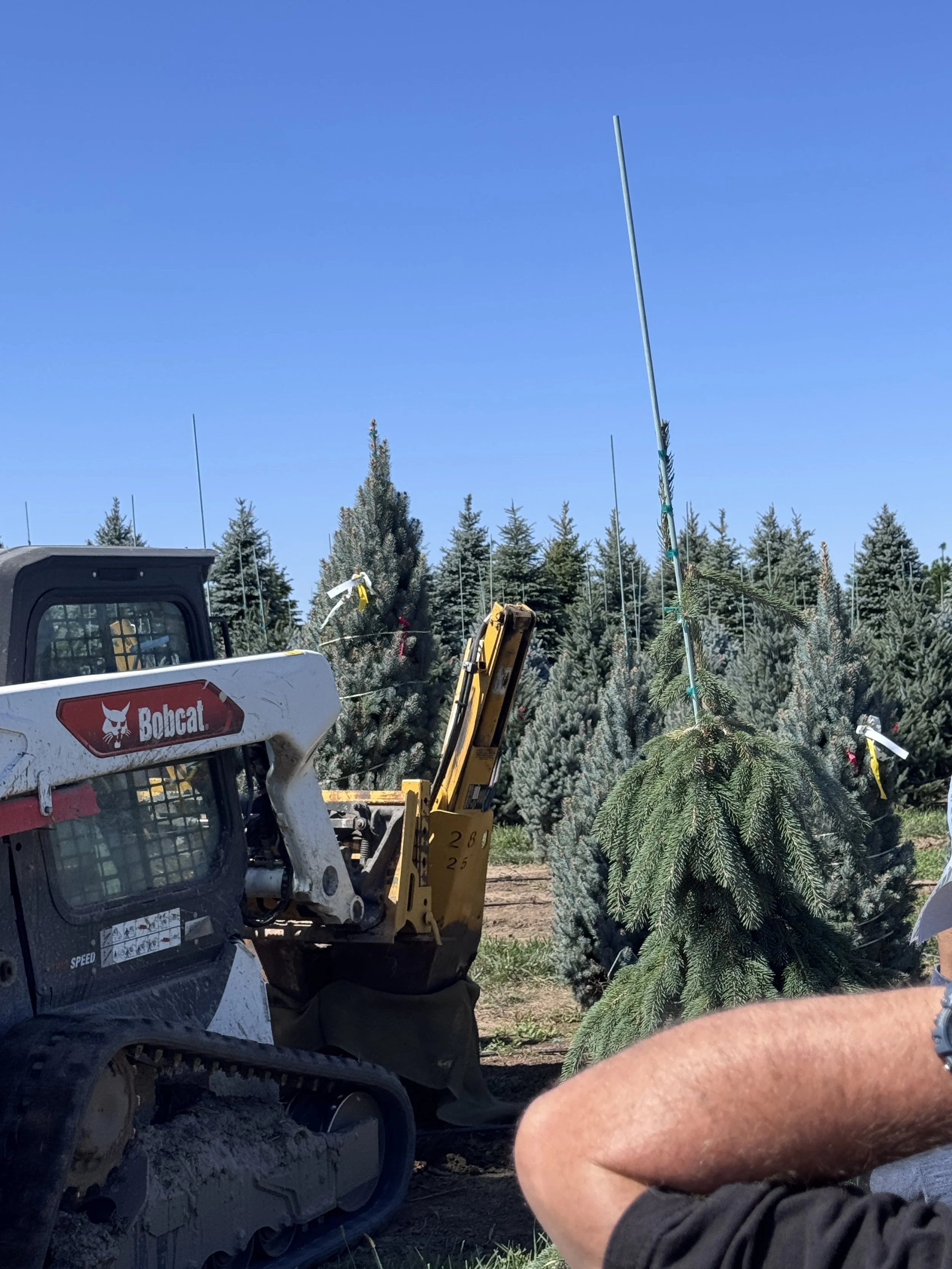
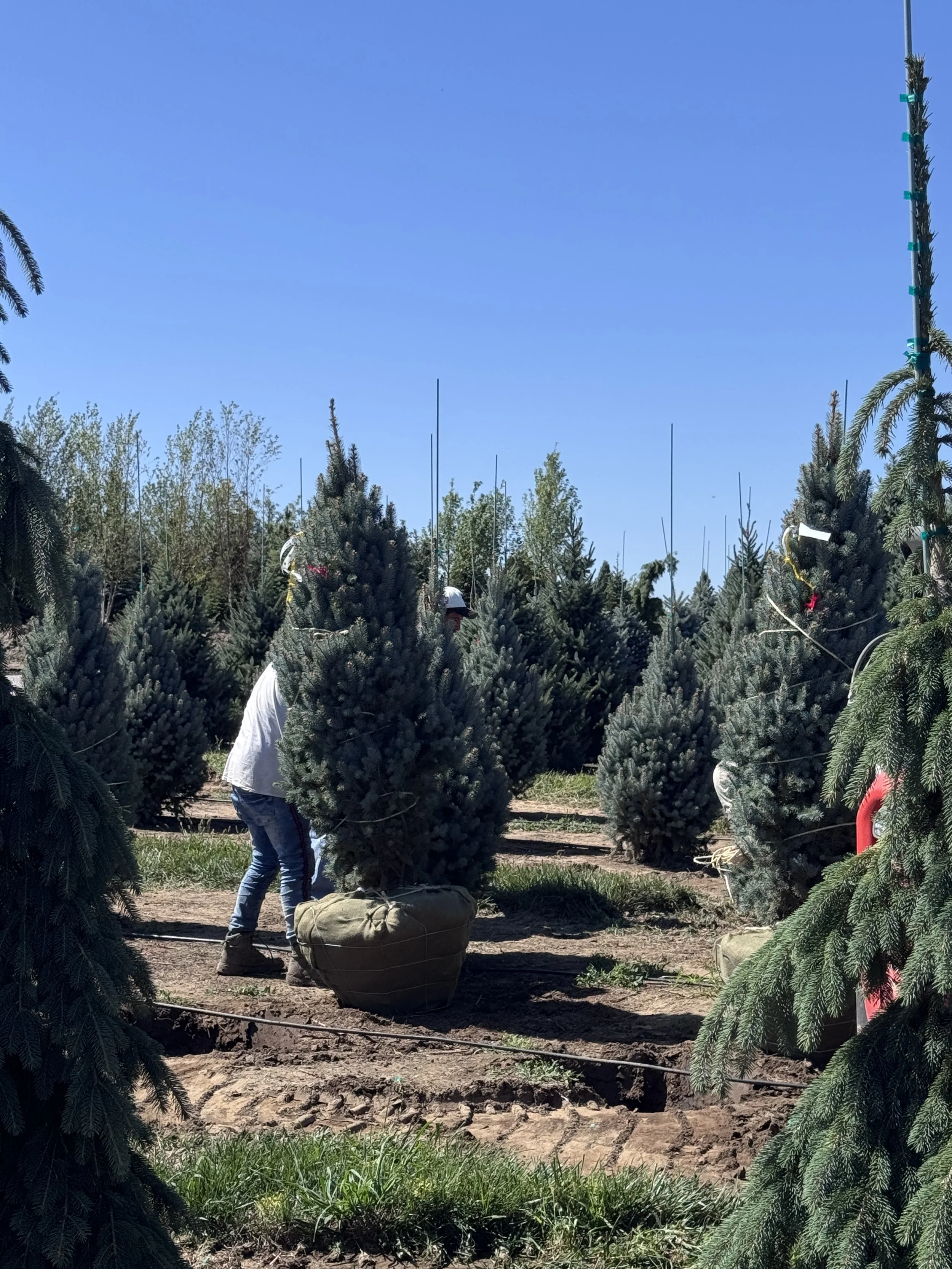
On Thursday, September 10th, NNLA hosted its annual Summer Field Day event at Kaspar Nursery. Located roughly 7 miles north of Mead, Kaspar Nursery is situated on 240 acres of rolling hills, surrounded by farmland. Kaspar nursery specializes in growing high-quality trees that are native or well-suited to the Midwest. Their ecological approach emphasizes strong, healthy trees that support long-lasting community forests while balancing function, habitat, and beauty.
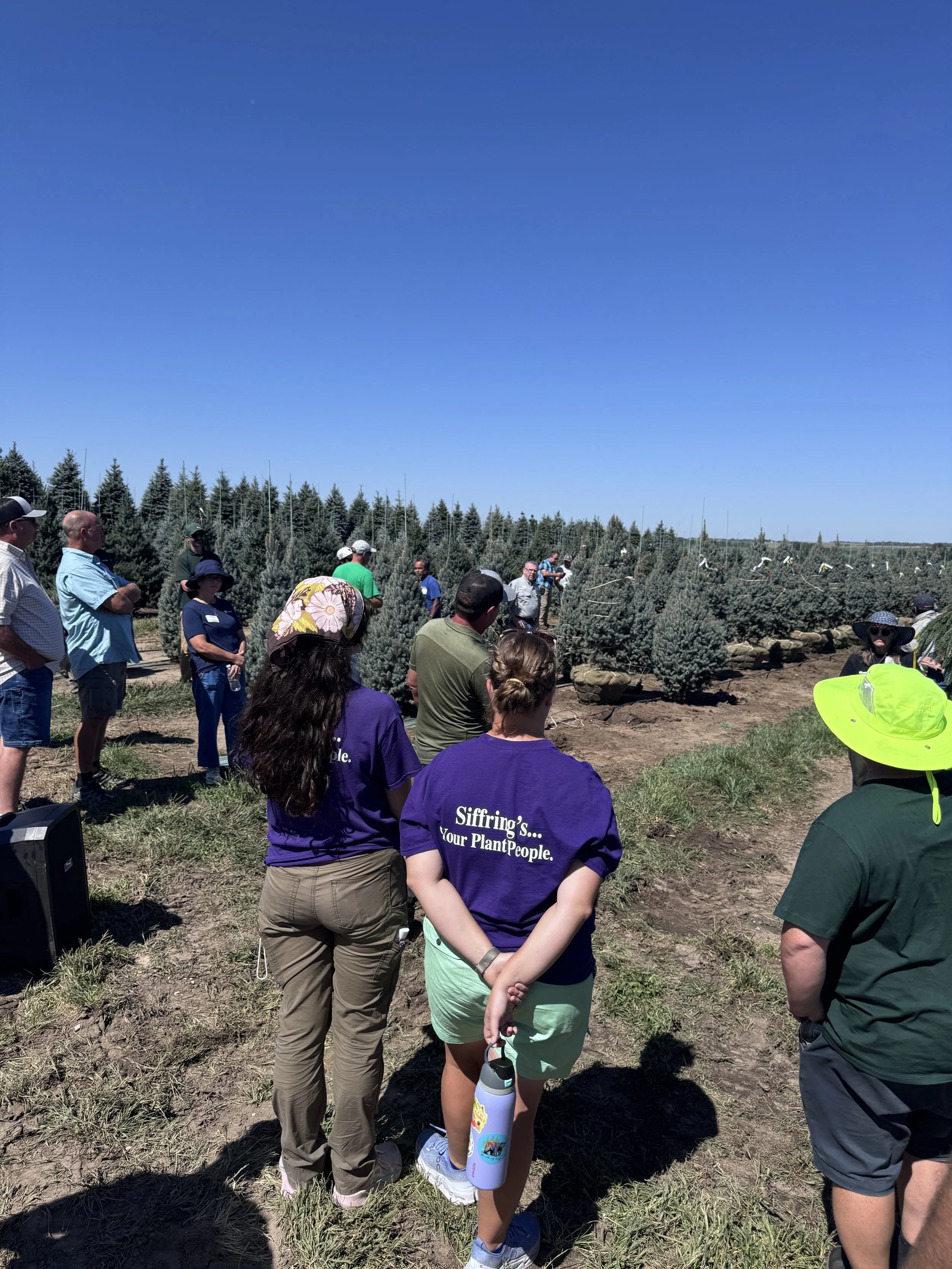
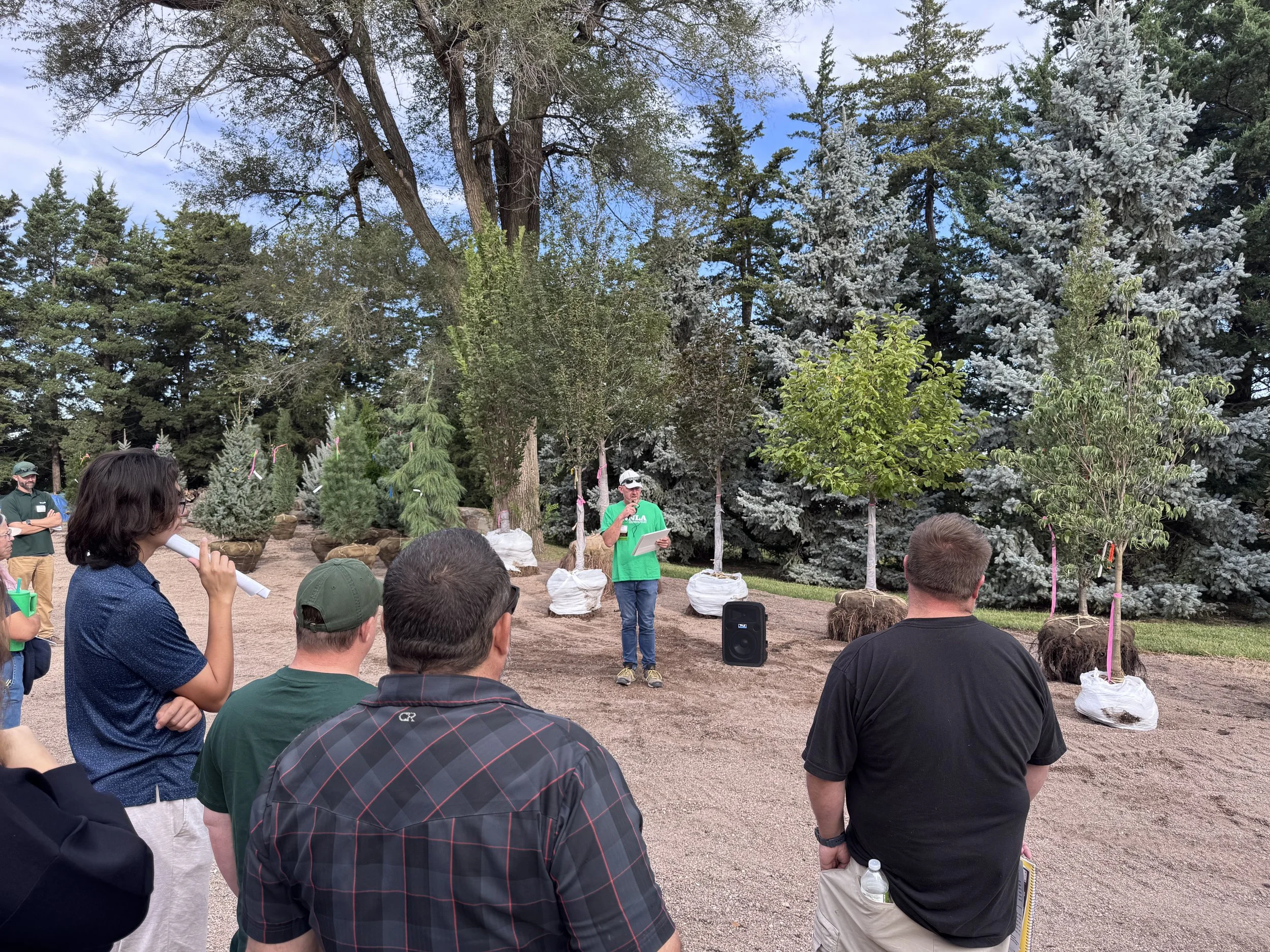
The day started with a welcome by NNLA president, Lee Olson. Darin Kaspar gave an overview of the history of the nursery and shared that Kaspar Nursery started out as a Christmas tree farm and is run by 3 generations of the Kaspar family. Darin explained that they use sand to heal in their B&B trees. The sand doesn’t decompose like mulch and it provides a cool, moist environment for the trees’ roots. Deer haven’t been a problem in the nursery since they removed a wooded area that provided the deer with shelter. The nursery is generally too open for them so they don’t feel safe to linger there. Bag worms have continued to be a particular challenge at Kaspar Nursery but they are diligent about scouting and spraying for them.
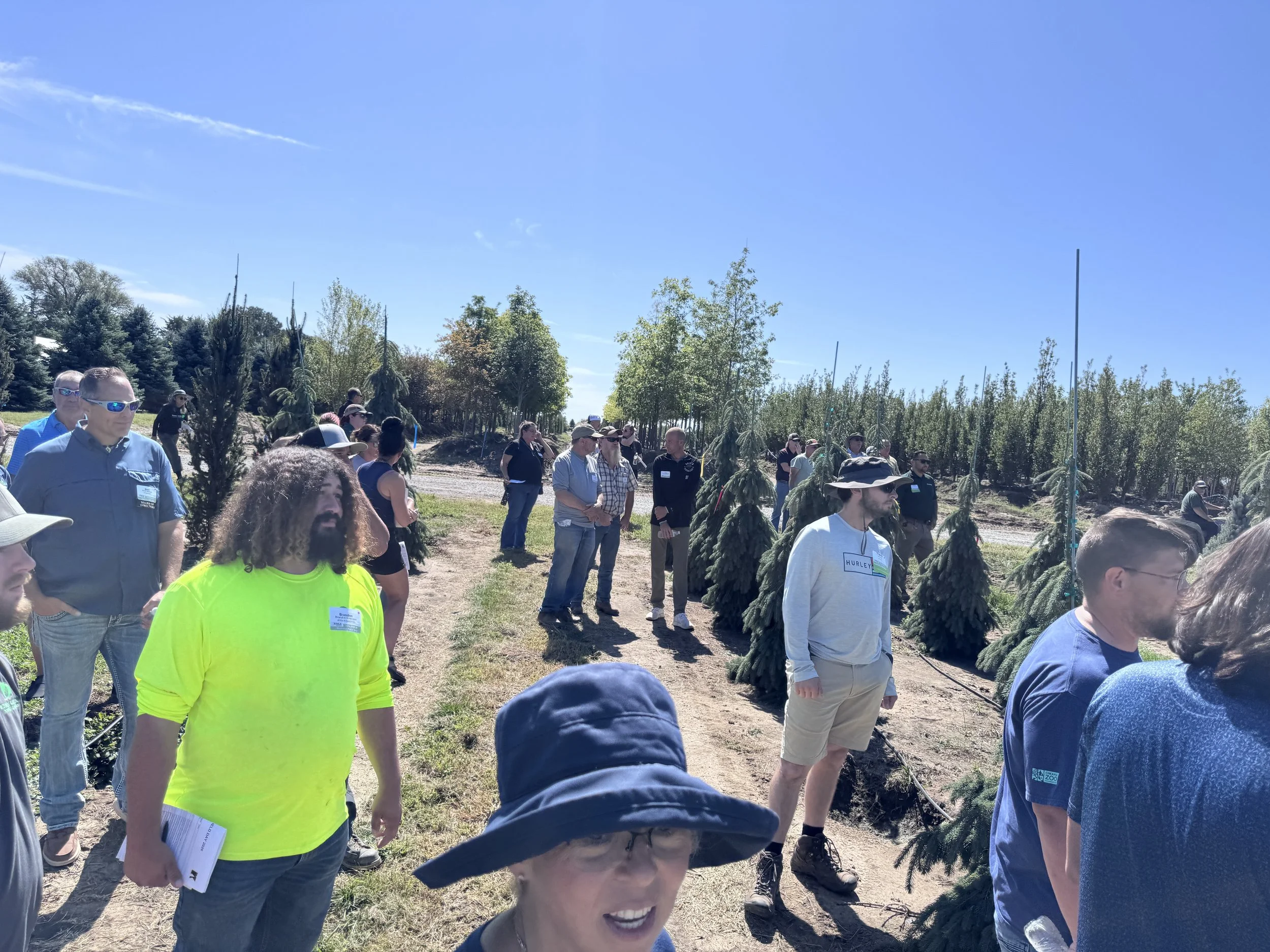
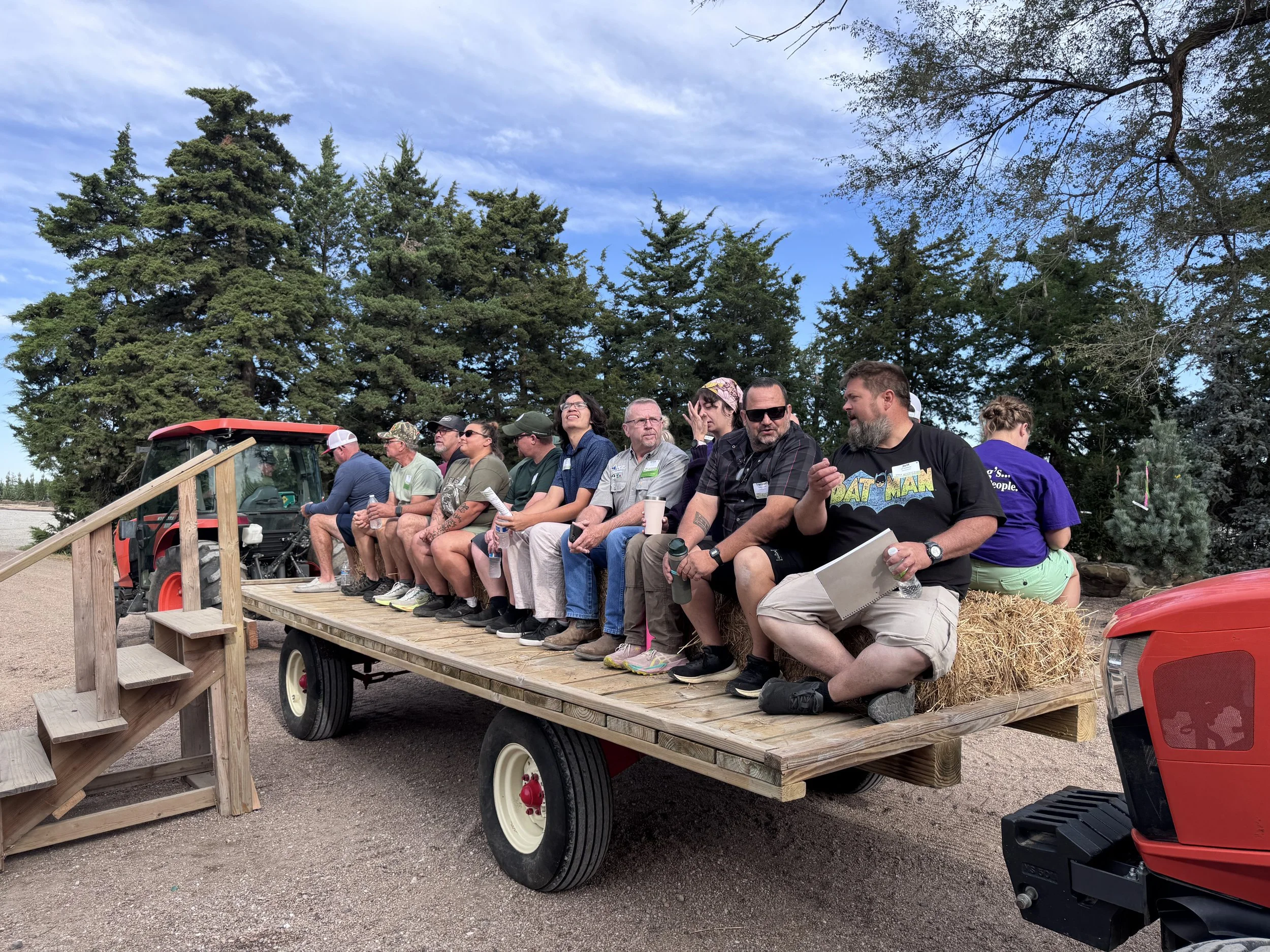
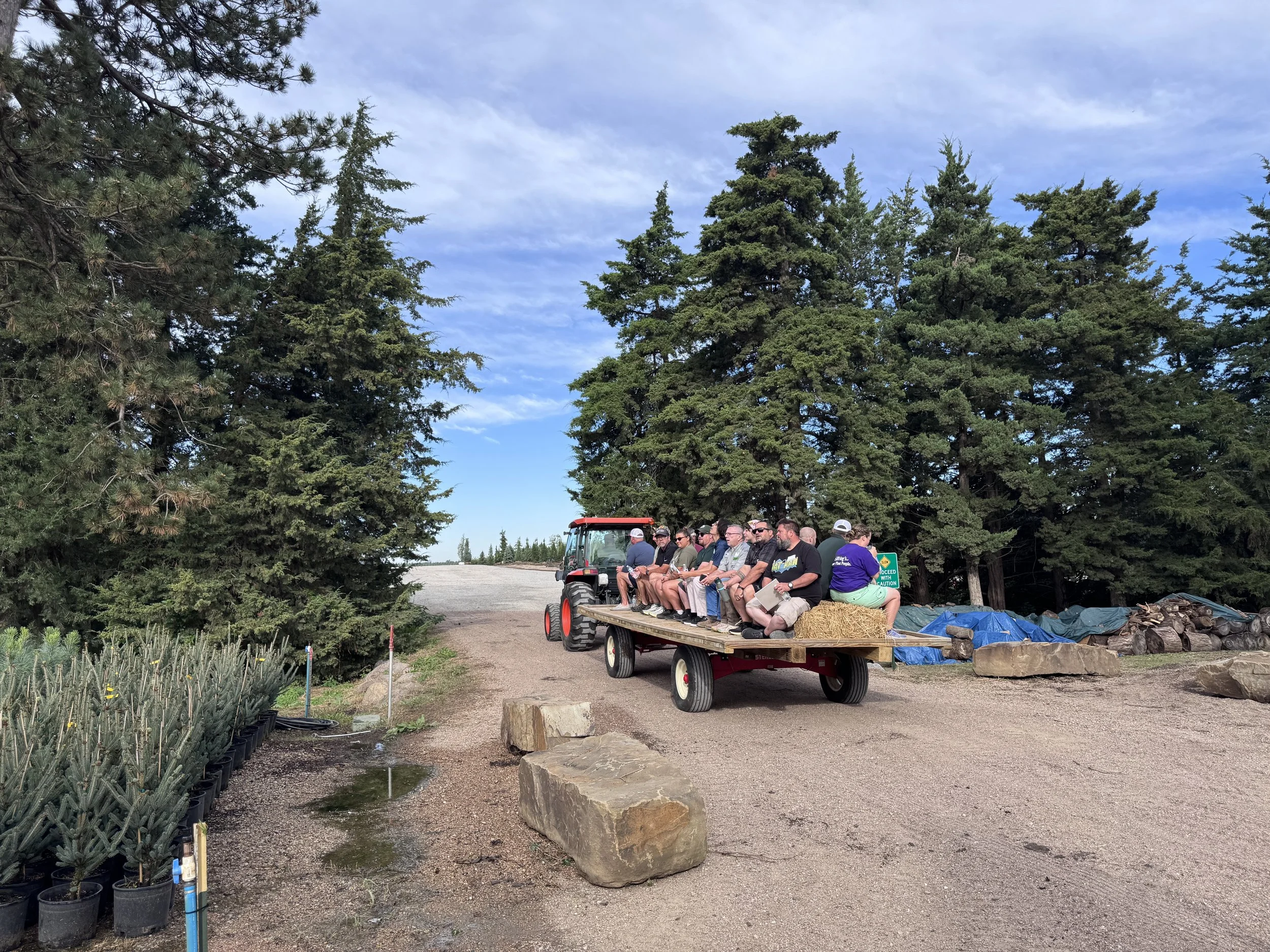
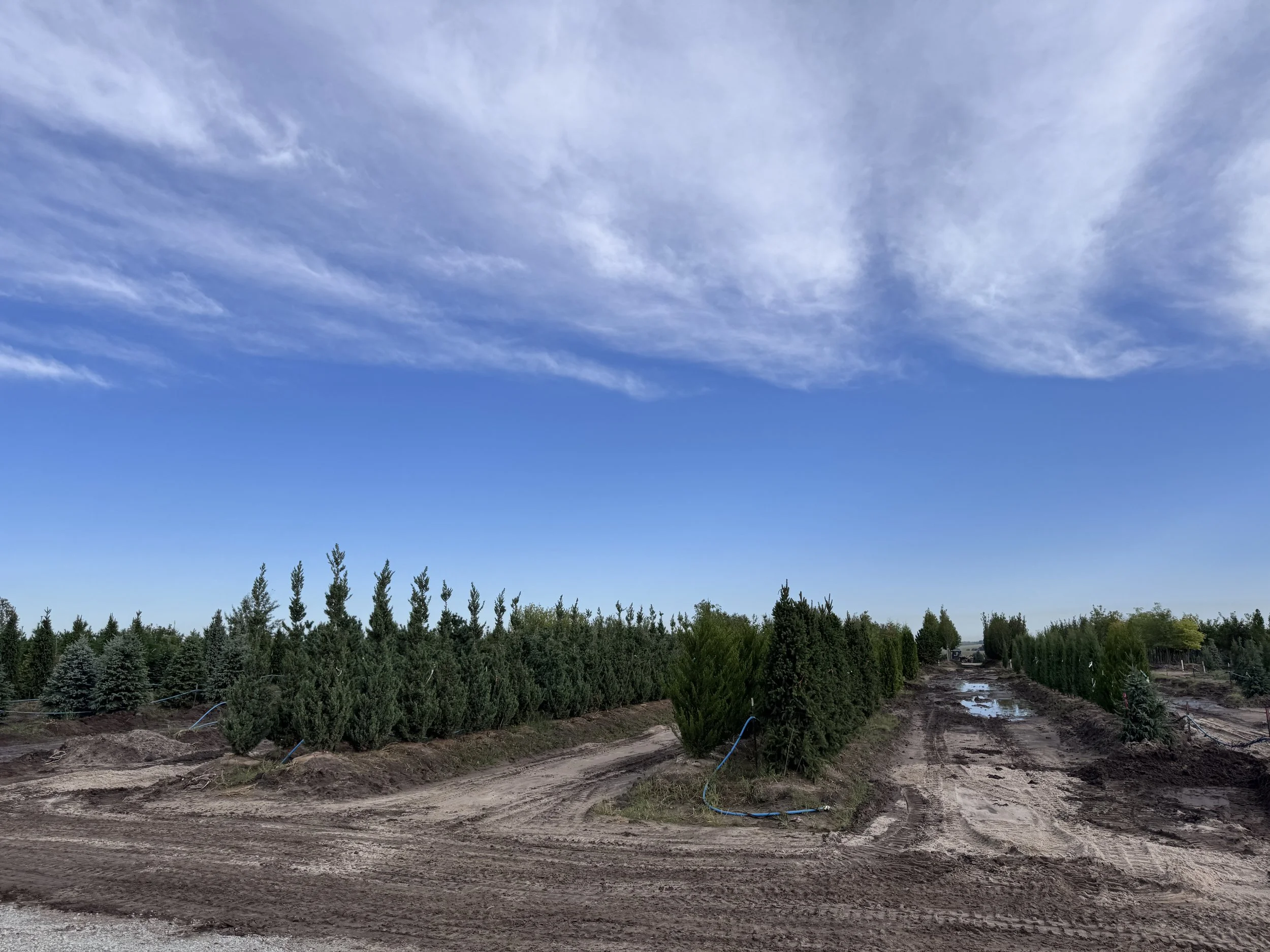
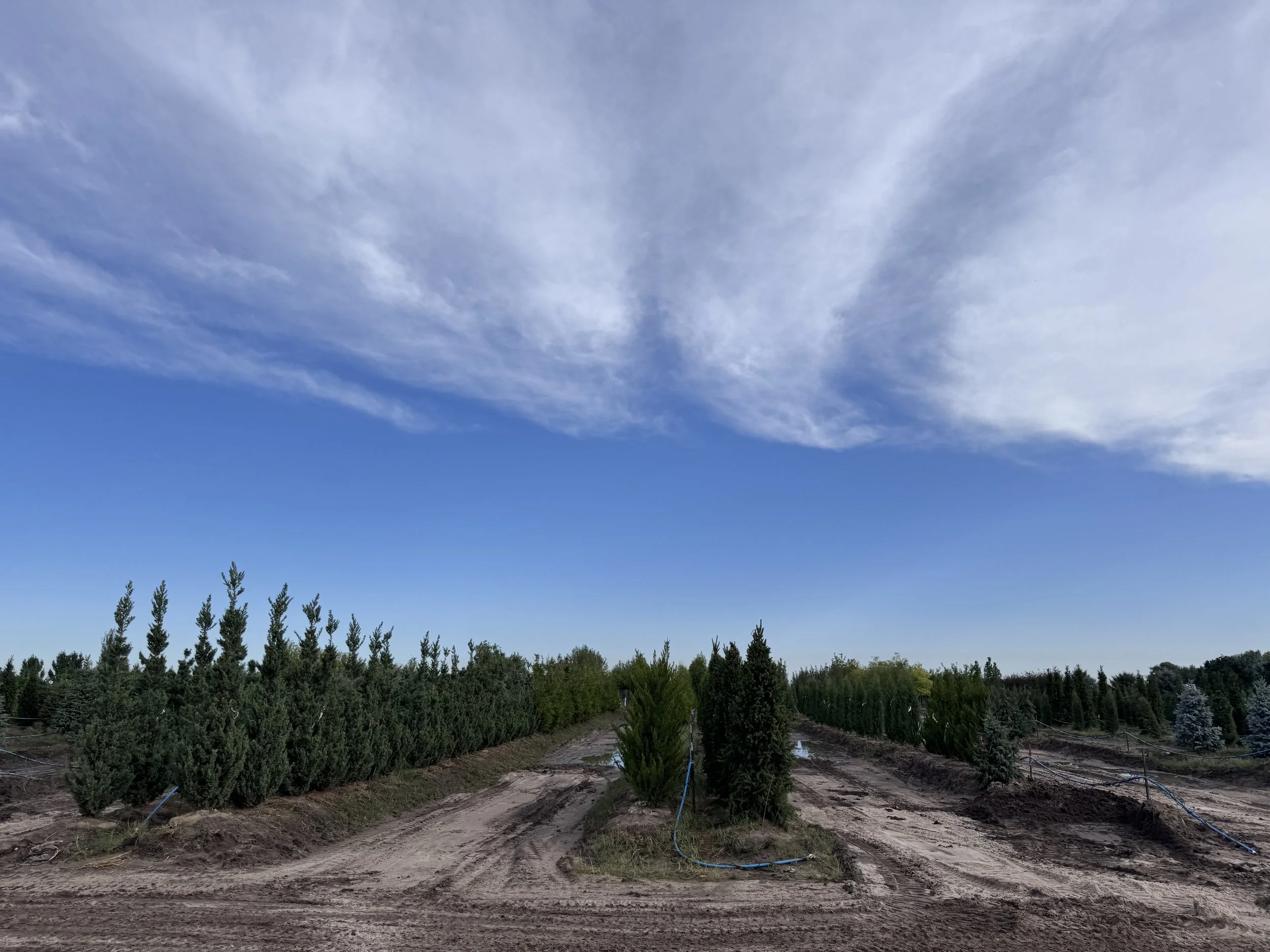
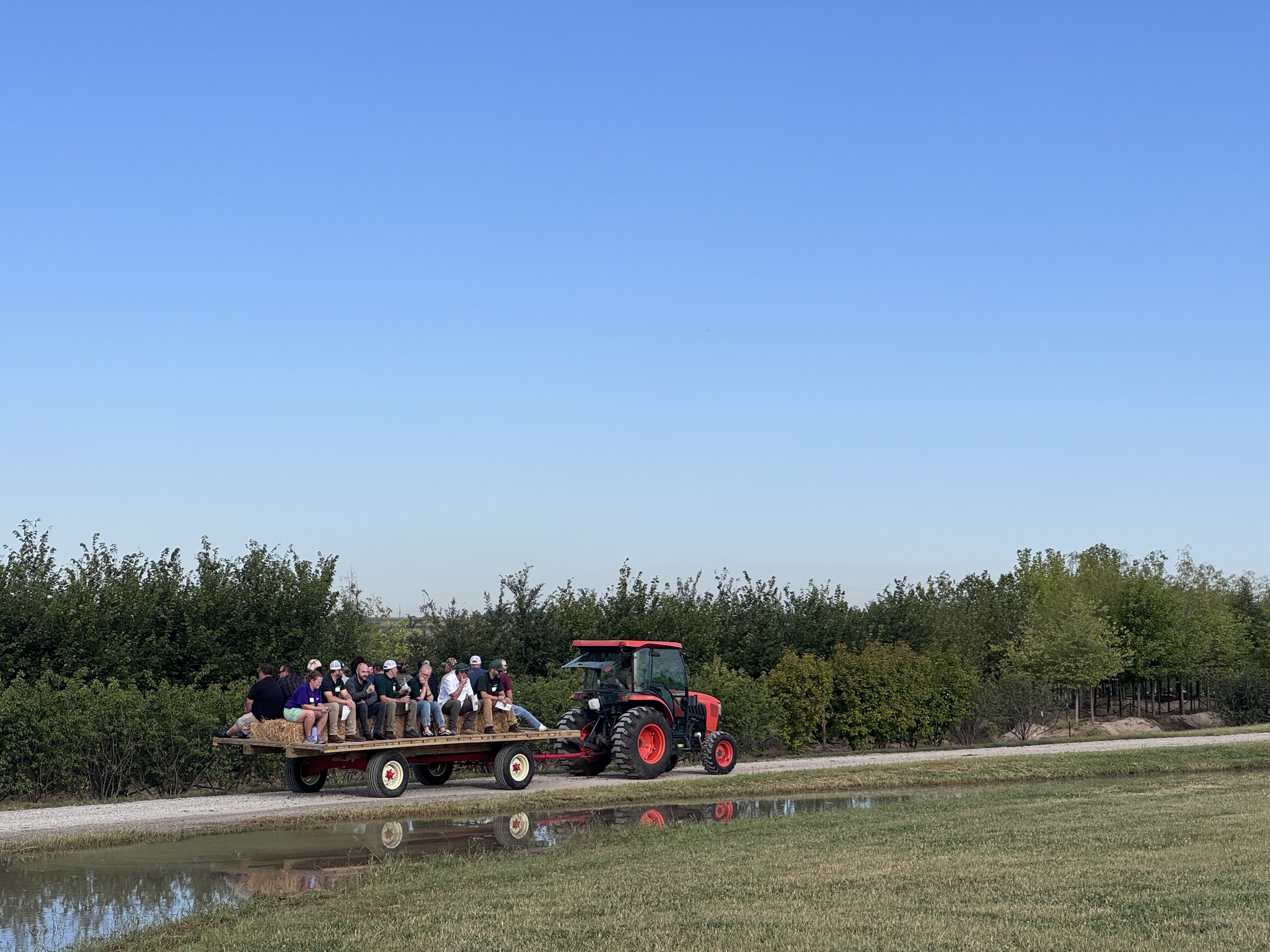
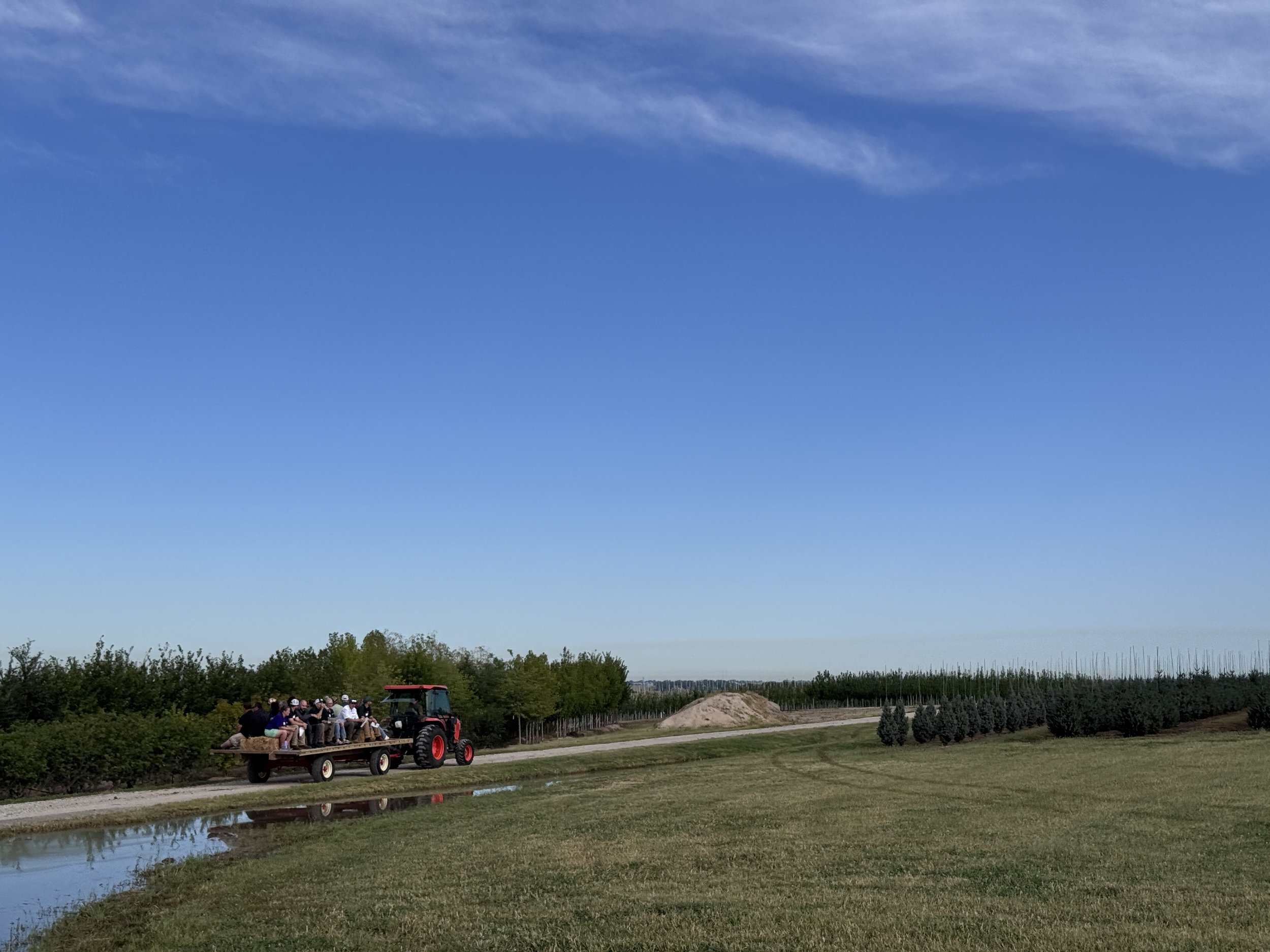
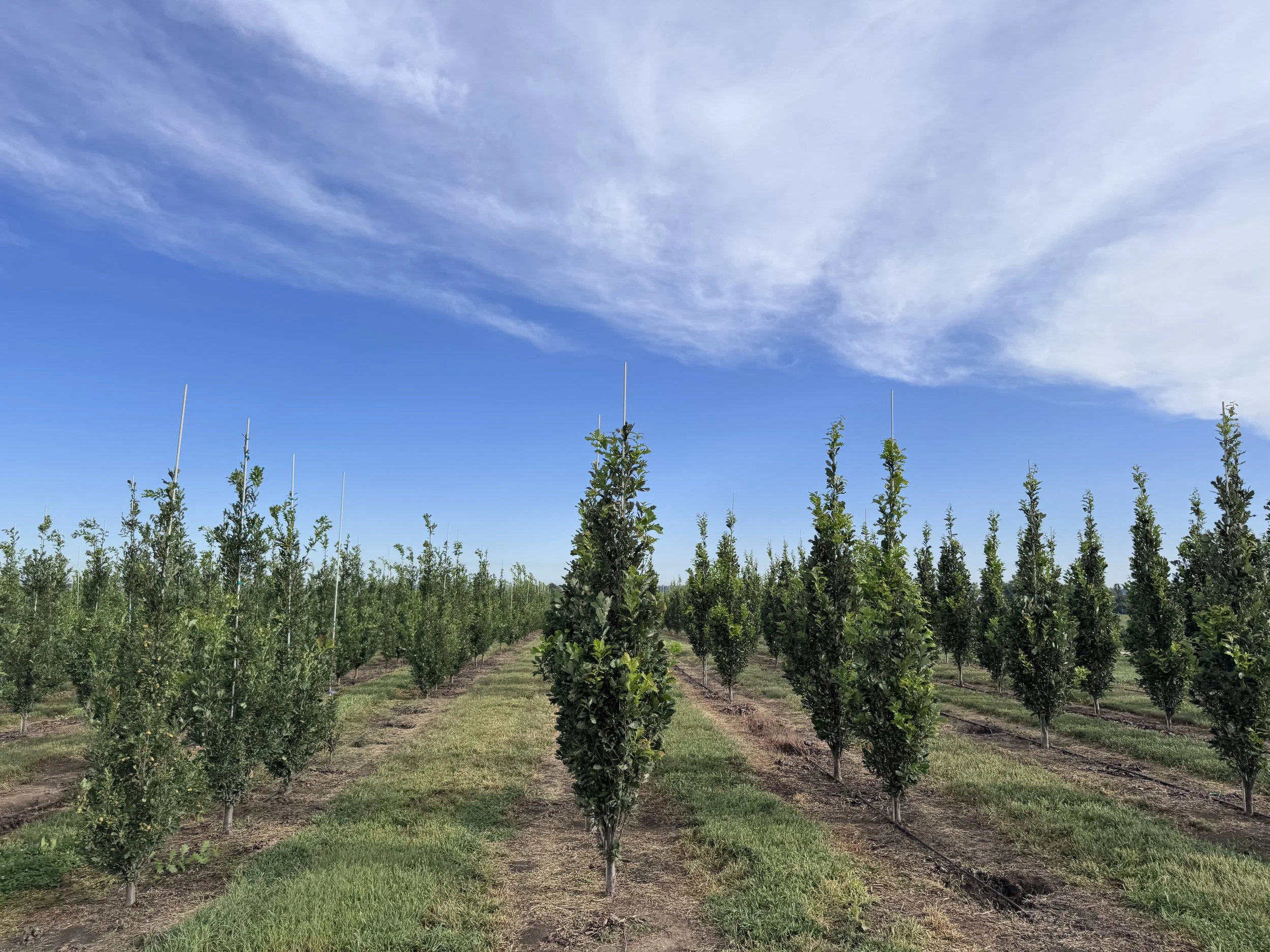
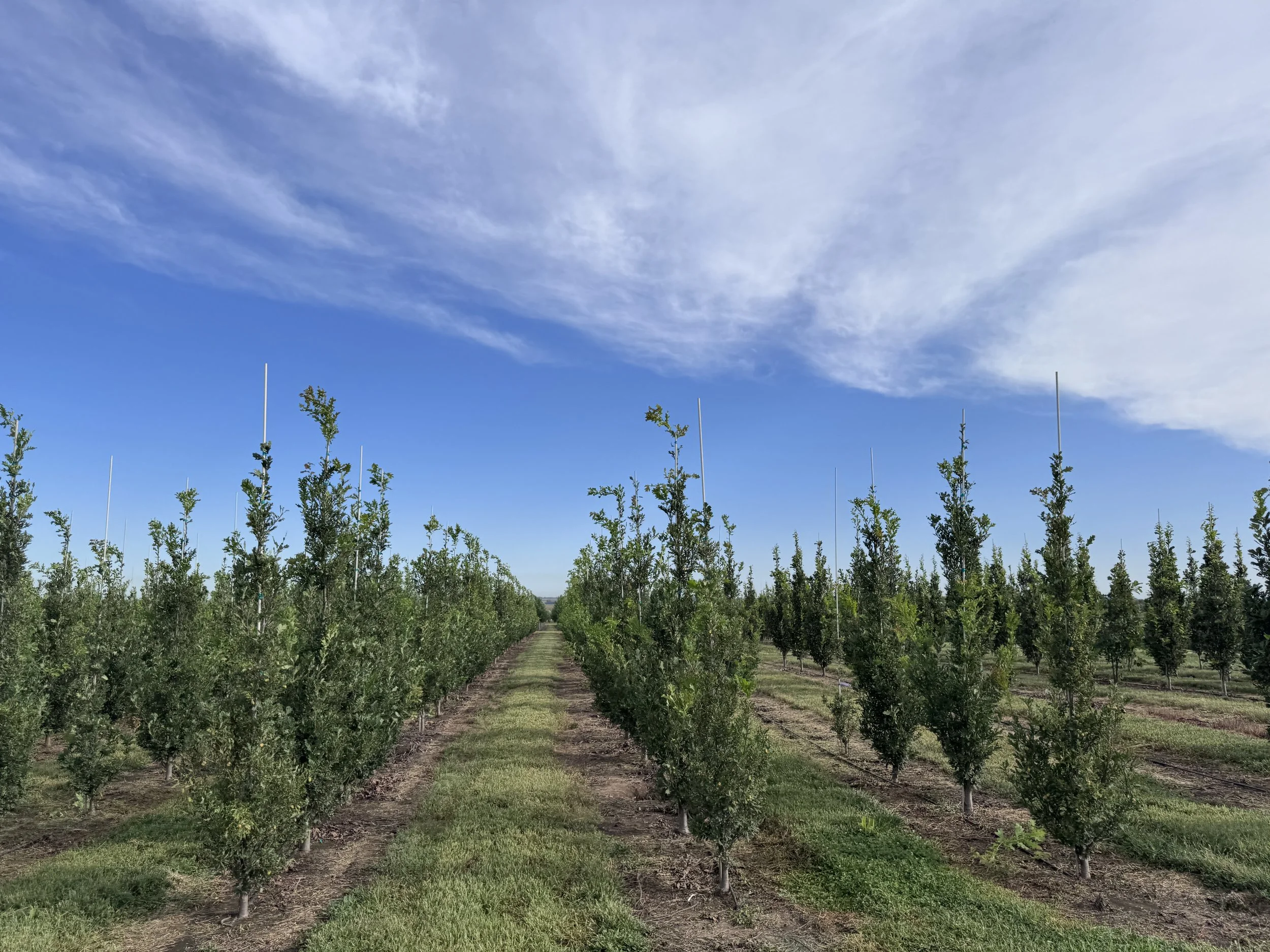
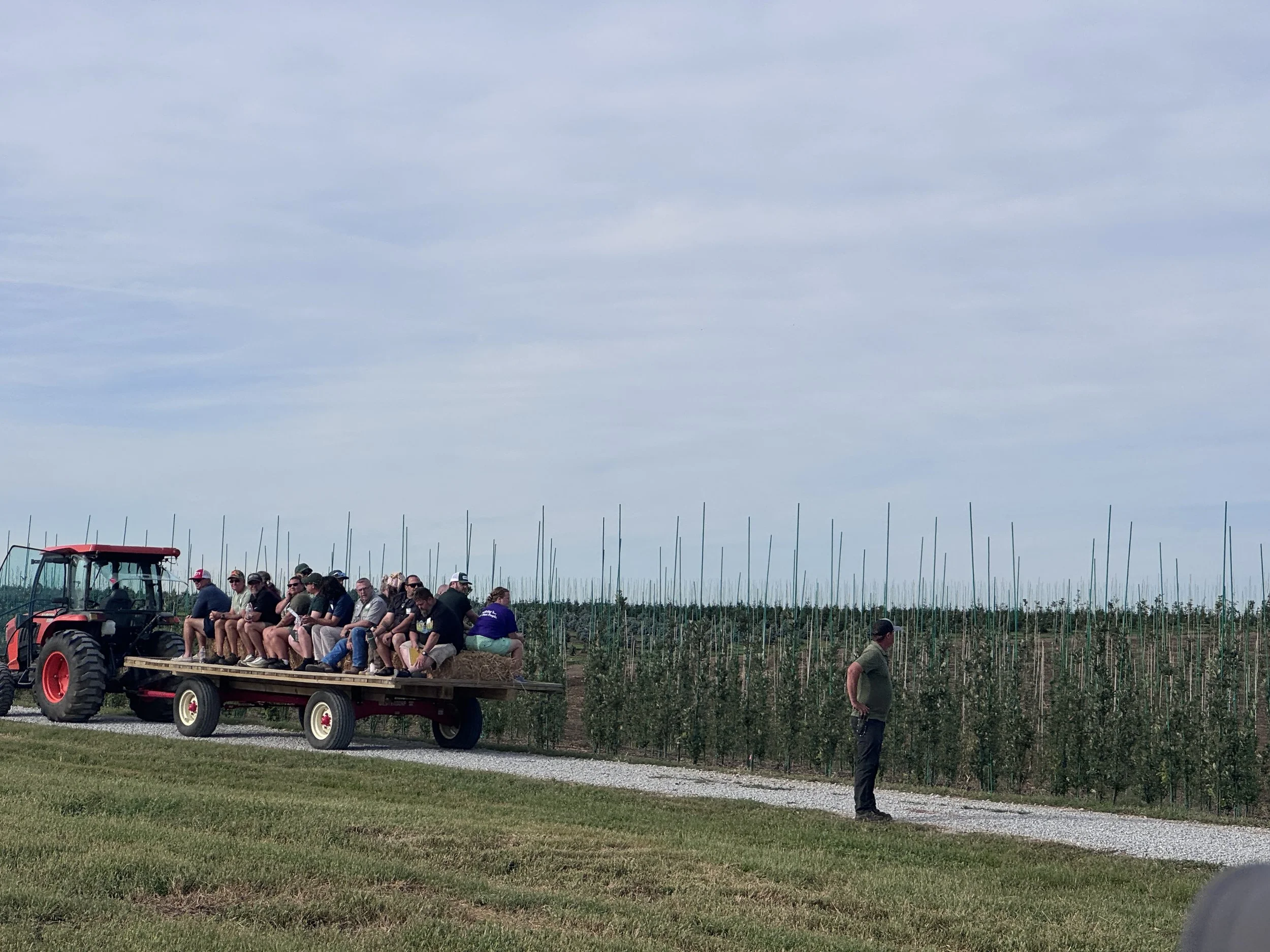
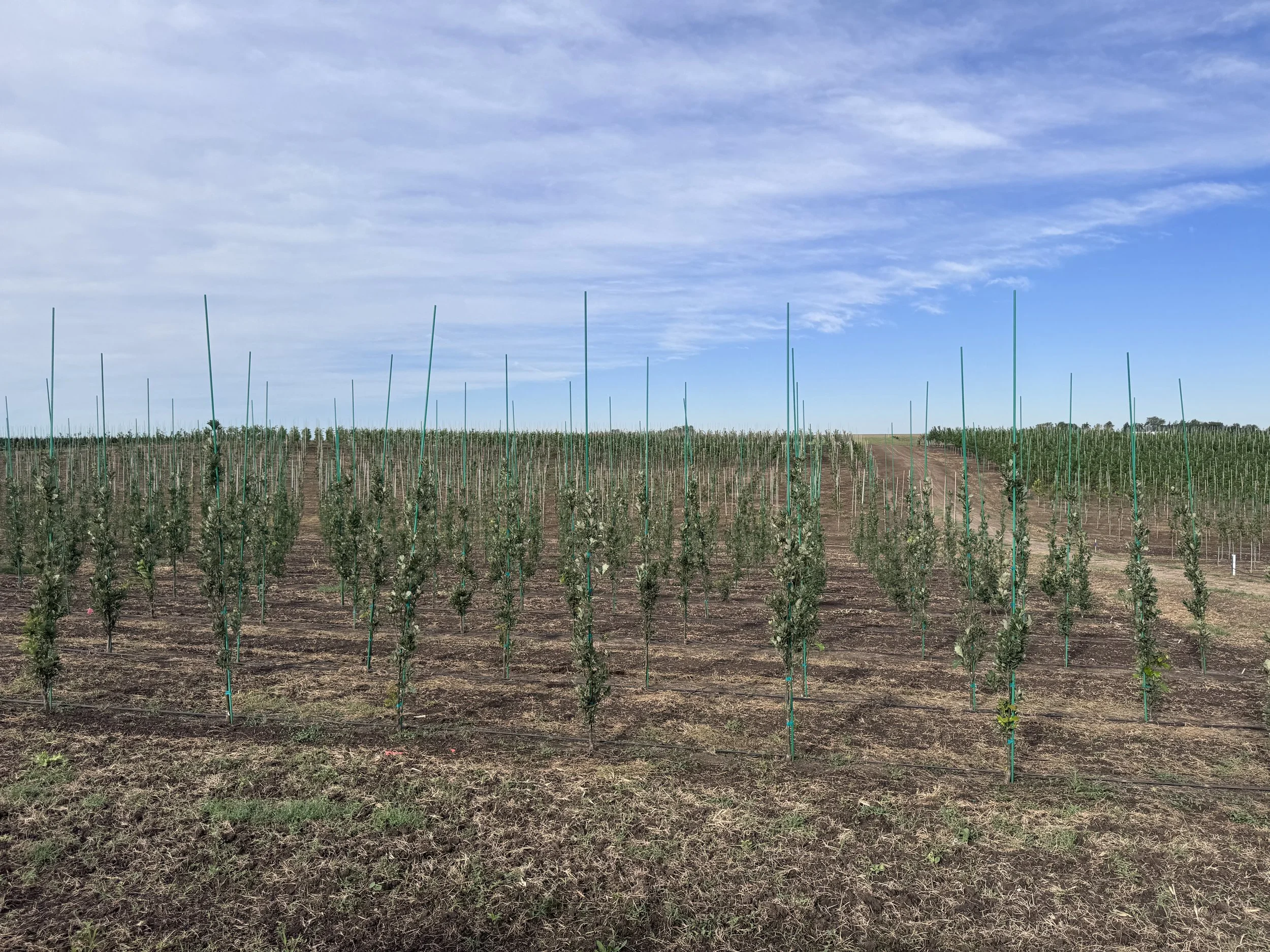
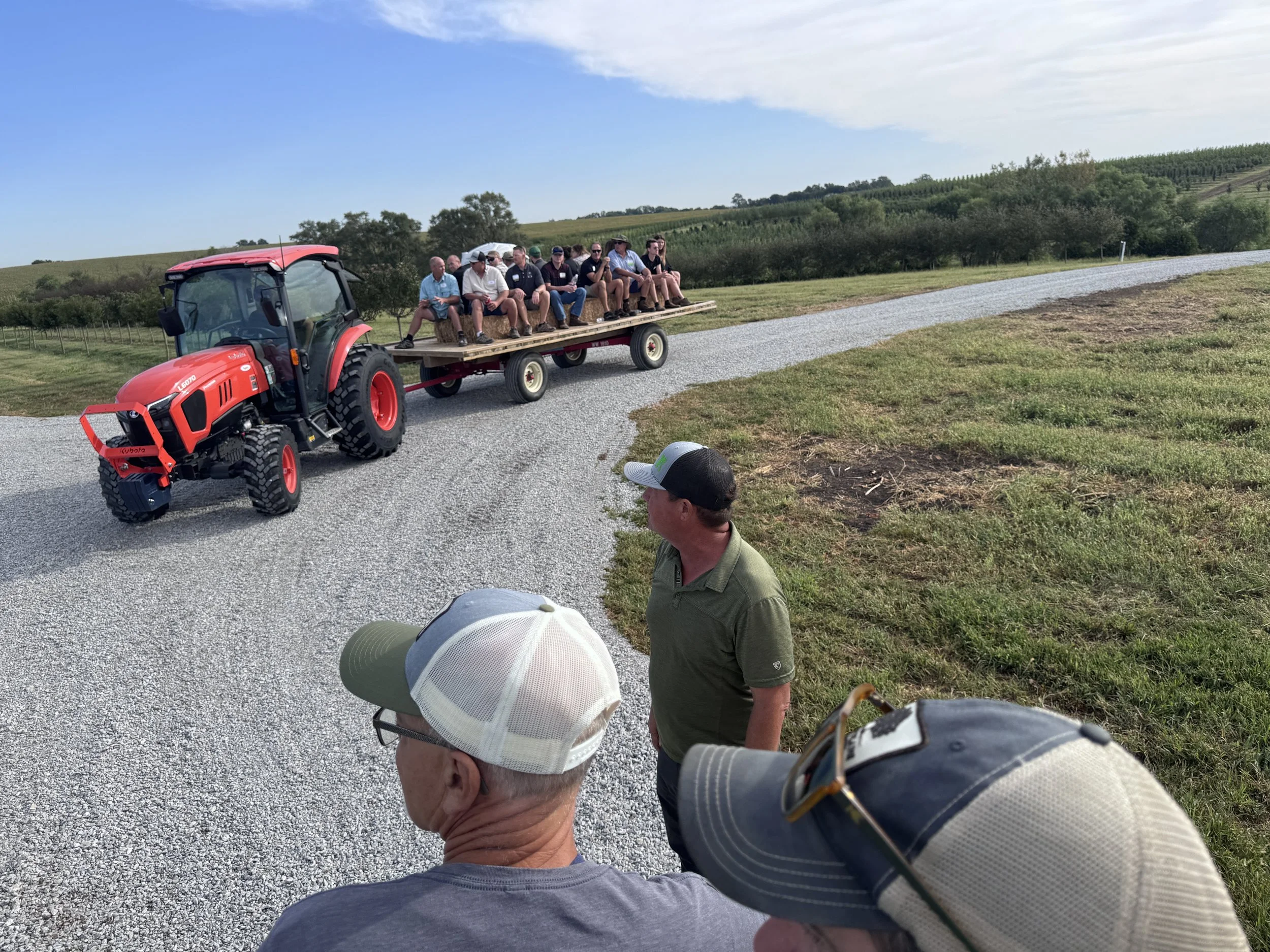
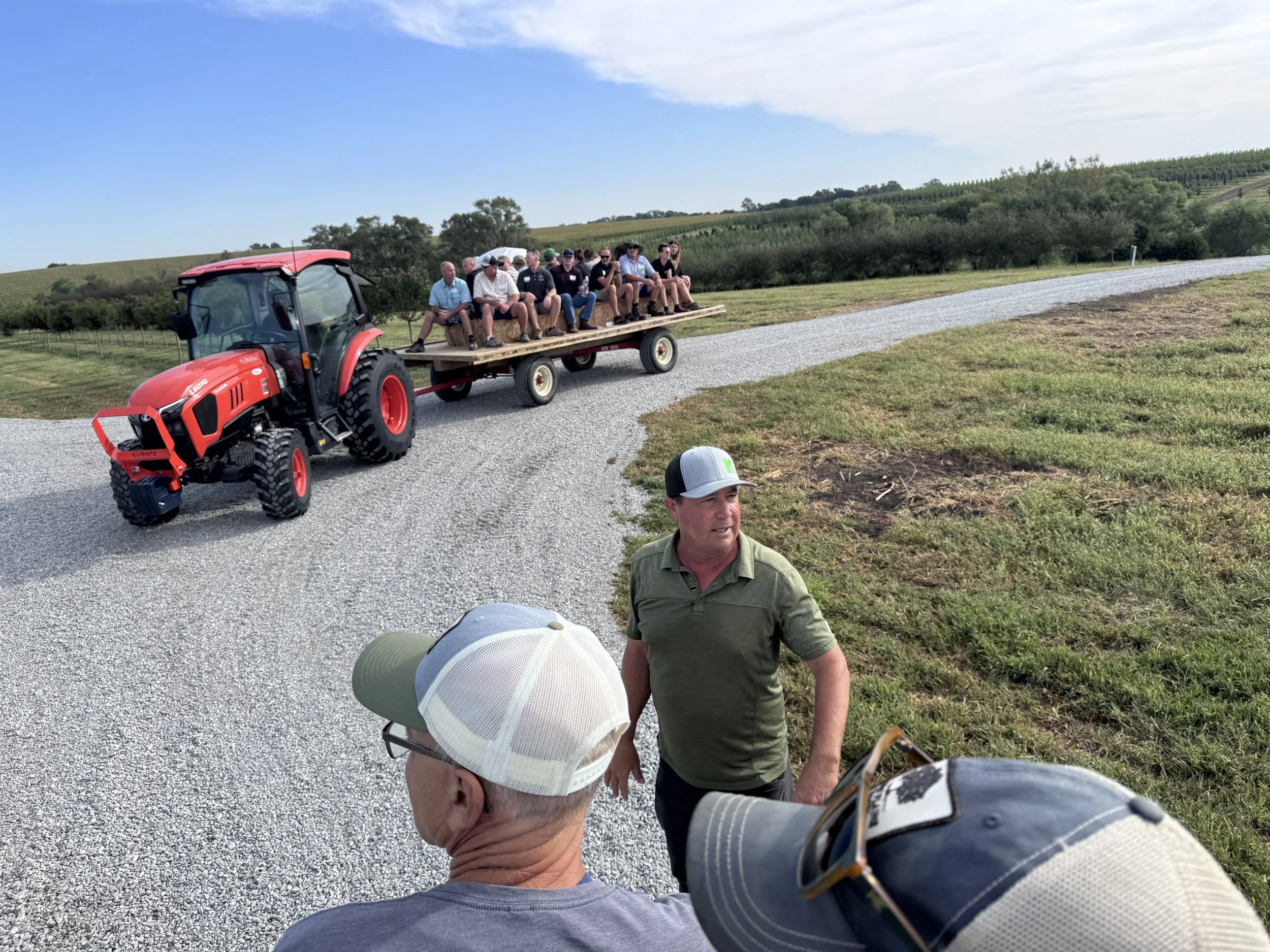
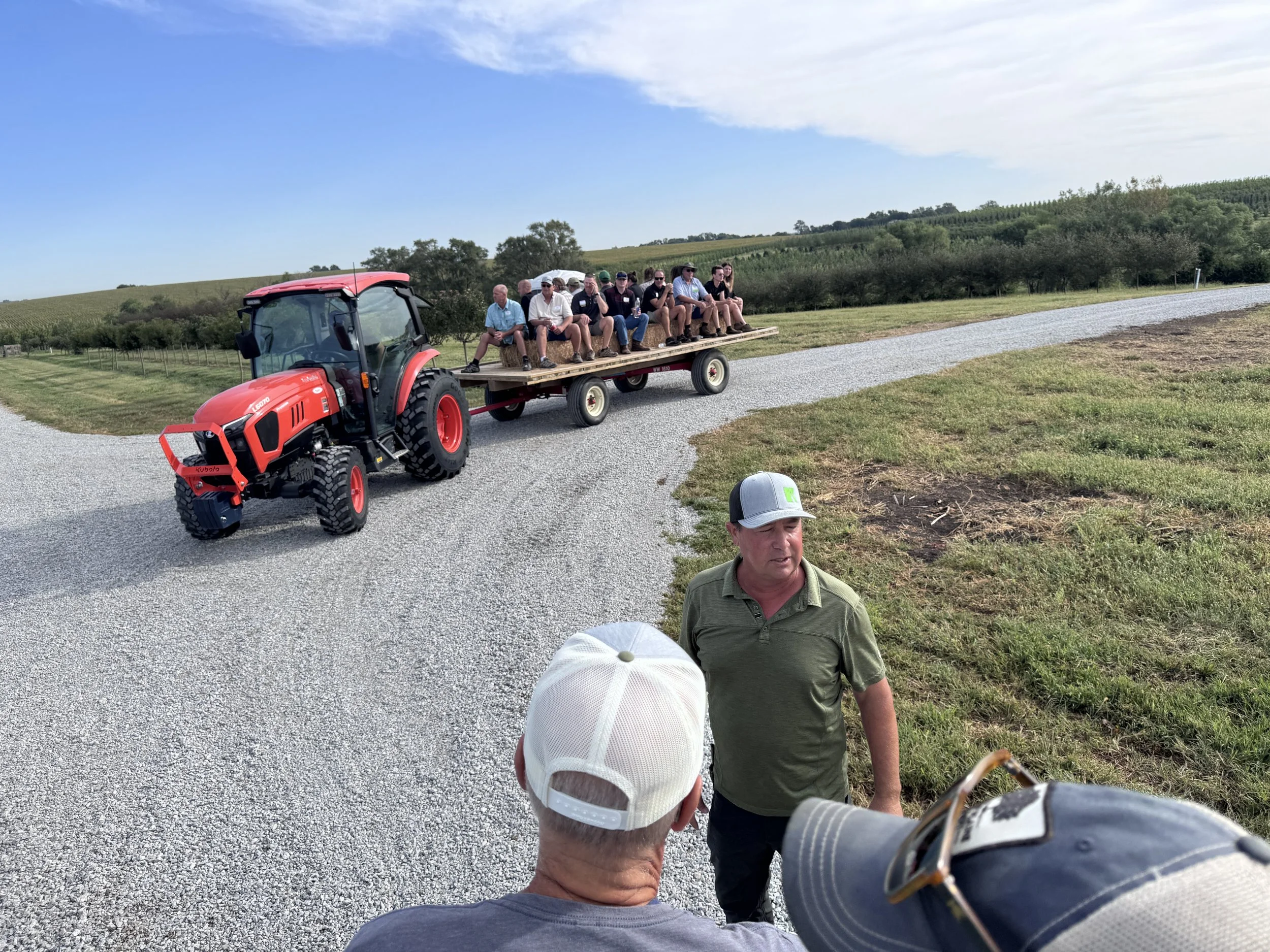
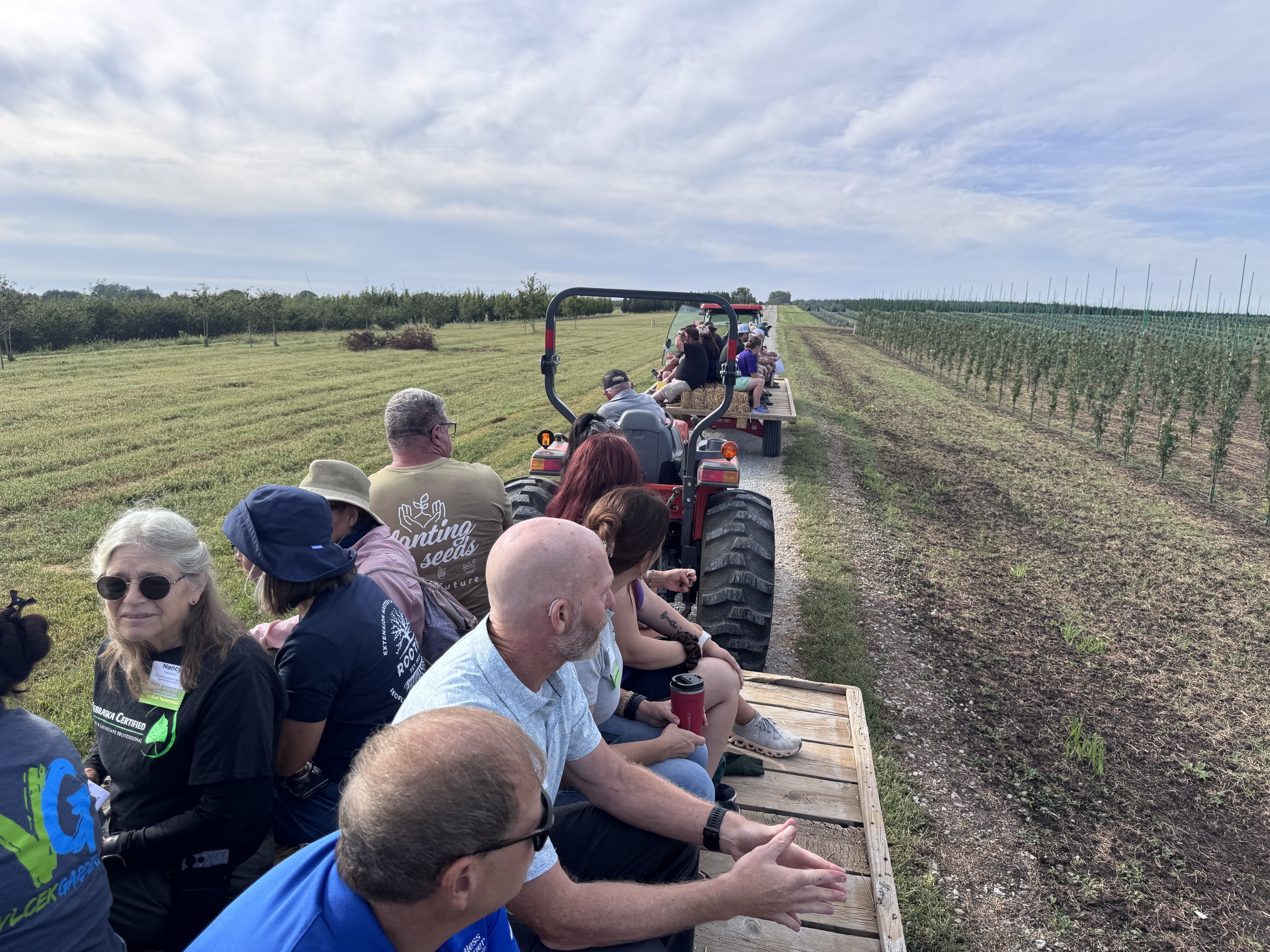
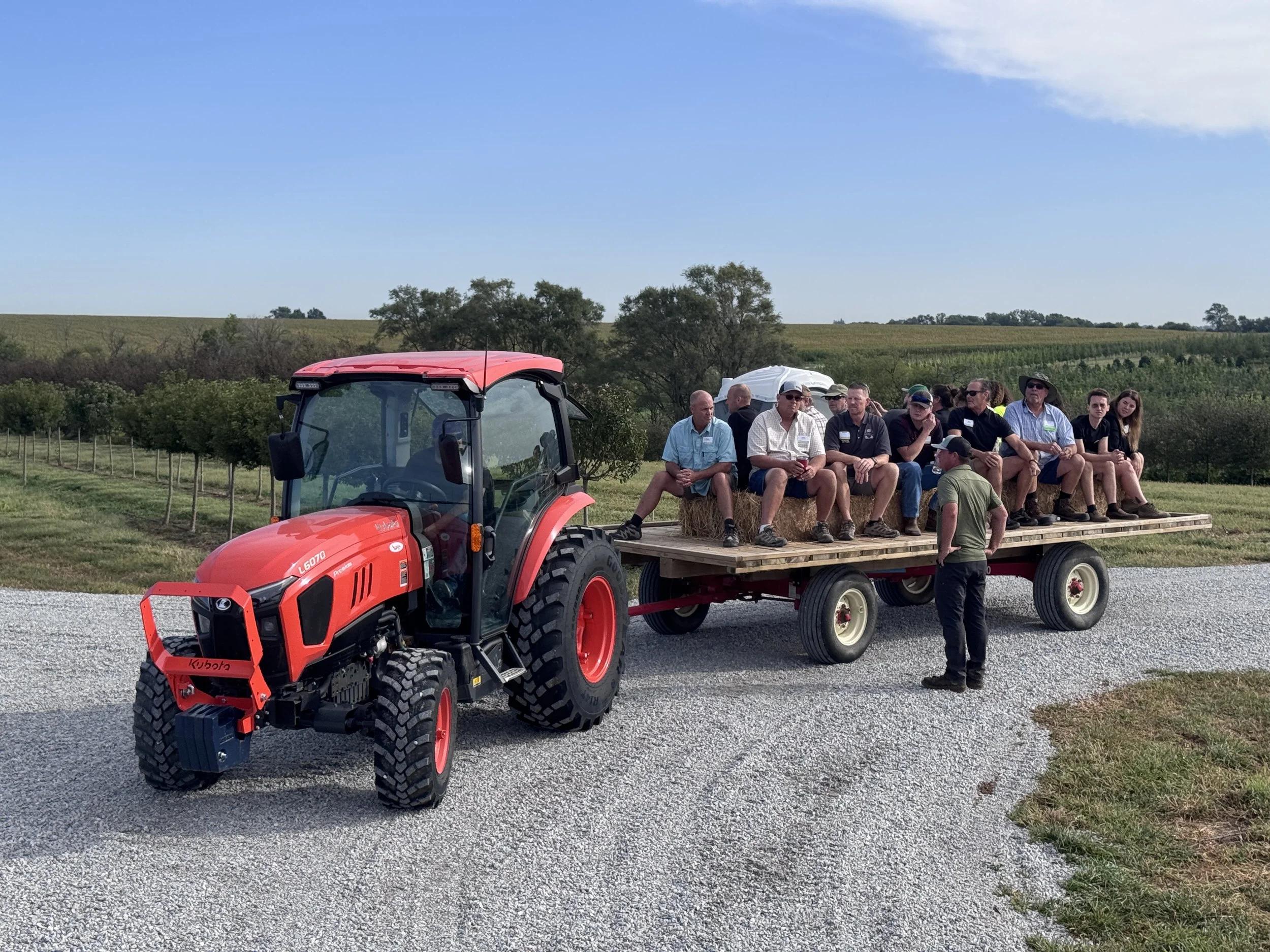
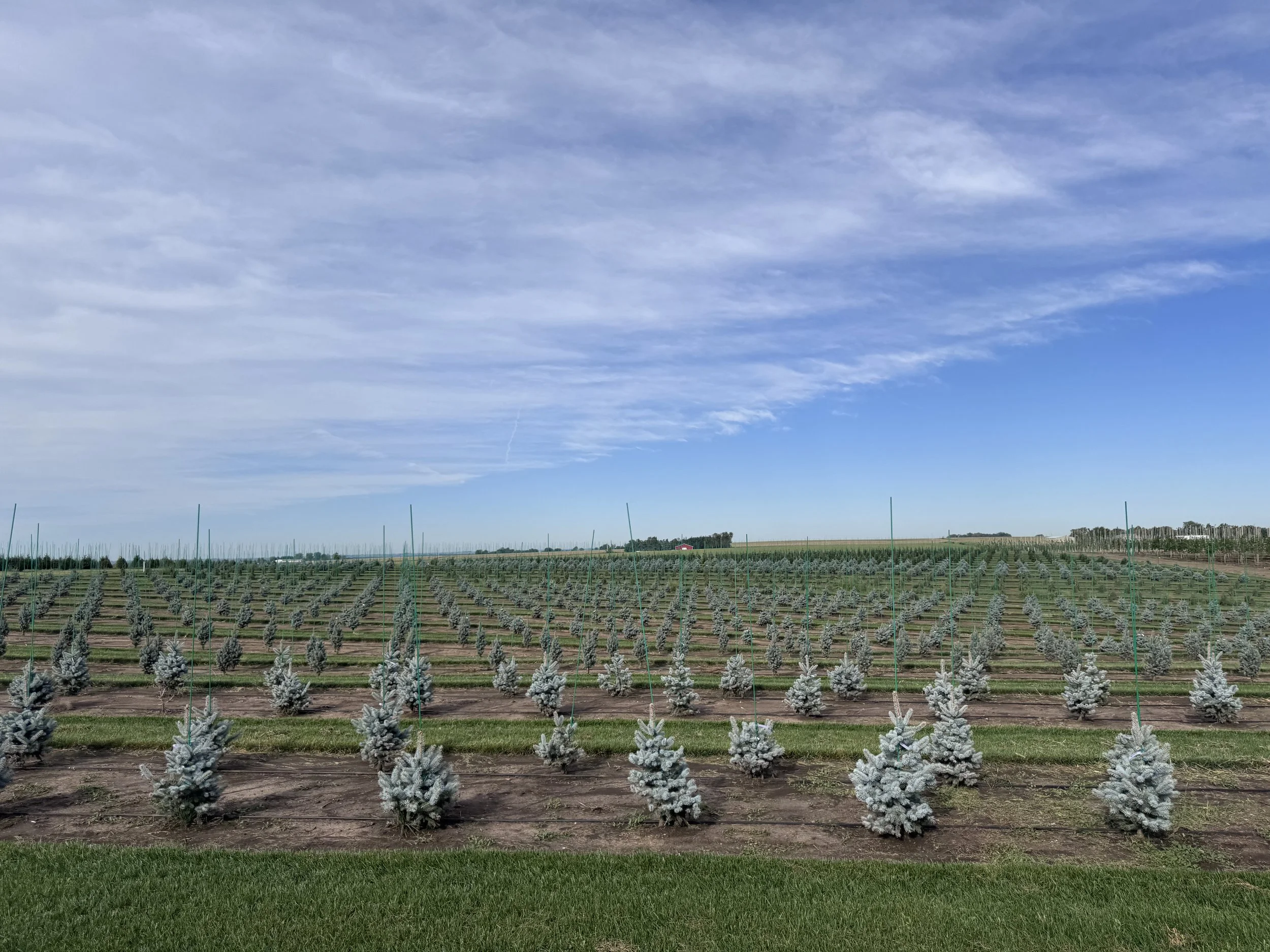
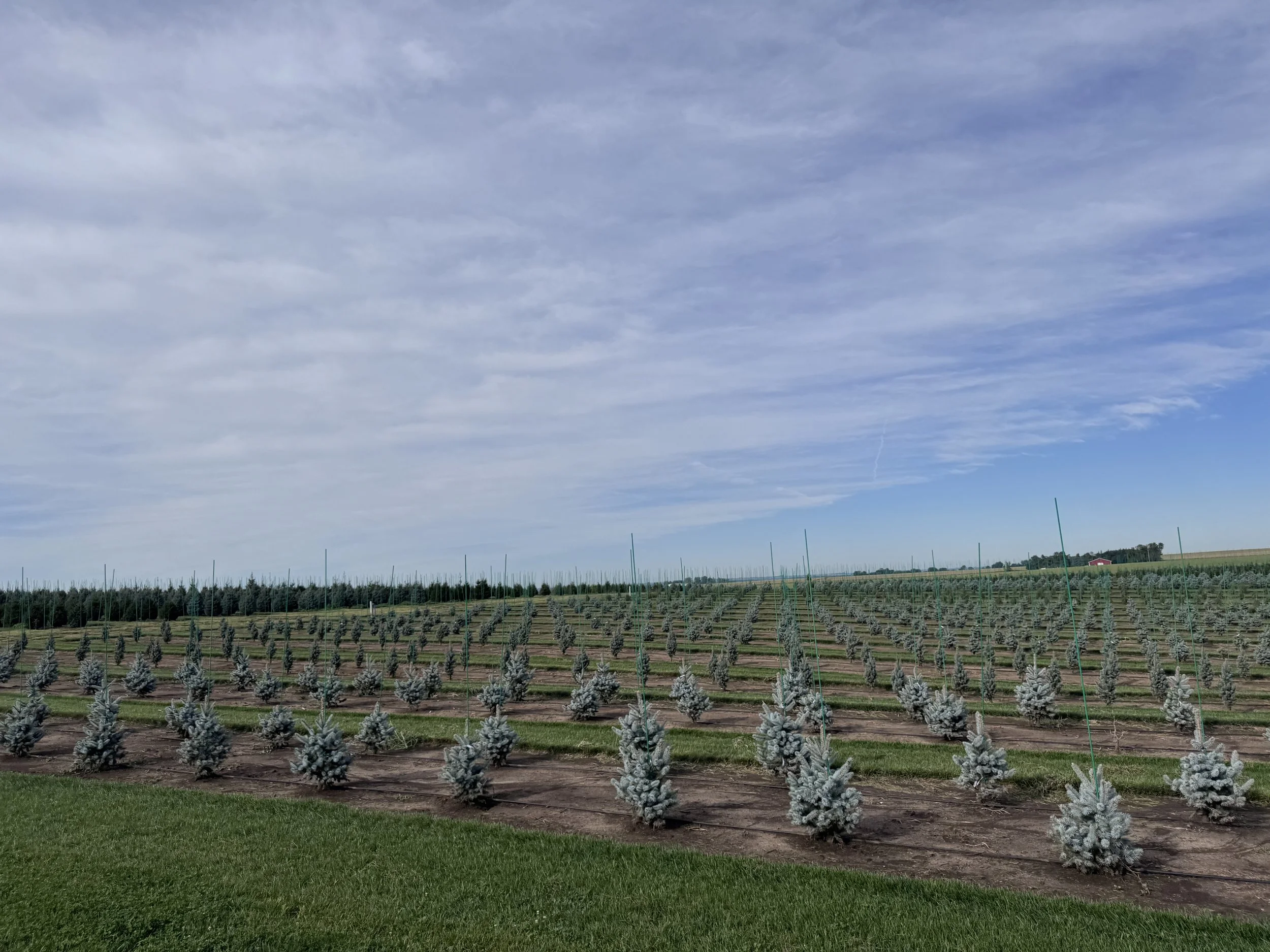
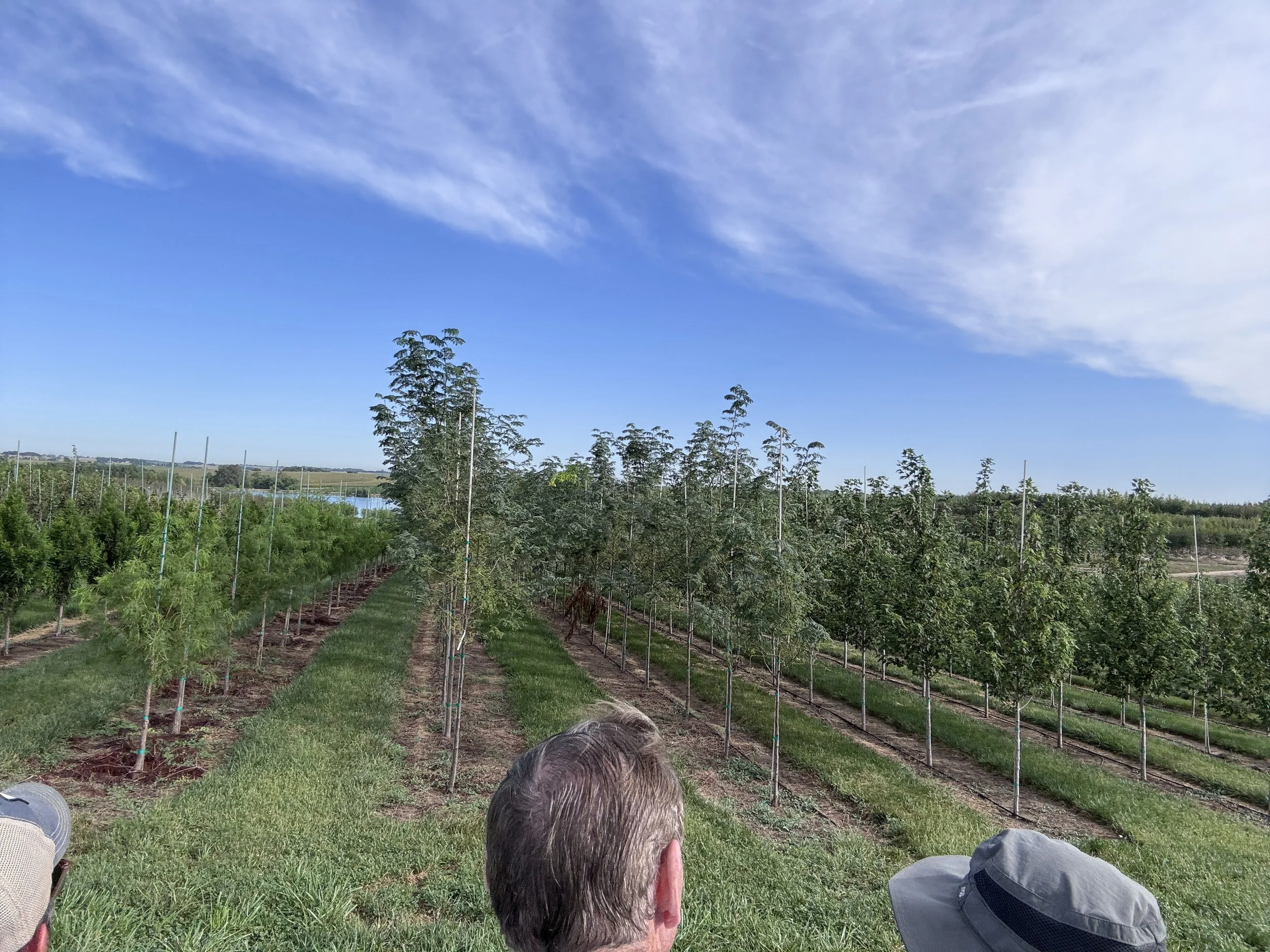
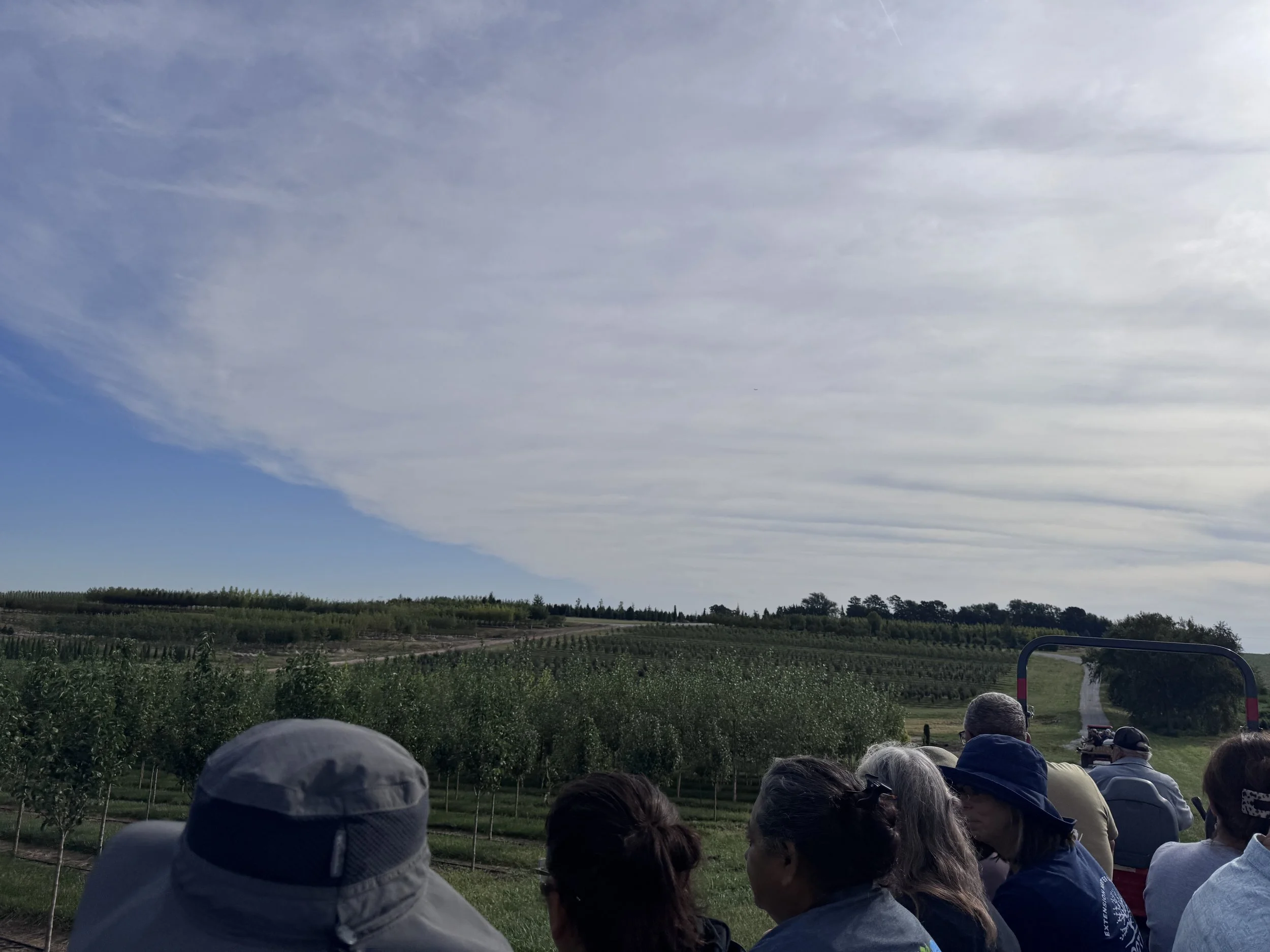
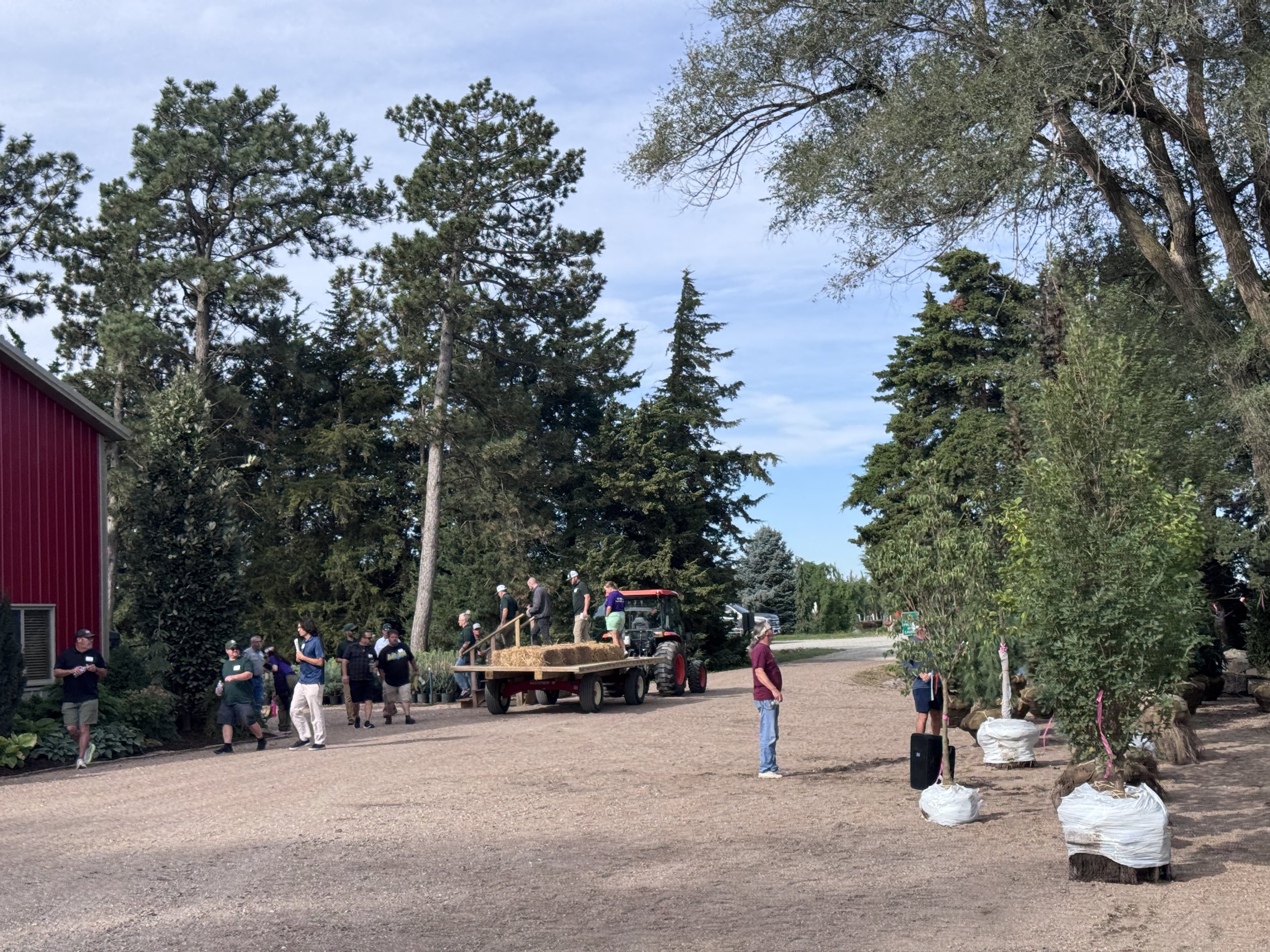
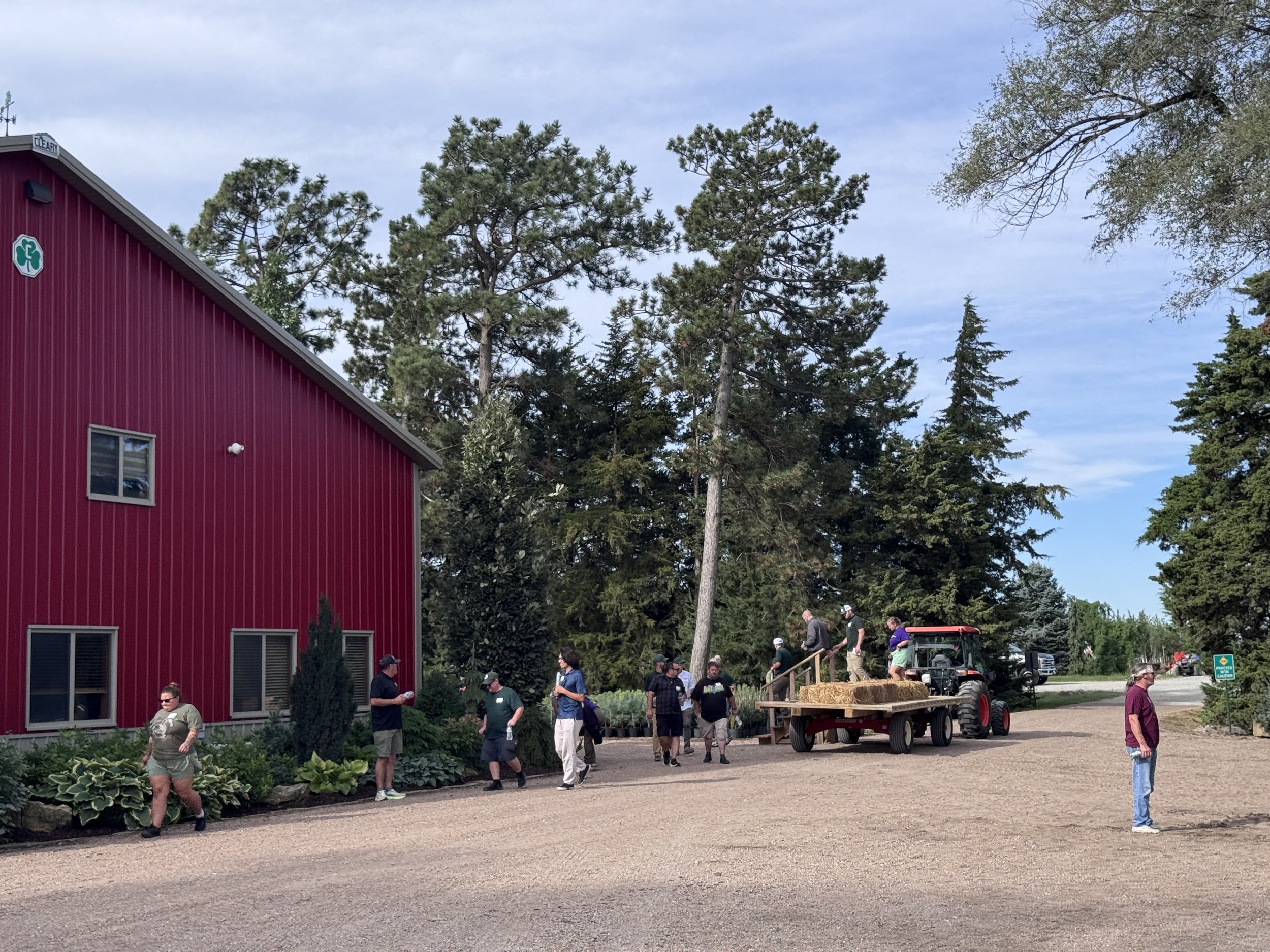
The 67 attendees were given a hayrack tour through the nursery to see the field production of the deciduous and evergreen trees. The straight, clean rows of trees were an impressive sight.
After a short break, NNLA members were split into two groups. One group was taken on a walking tour of the shrub yard by Jack McCarthy and Amy Brown. Jack shared that they focus on having diverse plant material to meet client needs. He emphasized “right plant, right place” and that professionals need to manage homeowner expectations of plants. He discussed that the assigned zone doesn’t matter as much as plant material being able to handle sudden swings in weather and drastic temperature changes. Jack recommended a few plant species for their performance: ‘Cat’s Pajamas’ catmint, ‘Blackhawk’ big bluestem, ‘Kodiak Orange’ diervilla, ‘Little Lime Punch’ hydrangea, the ‘Sky Sails’ series yarrow, ‘Midnight Purple’ salvia, and ‘Boom Chocolata’ geranium.
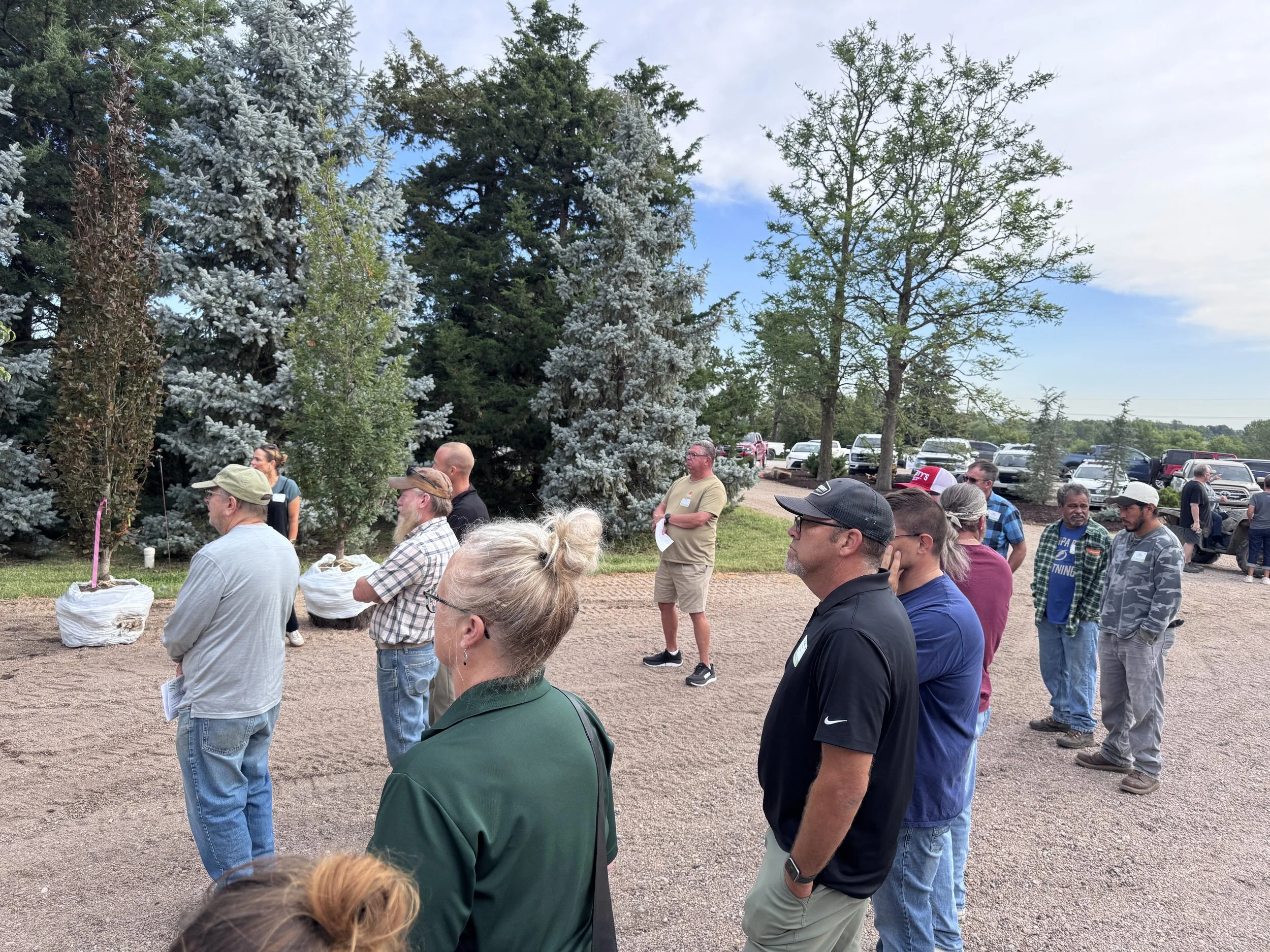
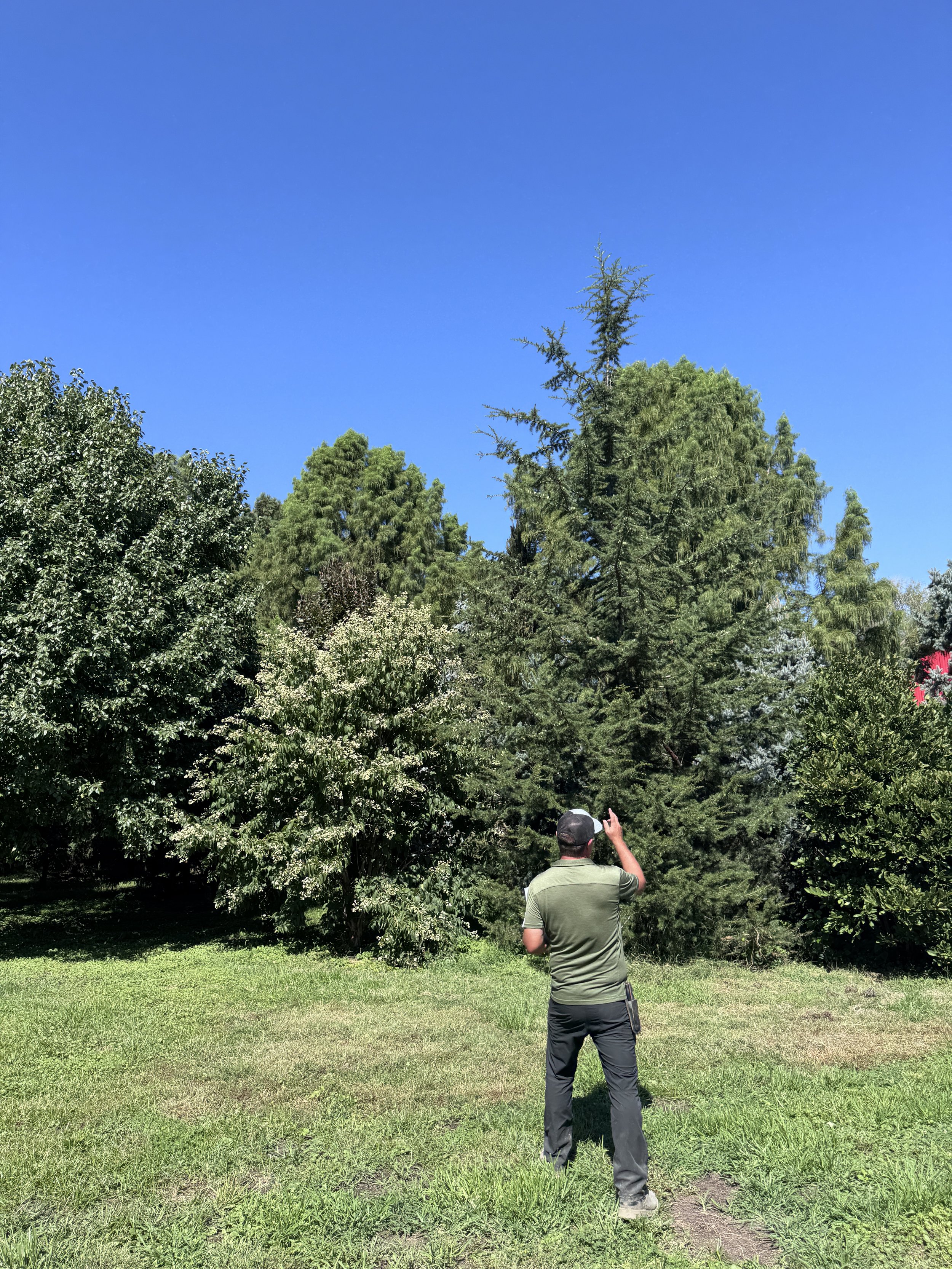
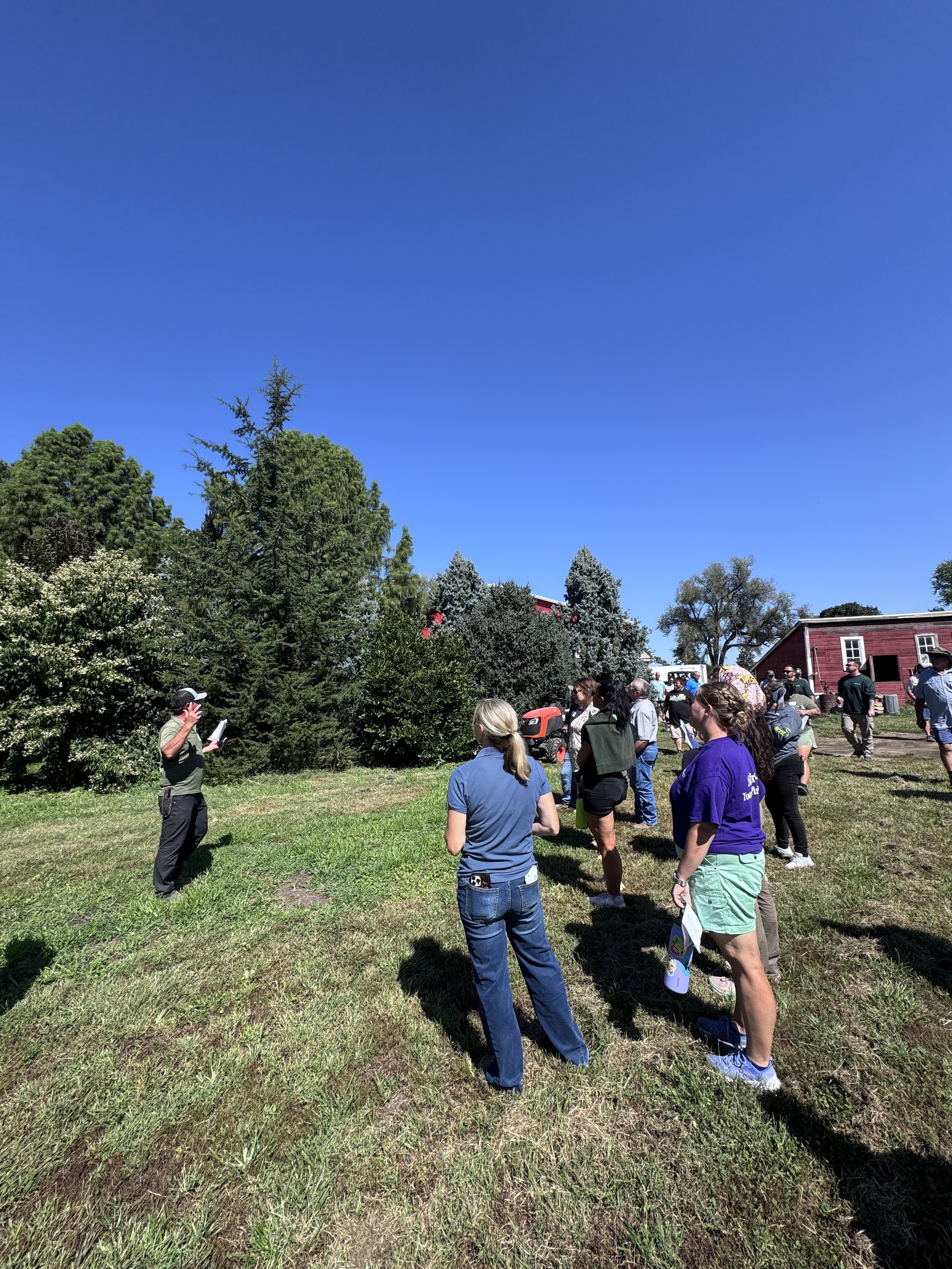
The other group was led by Darin through a discussion of underutilized and unique tree varieties. He shared his favorite evergreen trees including ‘North Pole’ arborvitae as a replacement for the less successful ‘Emerald Green.’ Darin would like to see more unique trees planted in homeowner’s yards so they could be the only person on the block with that tree. Other notable evergreens included: ‘Bruns’ Serbian spruce, ‘Blue Diamond’ spruce, Japanese white pine, and ‘Montrose Charm’ white spruce. Darin mentioned that ‘Stowe Pillar’ pine would be a good alternative to columnar white pine as it grows slower and keeps its narrow habit. He shared that ‘Woodward’ juniper is basically a “blue Taylor” and that it should be used much more. Deciduous trees included ‘Butterflies’ magnolia (the hardiest magnolia Darin has found) and ‘Scarlet Letter’ oak which is better than ‘Crimson Spire’ and ‘Regal Prince’ if you are looking for a columnar oak. Favorite elm species were discussed and ‘Triumph’ seemed to win out.
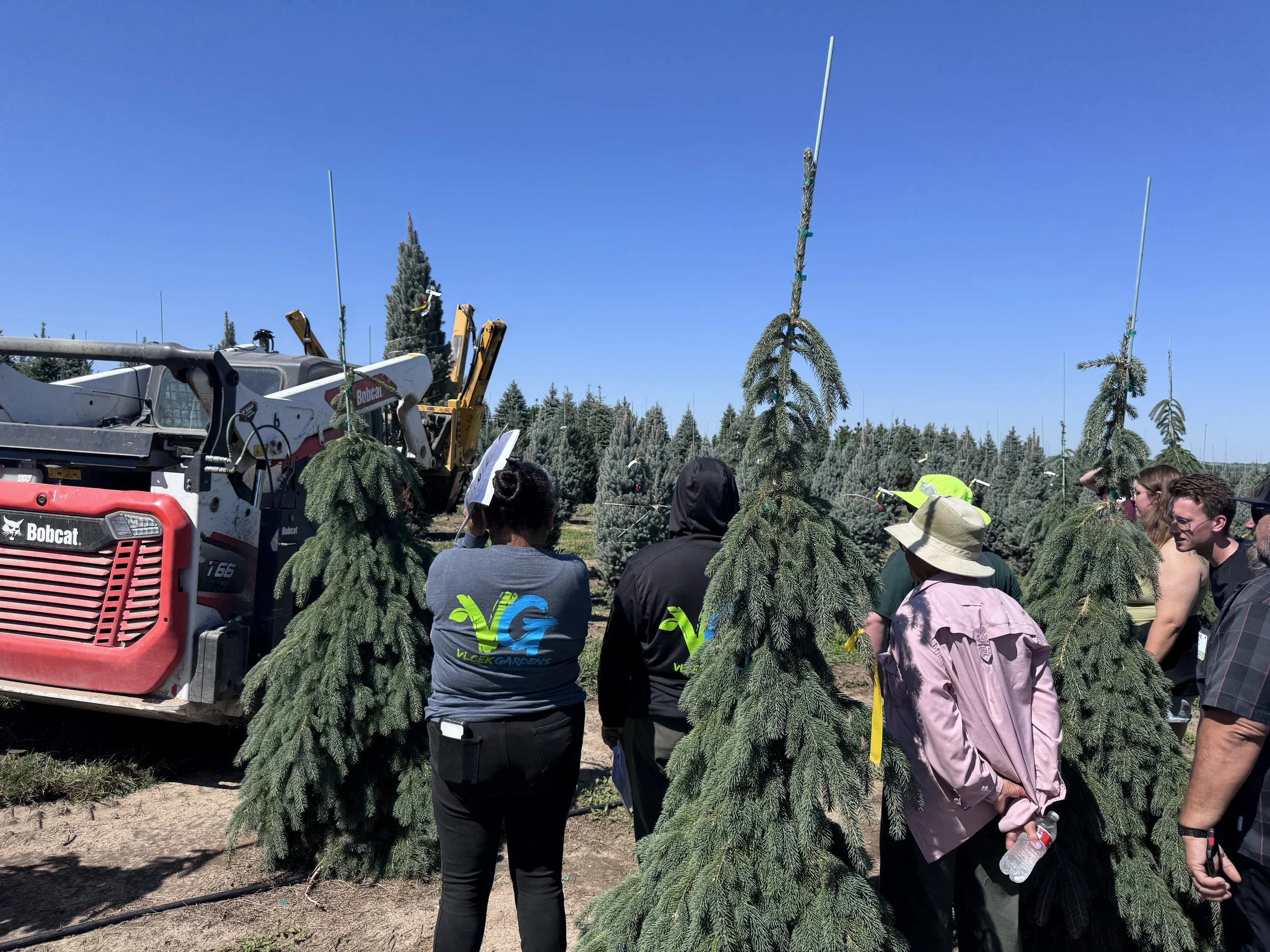
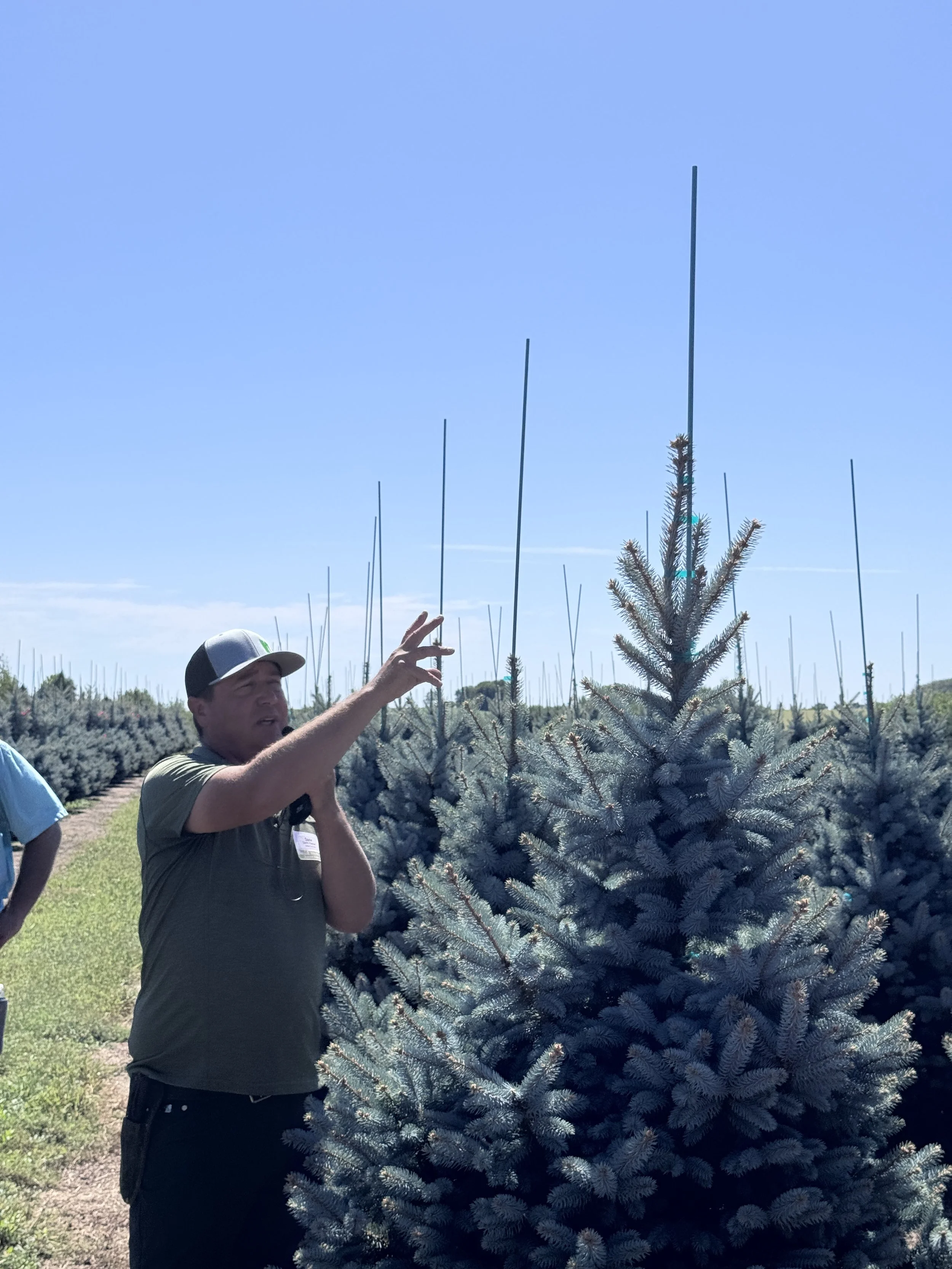
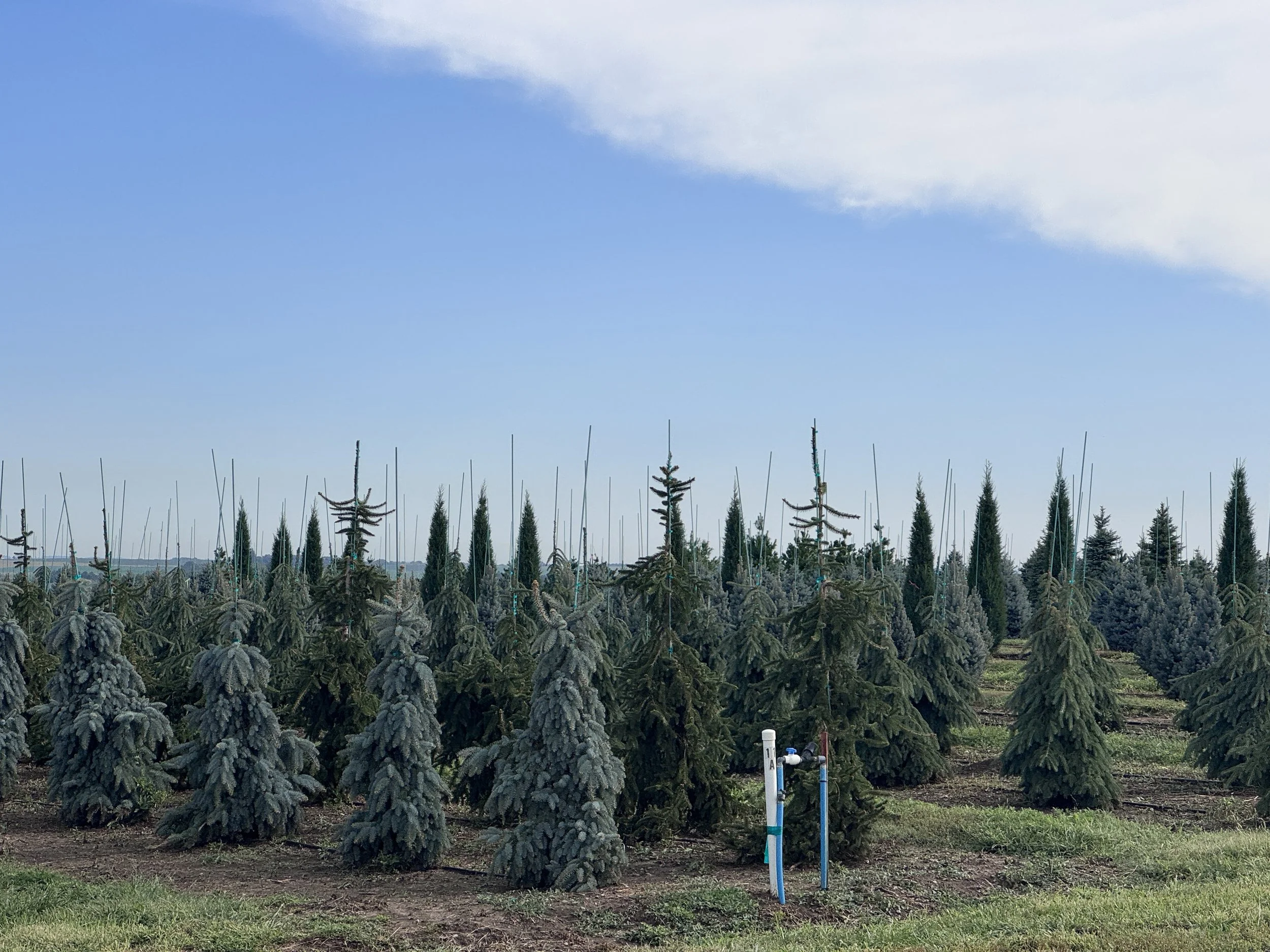
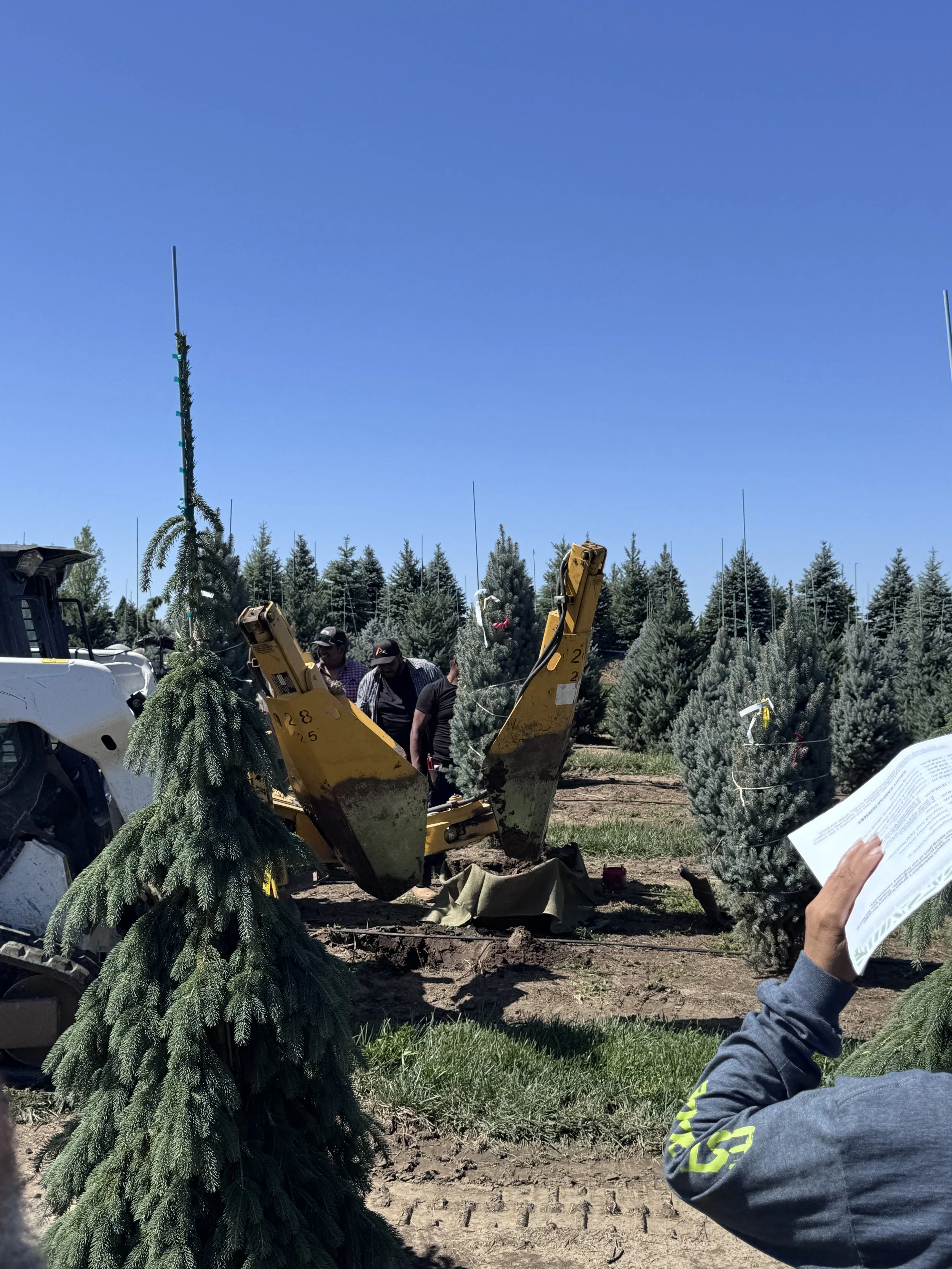
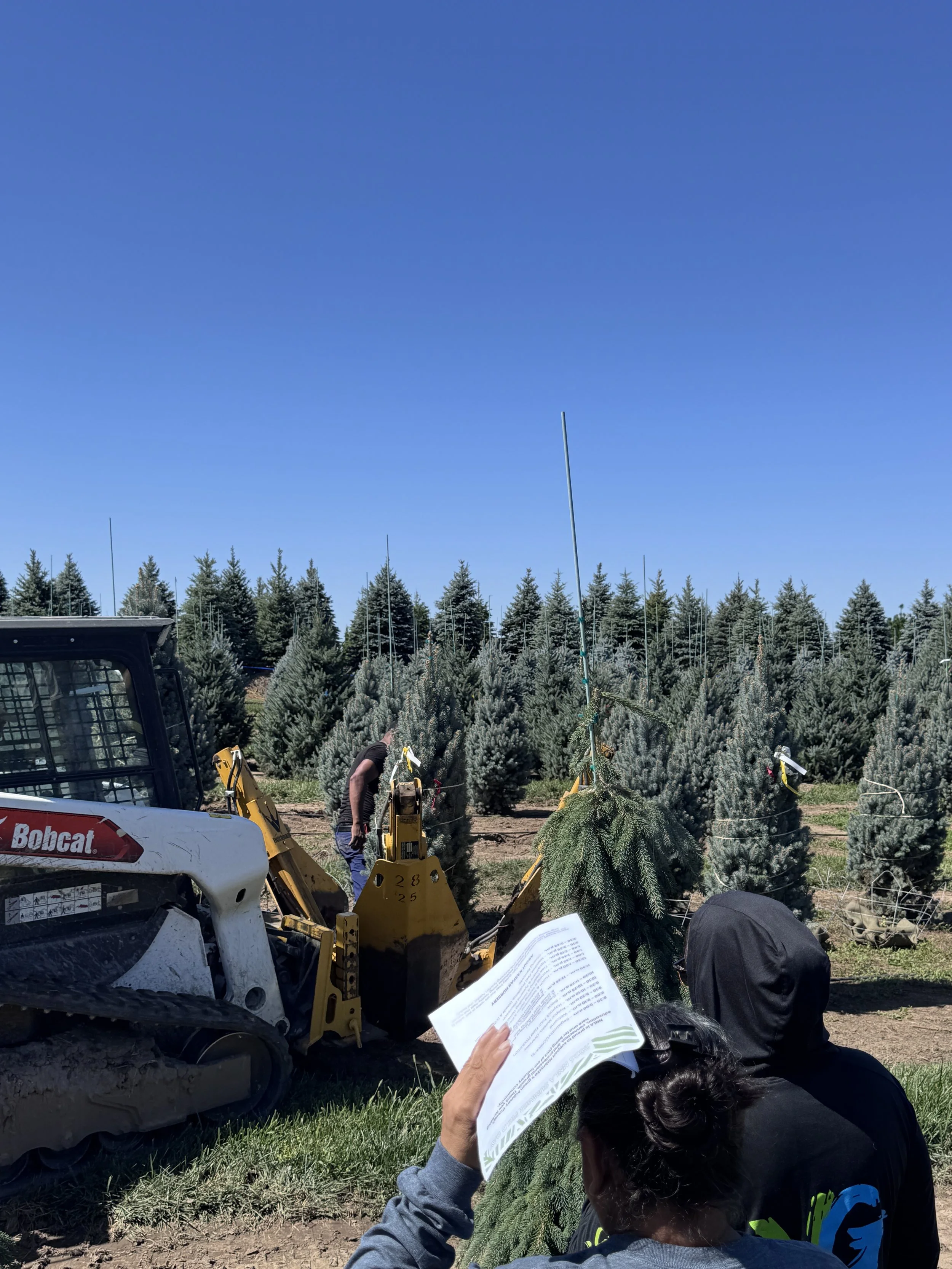
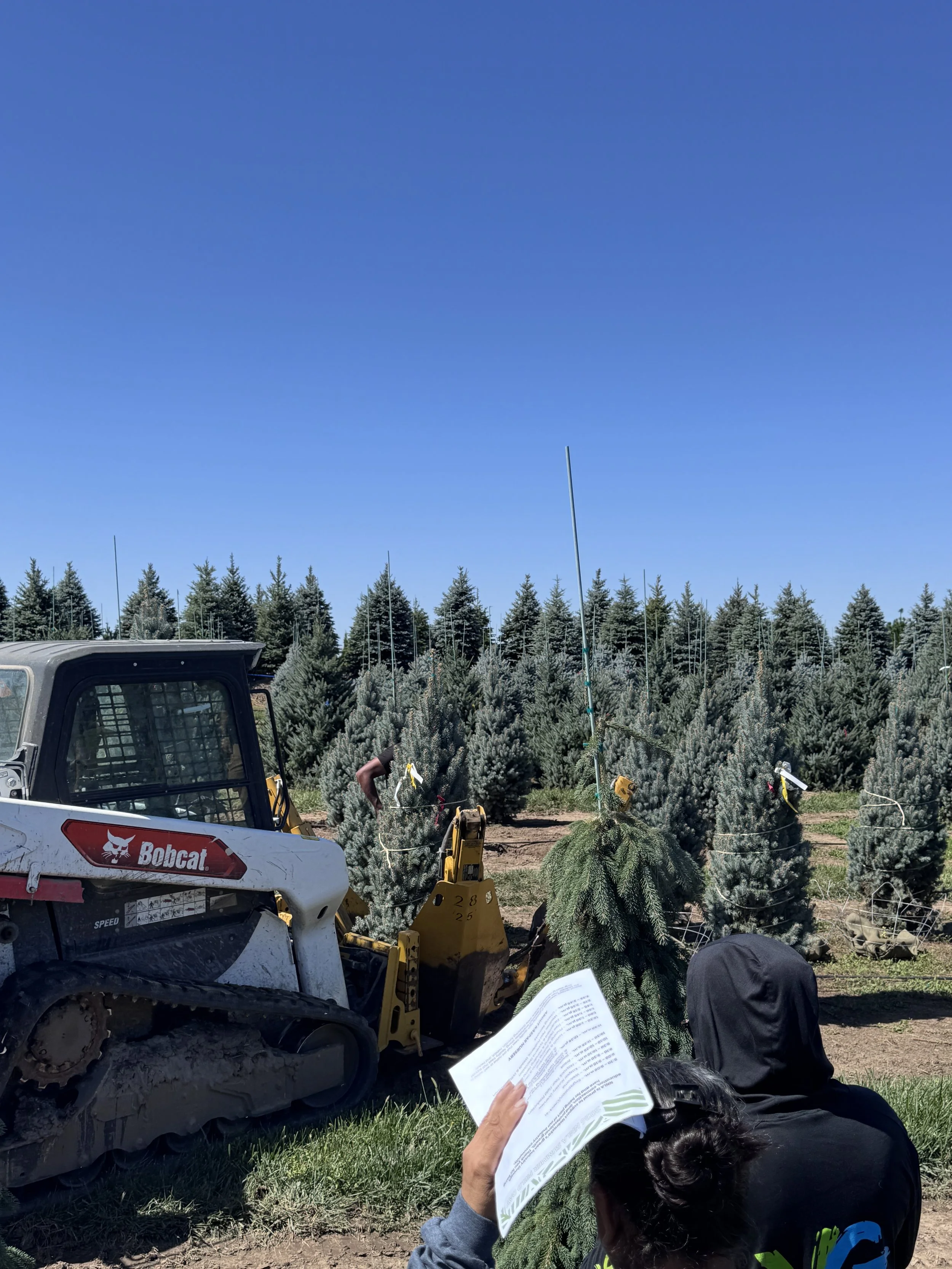
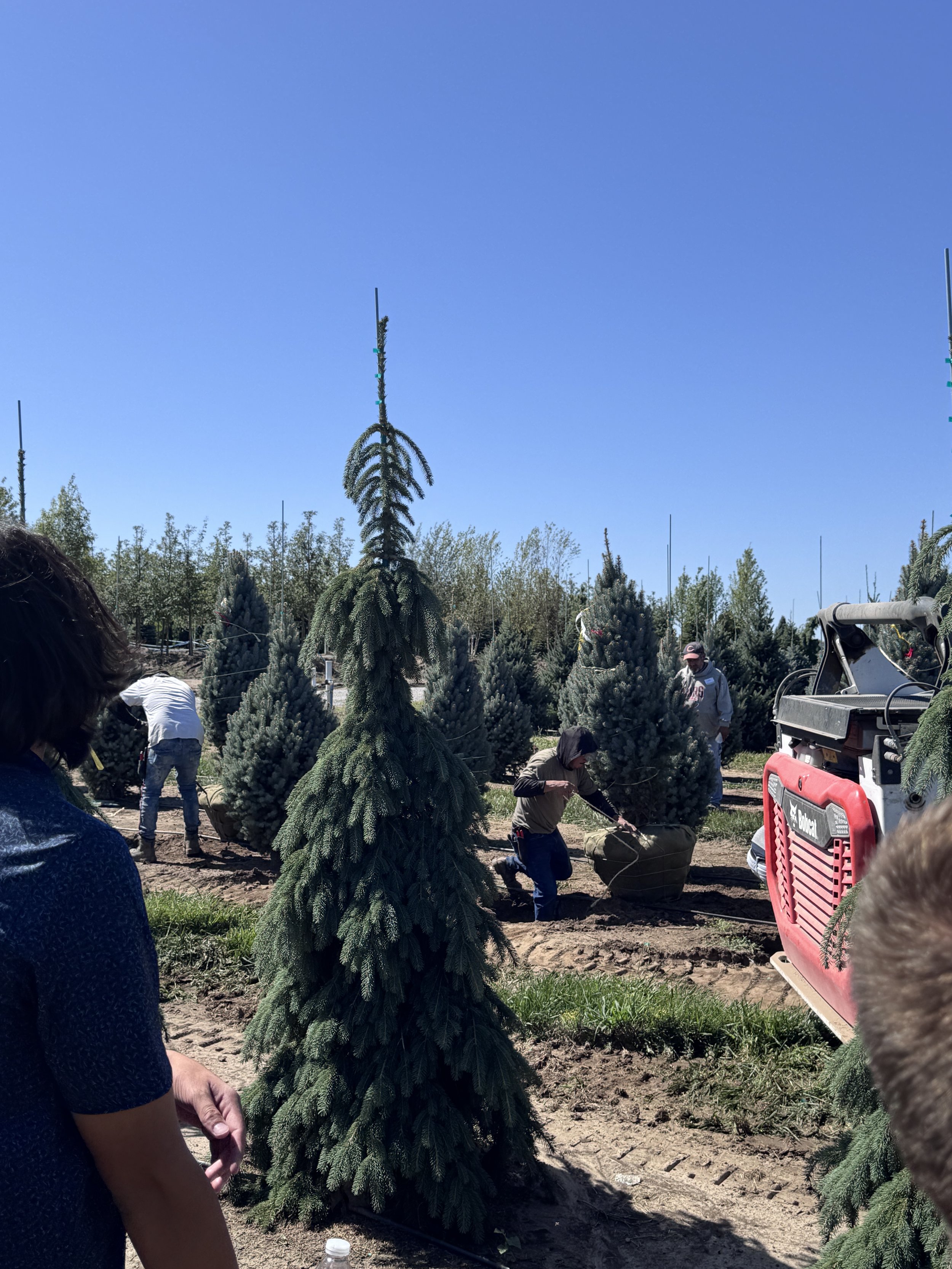
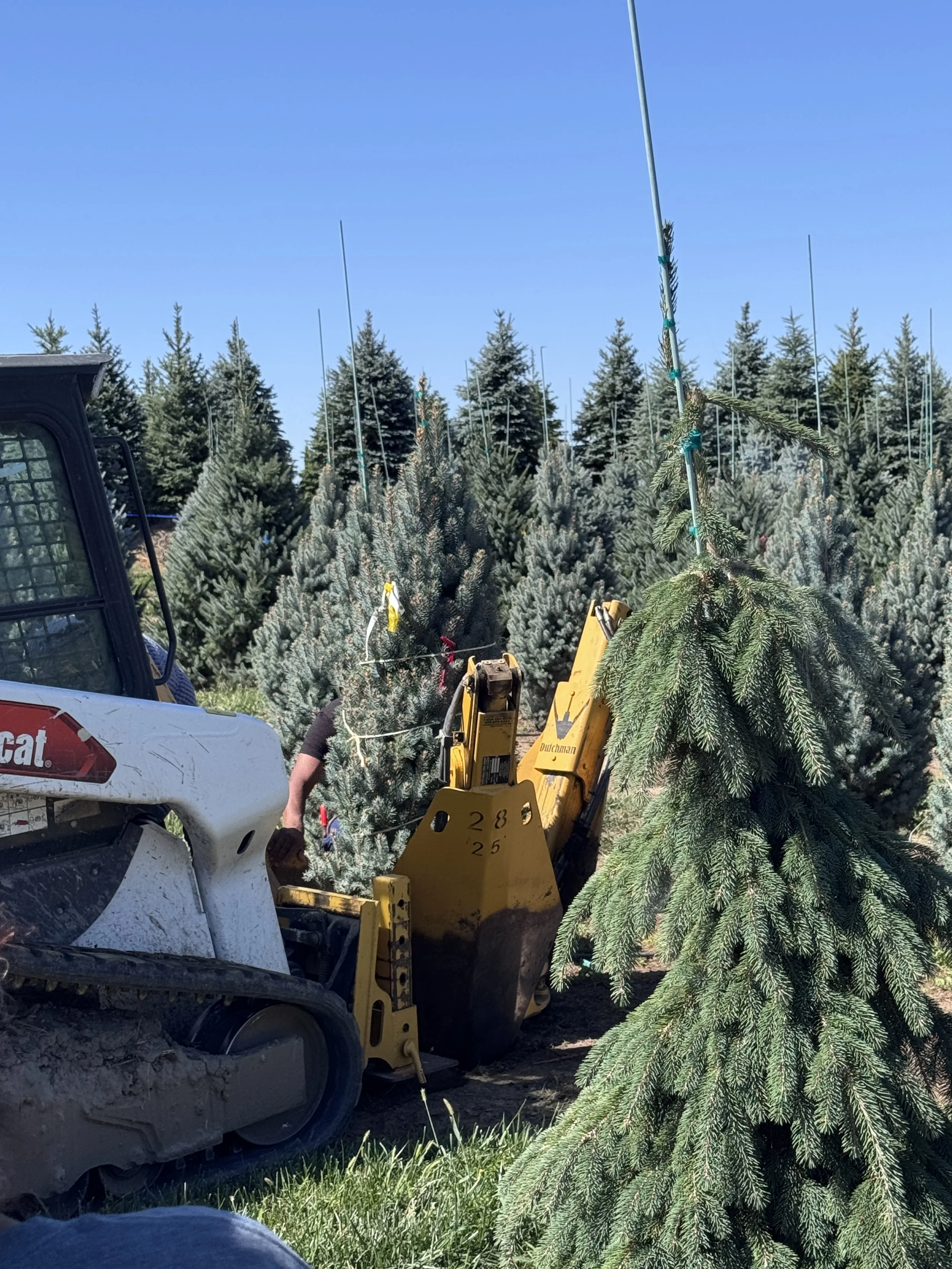
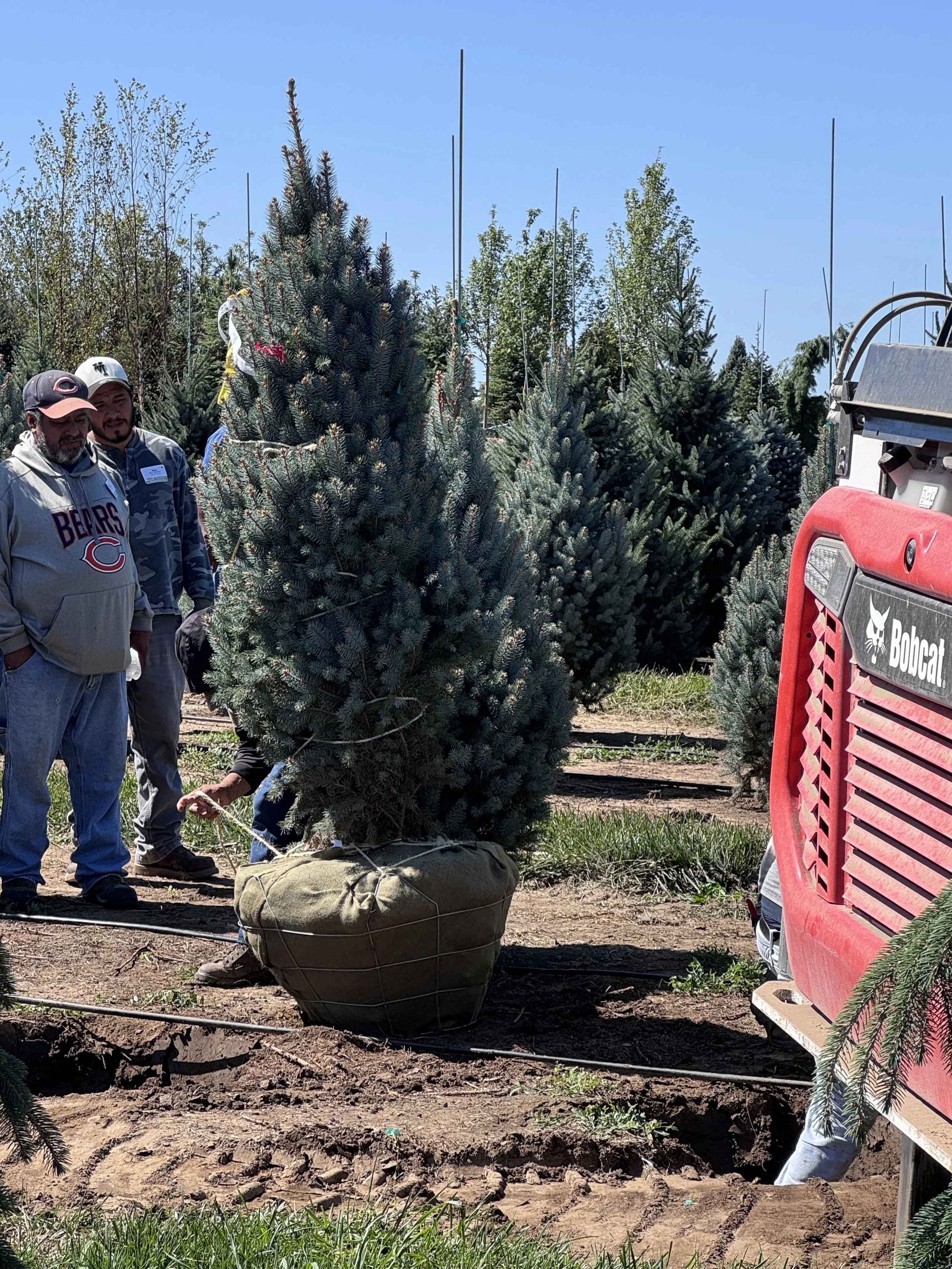
After lunch and time for networking and catching up, attendees were shown the Kaspar Nursery process for digging trees. Darin led the group through the production fields and shared tips on how, when and why they prune and stake evergreen and deciduous trees. The fiberglass stakes allow the trees to blow in the wind but return to an upright position. The stakes are anchored roughly 2 feet into the soil. Also, birds land on the stake rather than on the tree’s leader which protects them from damage. Kaspar Nursery prunes evergreens for a more natural look so they don’t do any shearing other than on their columnar junipers.
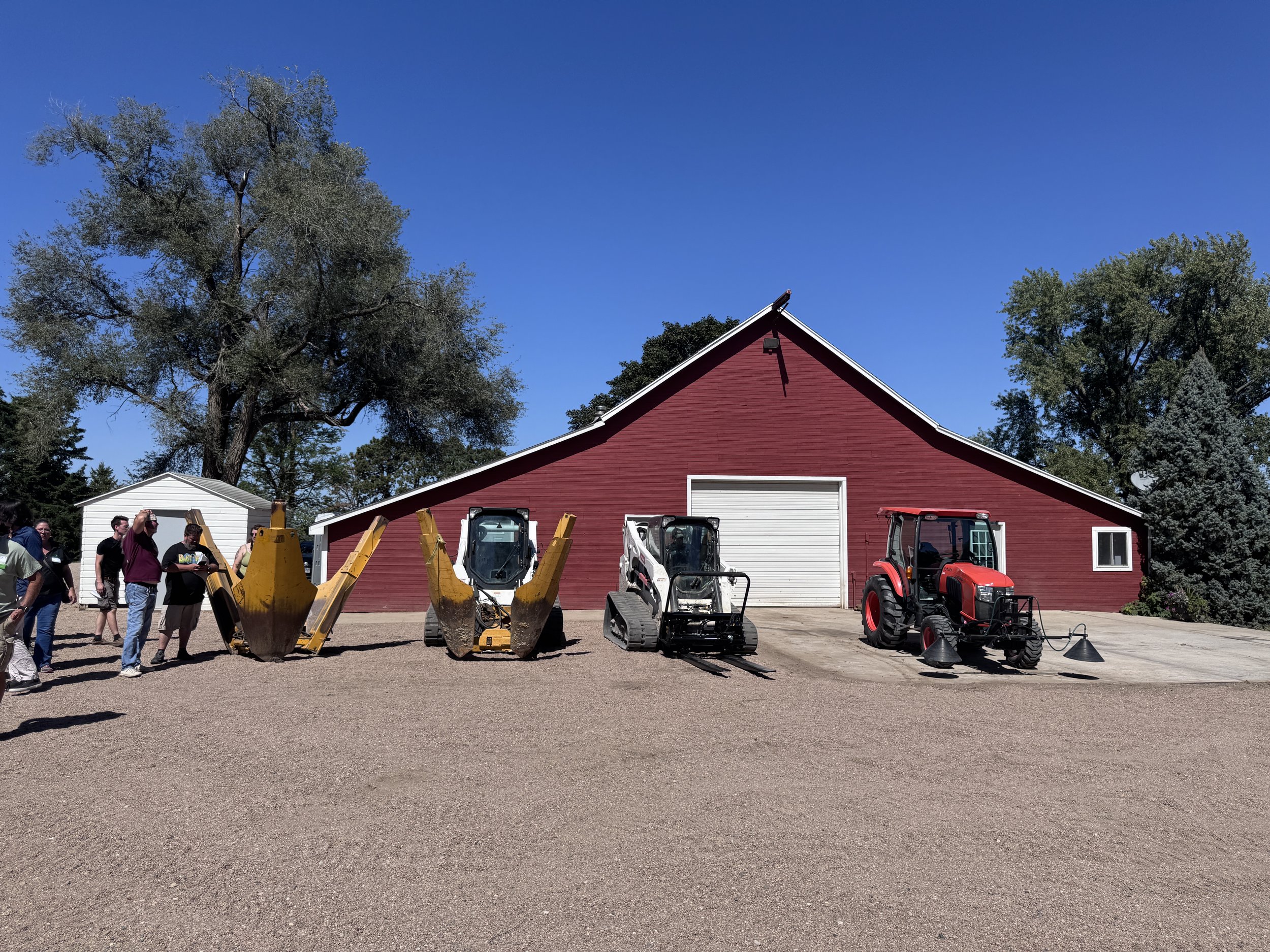
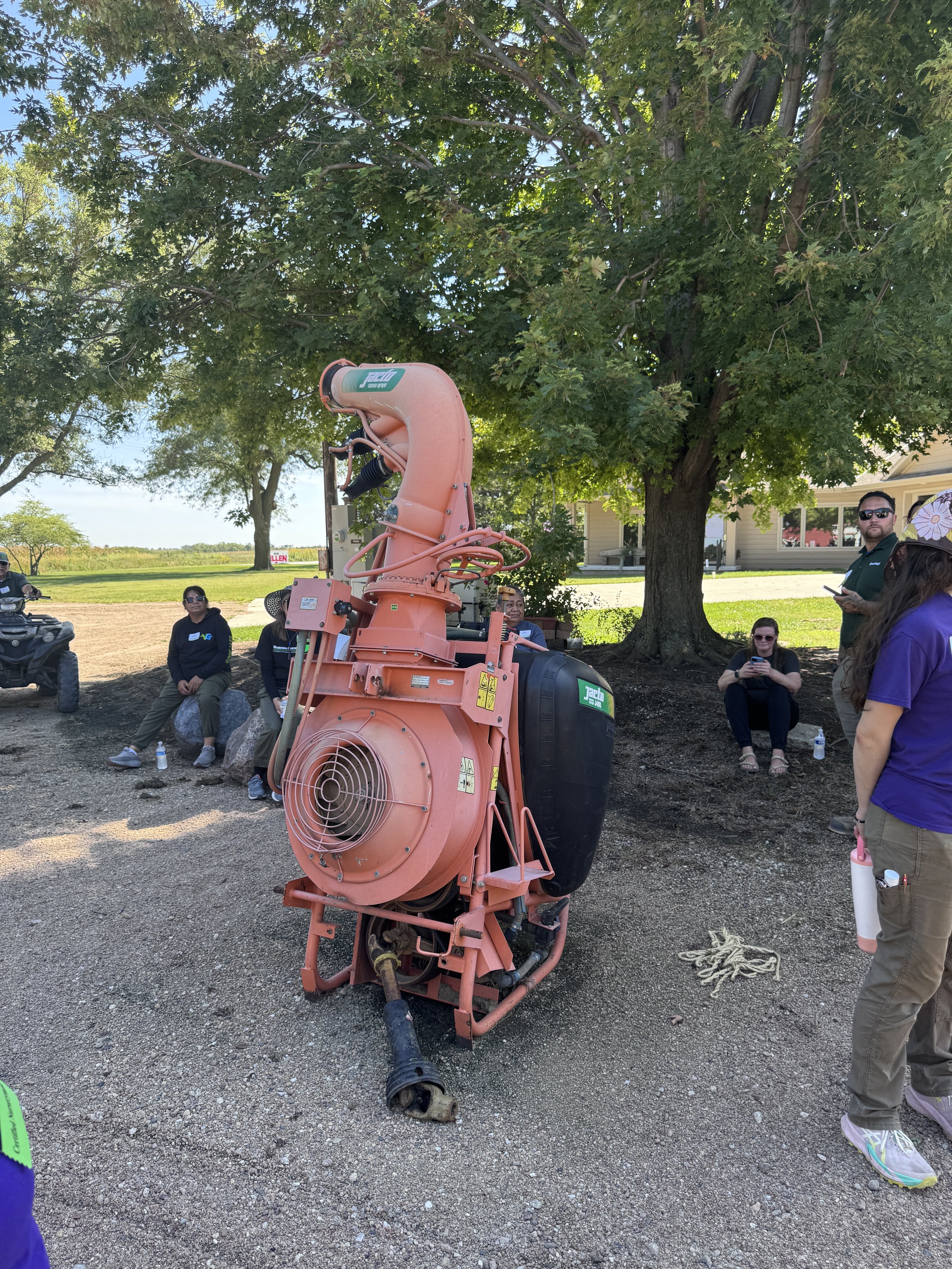
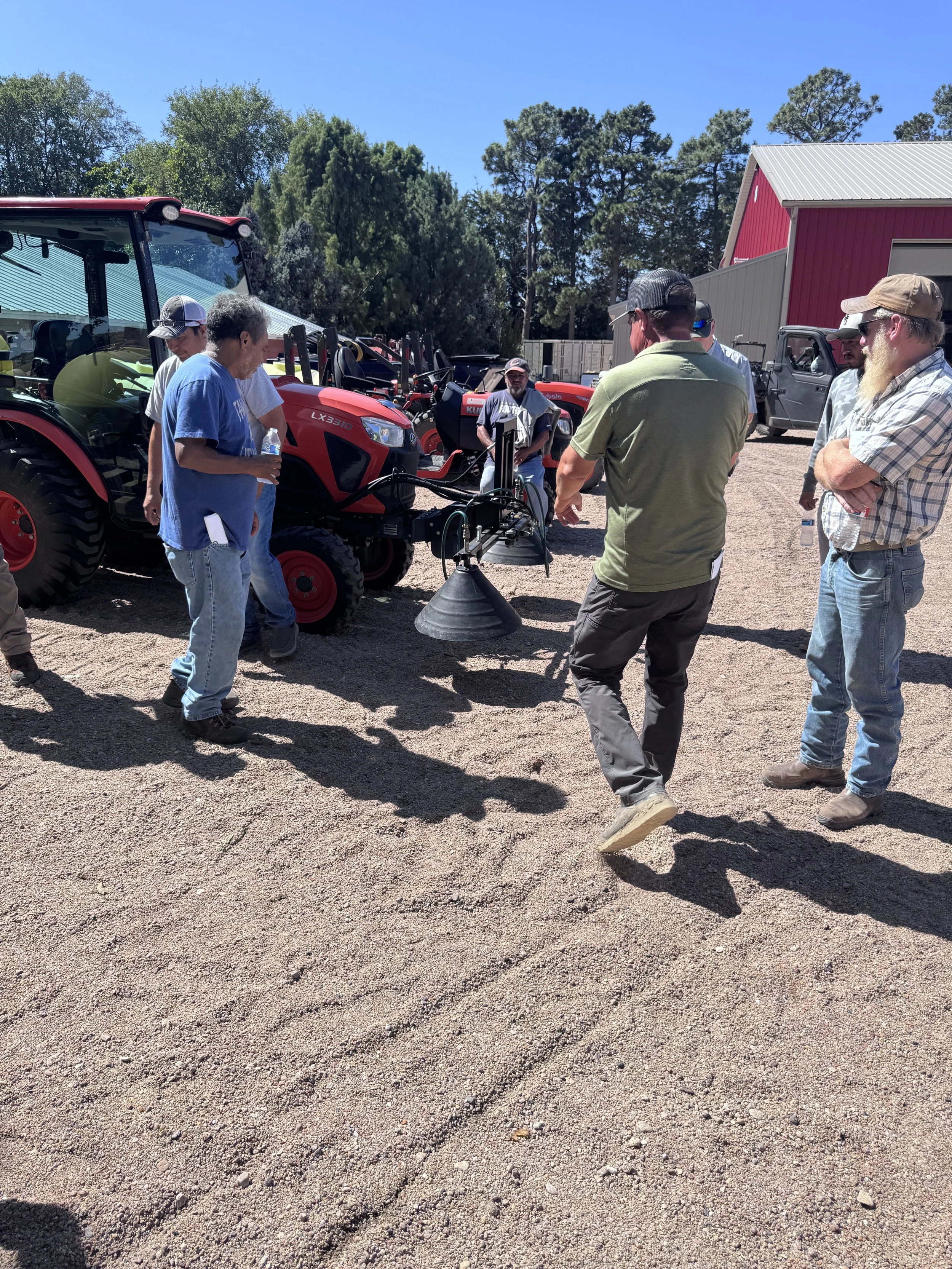
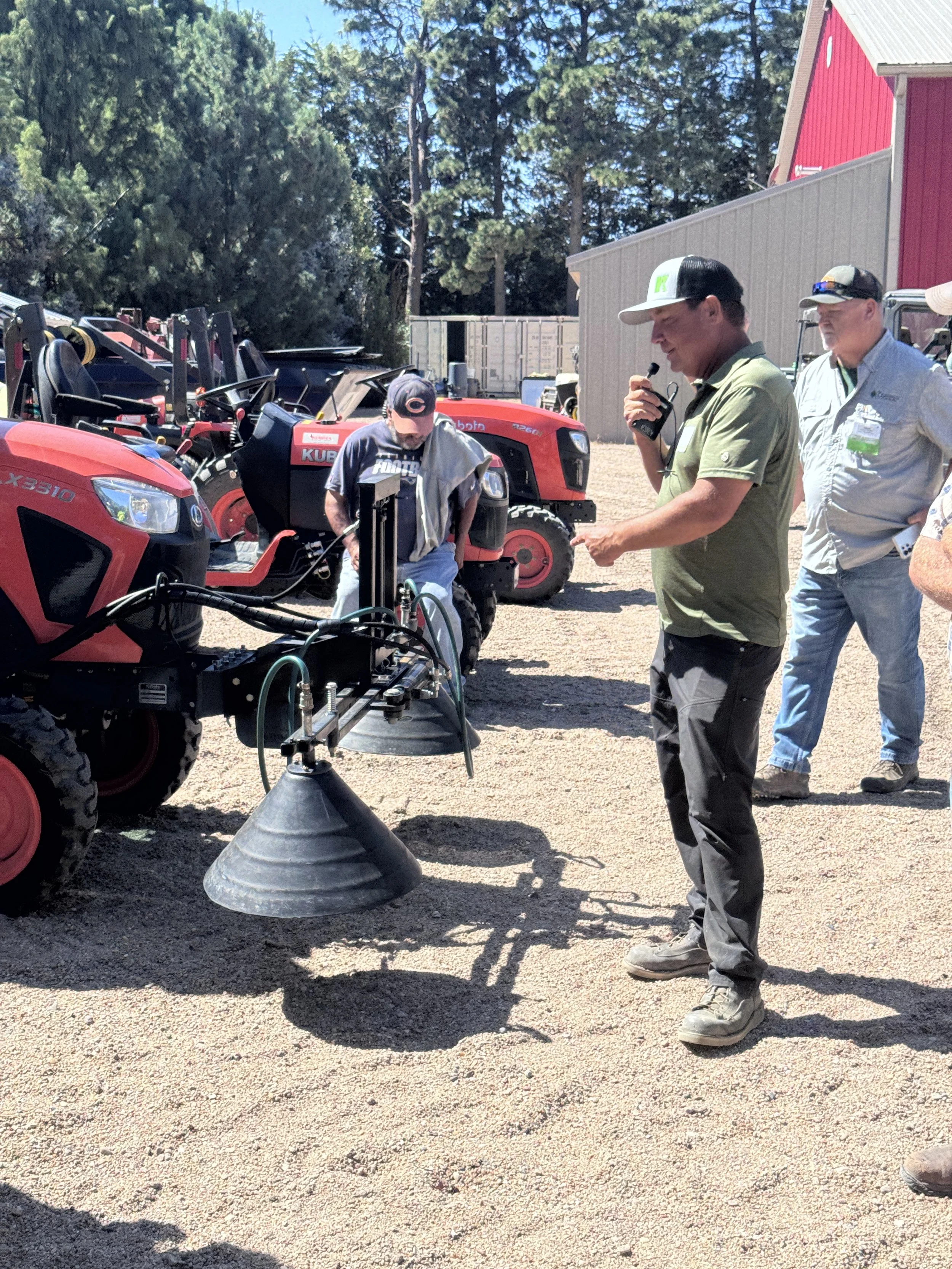
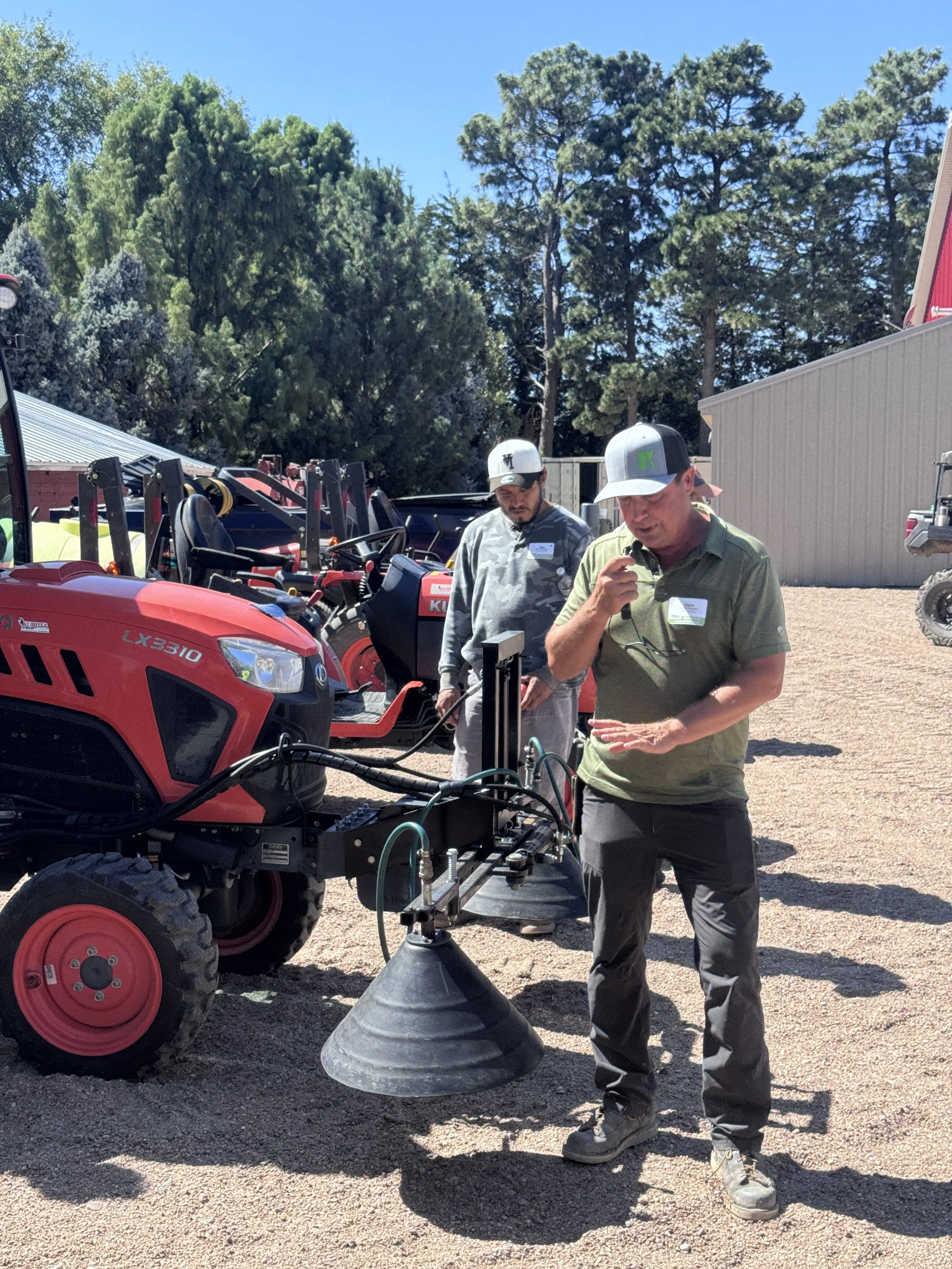
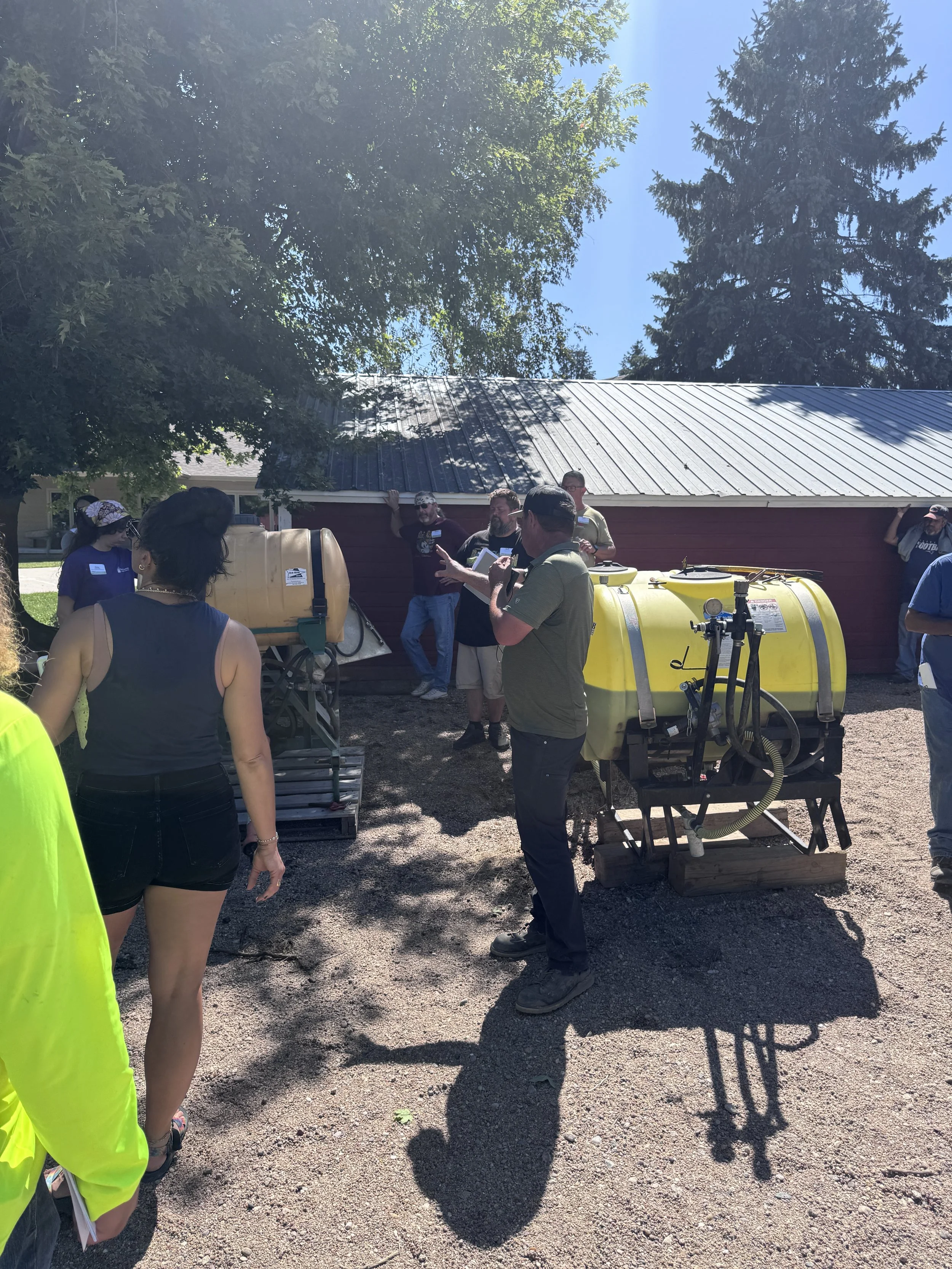
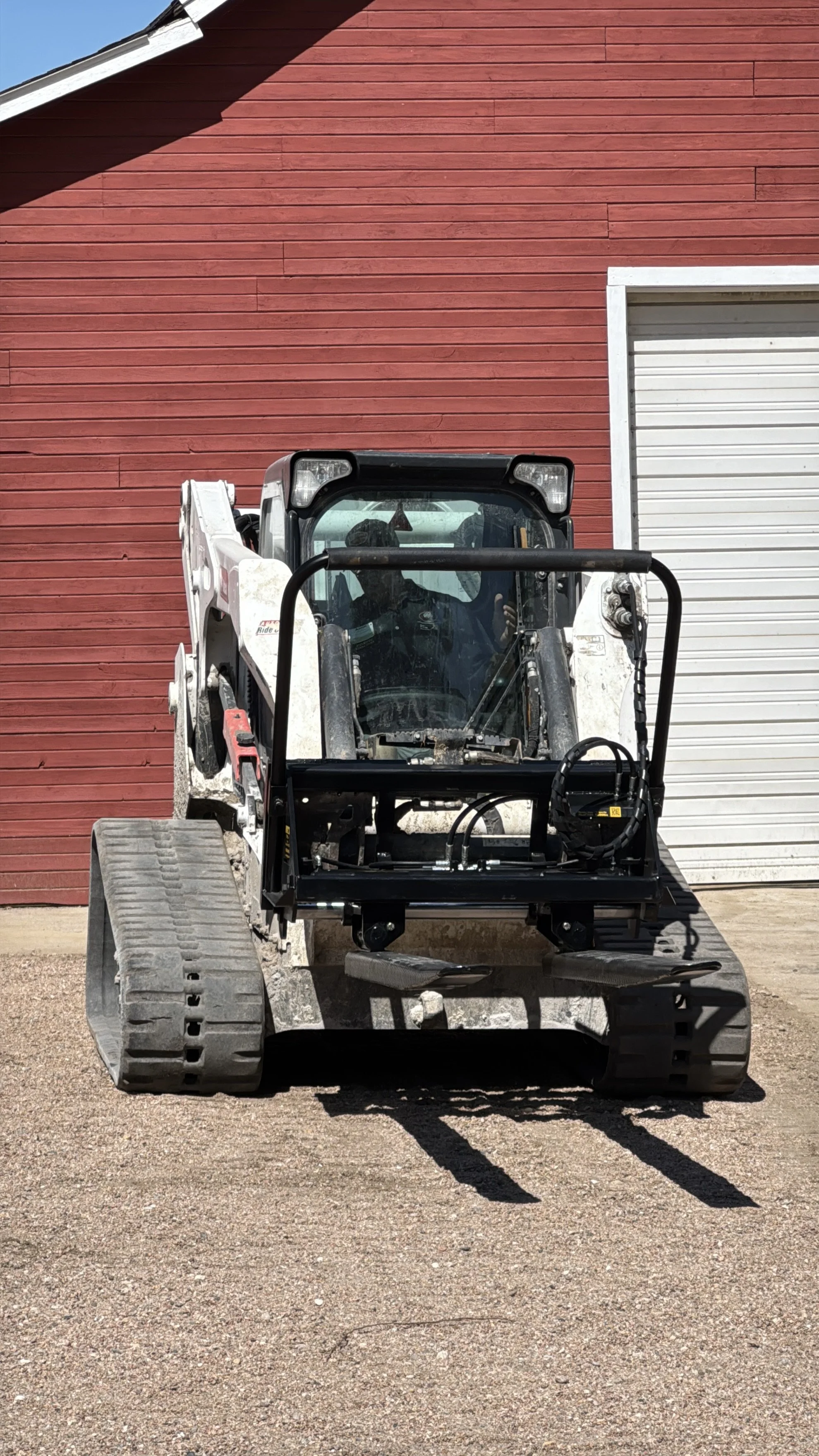
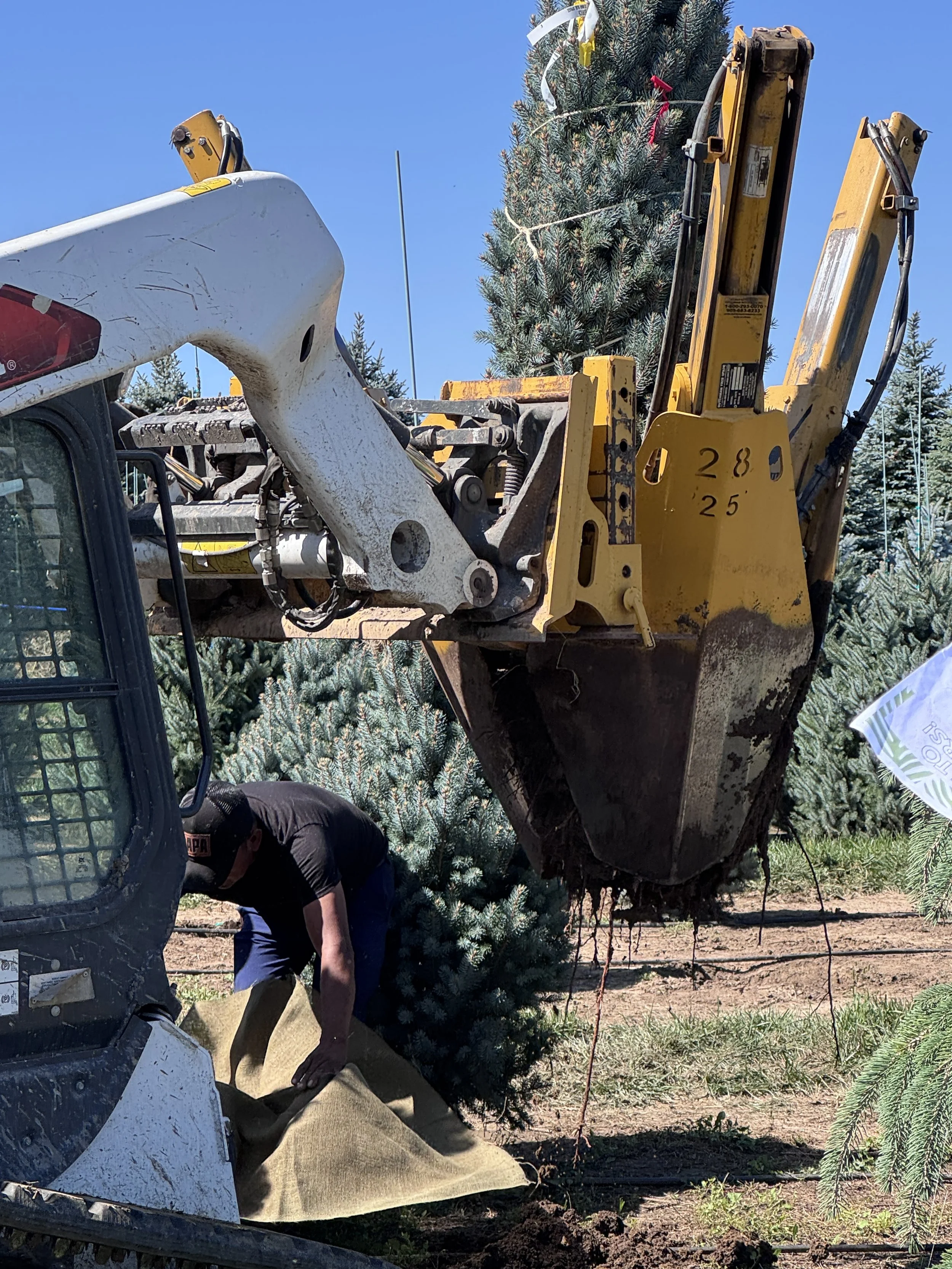
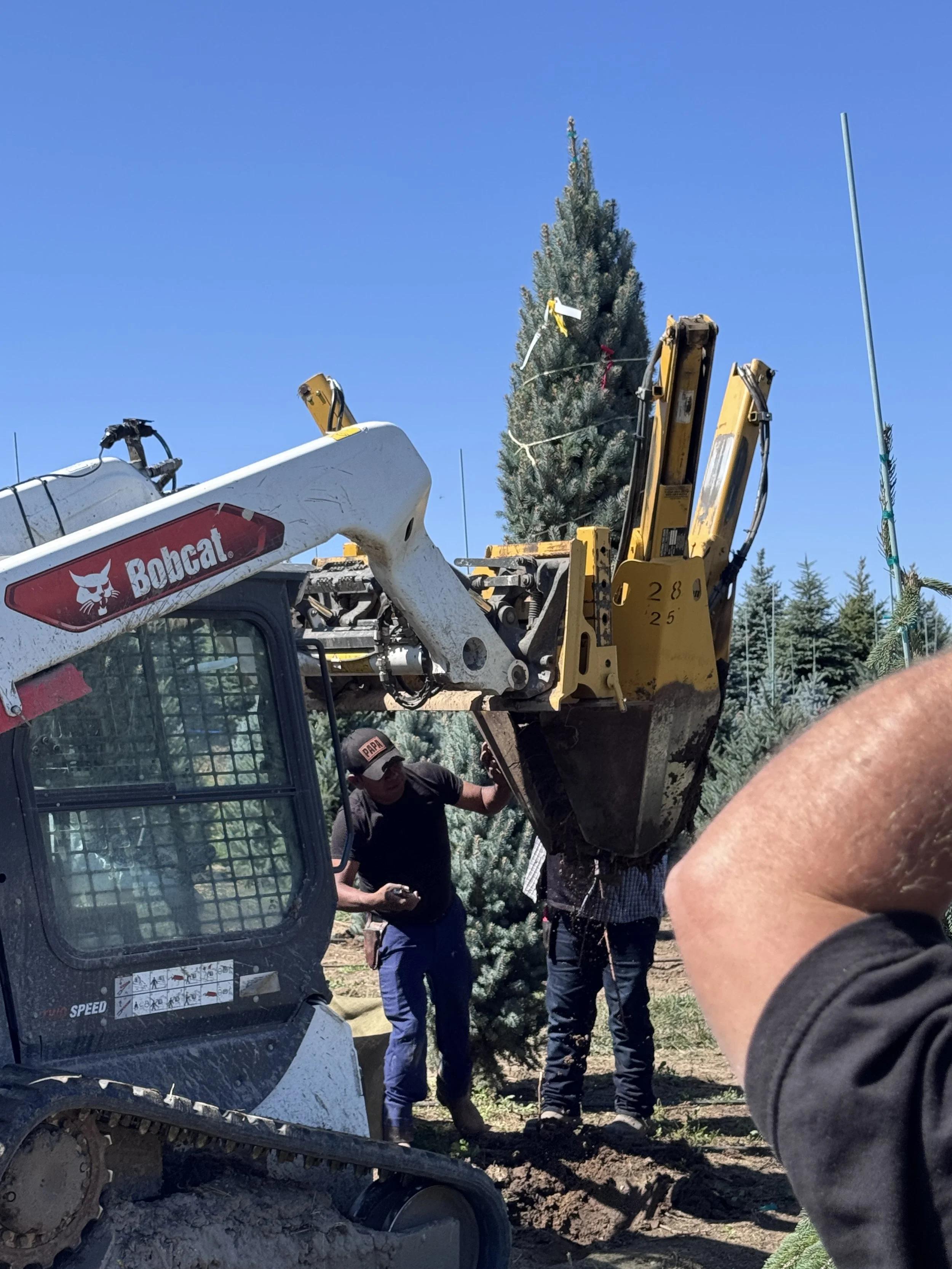
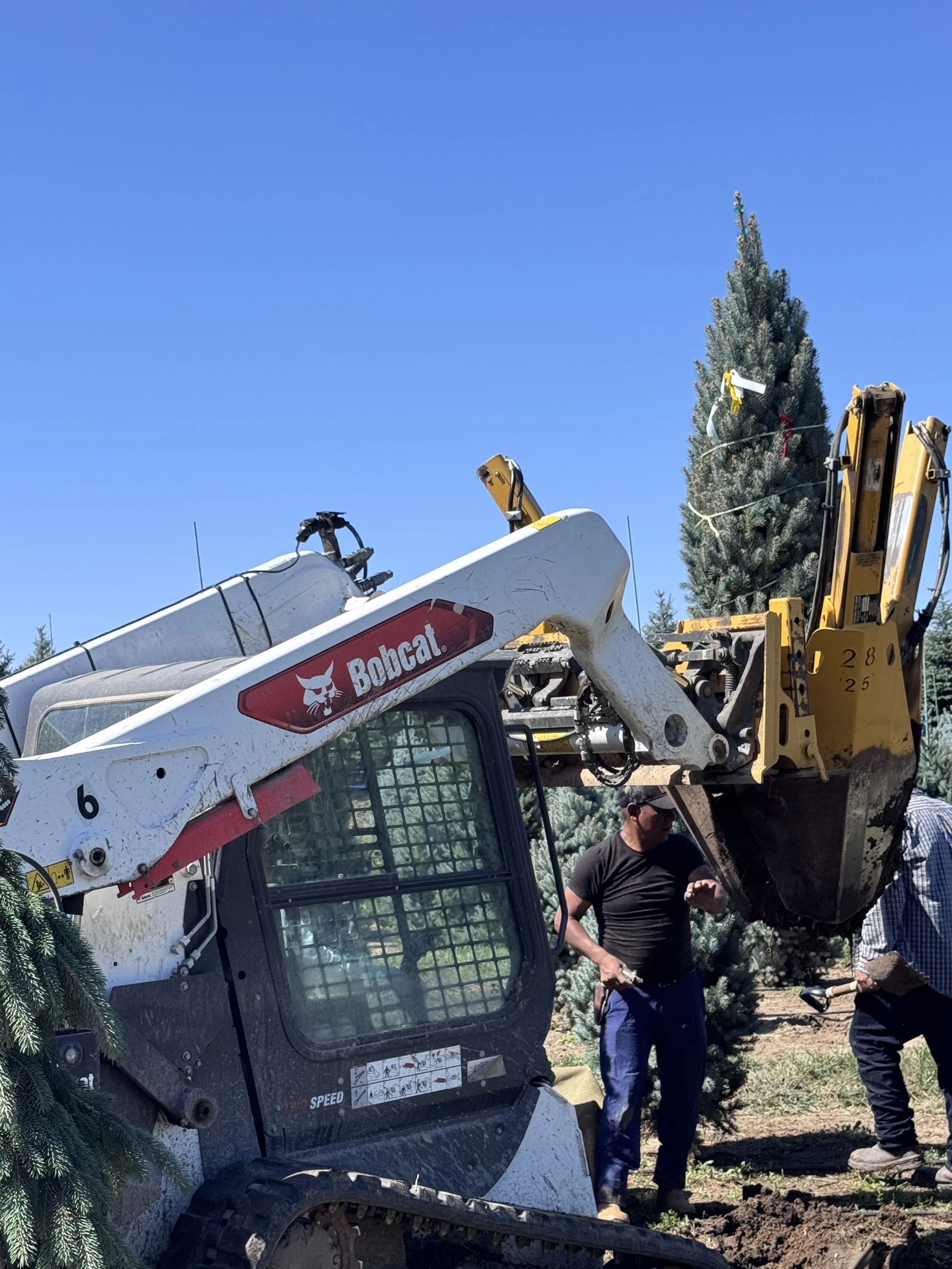
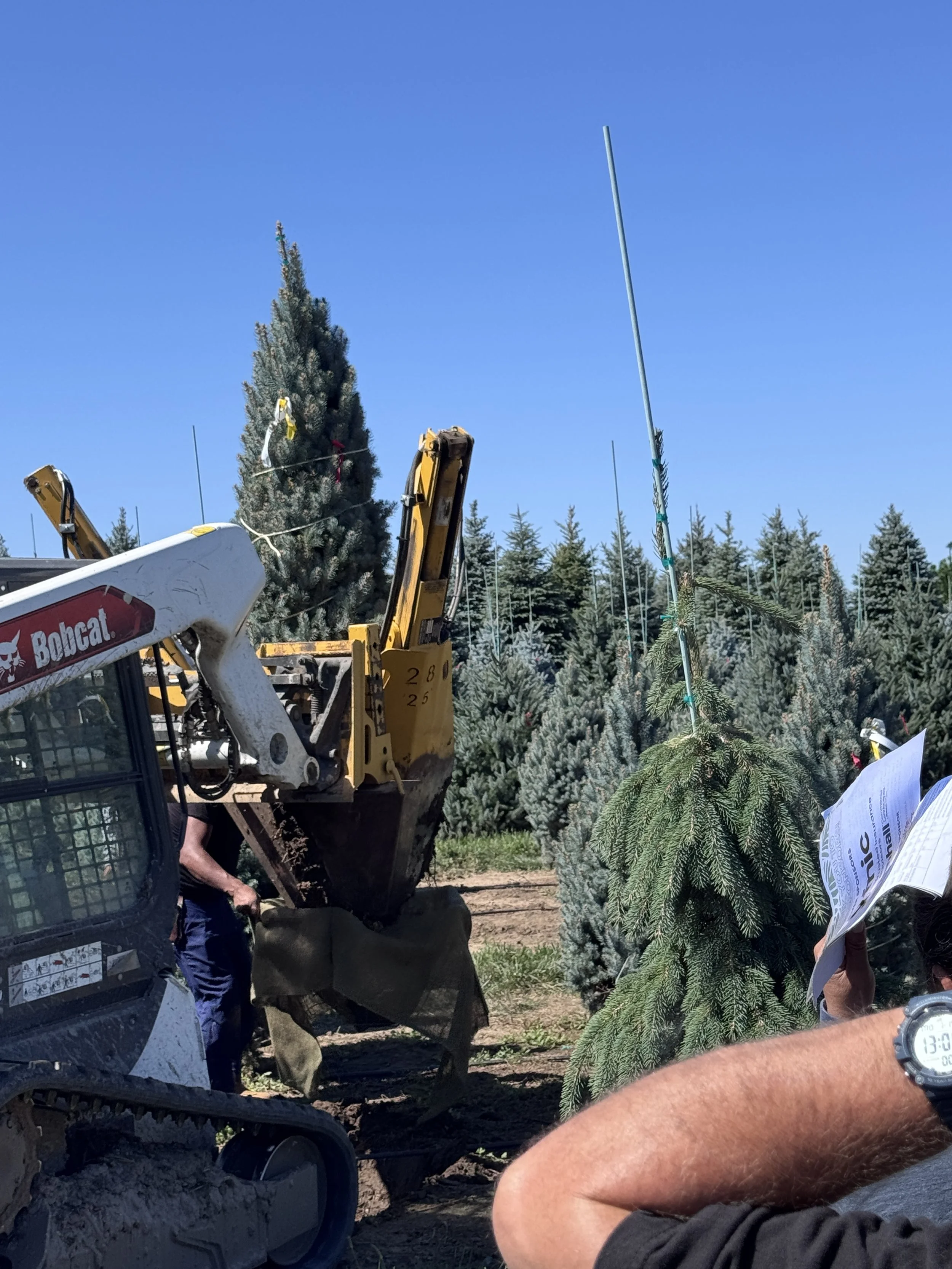
Next, Darin shared a quick overview of the equipment and tools needed to run the nursery and tree farm. Aaron Oltman’s demonstrated his jaws and they talked about a cone shield they set up to spray down at the base of trees in the production fields.
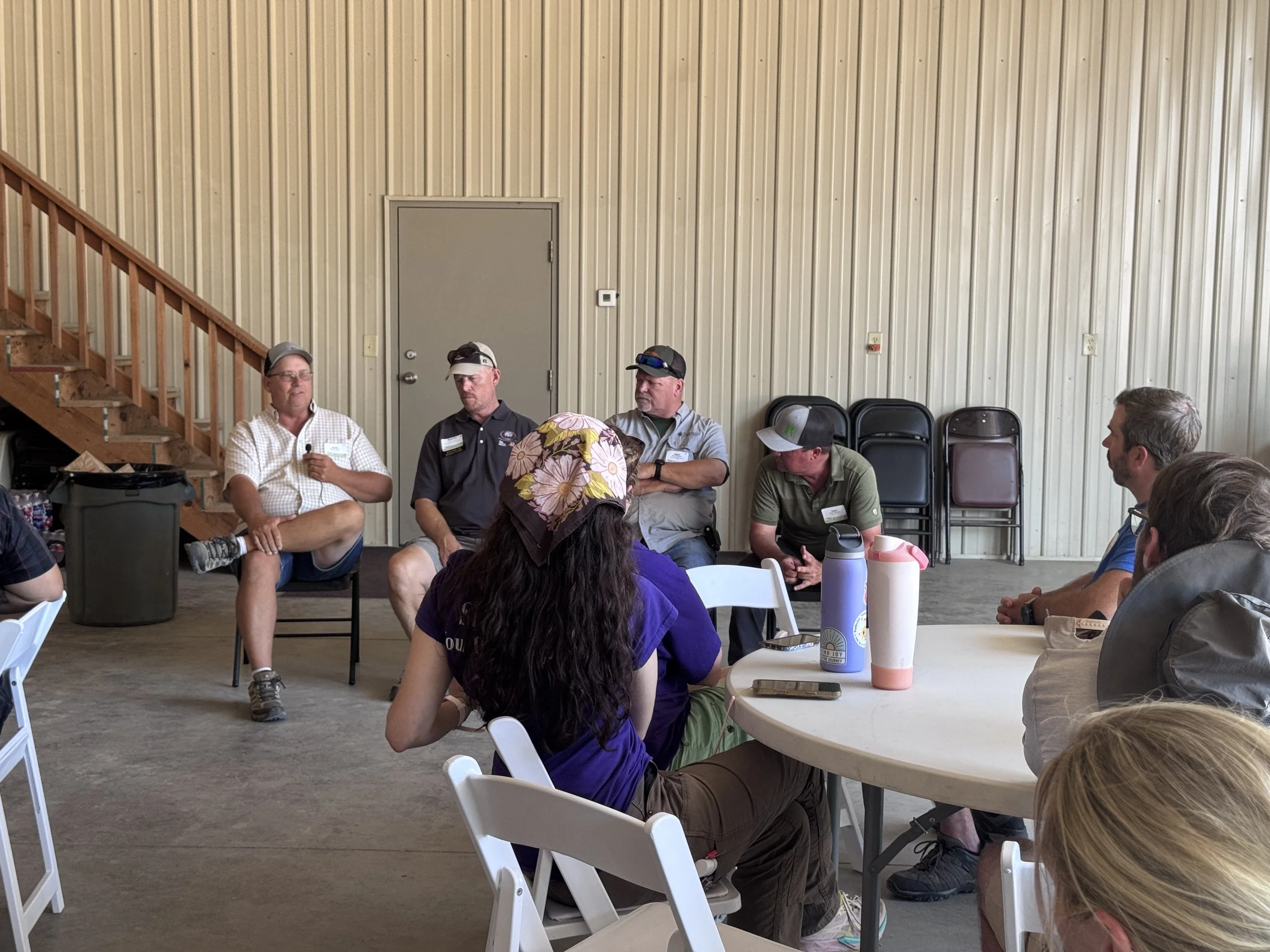
The day ended with a panel discussion of weather, chemical drift and other challenges facing the nursery industry. Members of the panel included Aaron Oltmans, Darin Kaspar, and Jason Kuehl, and was moderated by Lee Olson. Dicamba seems to be the most problematic agricultural chemical and the drift impacts coffeetree, redbud species the most.
NNLA members in attendance earned 3.0 continuing education hours toward their yearly Nebraska Nursery & Landscape Professional (NCNLP) requirement.
Thank you to the event sponsors; Silver sponsors FNIC and Greenhal and bronze sponsor Papio Valley Nursery.